2026 Scent Work Training Guide for Anxious Dogs: Build Trust
Discover how at-home scent work training builds trust and reduces anxiety in dogs. Explore 2026 gear, step-by-step routines, and bonding techniques.
Introduction: A New Era of Canine Bonding in 2026
Welcome to 2026, where the landscape of canine behavioral science and enrichment has evolved far beyond simple puzzle toys and basic obedience. For dog owners sharing their lives with anxious, reactive, or under-confident dogs, building a deep, trusting relationship is the ultimate goal. One of the most powerful, scientifically backed methods for achieving this is at-home scent work. Unlike high-arousal sports like agility or flyball, scent work taps into a dog's primary sense, lowering their heart rate, reducing cortisol levels, and fostering a profound cooperative bond between human and hound.
This comprehensive guide will walk you through the exact science, gear, and step-by-step training protocols you need to start a scent work journey with your anxious dog this year. Whether you have a nervous rescue or a sensitive herding breed, nose work is the ultimate relationship-building tool.
The Neurological Science of Sniffing and Bonding
To understand why scent work is so effective for anxious dogs, we must look at canine neurology. A dog's olfactory bulb is proportionally 40 times larger than a human's, and the act of sniffing requires intense cognitive processing. When a dog engages in directed scent work, their brain releases dopamine—the neurotransmitter associated with pleasure, reward, and motivation.
According to the American Kennel Club's Scent Work guidelines, this type of cognitive enrichment builds immense confidence because it allows the dog to make independent choices and succeed in a low-pressure environment. For an anxious dog, the world is often a chaotic, overwhelming place filled with loud noises and unpredictable triggers. Scent work creates a 'scent bubble' where the dog can tune out visual and auditory stressors and focus entirely on the task at hand. When you, the handler, become the gateway to this rewarding, calming activity, your dog's trust in you deepens significantly. You are no longer just the provider of food; you are the partner in their most fulfilling cognitive game.
Furthermore, organizations like Fear Free Pets heavily advocate for scent-based enrichment as a core pillar of reducing fear, anxiety, and stress (FAS) in companion animals. By integrating scent work into your daily routine, you are actively participating in a fear-free lifestyle that prioritizes your dog's emotional well-being.
Essential 2026 Scent Work Gear for Anxious Dogs
You do not need to spend a fortune to start, but having the right tools ensures the game remains frustration-free for sensitive dogs. Here is a breakdown of the top-rated gear for 2026, specifically selected for dogs that need gentle, confidence-building introductions to nose work.
| Product Name | Type | Best For | 2026 Est. Price |
|---|---|---|---|
| PAW5 Wooly Snuffle Mat | Foraging Mat | Beginners & High-Anxiety Dogs | $48.00 |
| Nose-It K9 Birch Scent Kit | Target Odor Kit | Formal Scent Imprinting | $35.00 |
| Sniffiz SmellyMatty Pro (2026 Ed.) | Multi-Layer Puzzle Mat | Intermediate Progression | $62.00 |
| Starmark Everlasting Treat Ball | Scent-Association Toy | Building Drive & Focus | $14.99 |
Pro-Tip for High-Value Rewards: Anxious dogs often lose their appetite when stressed. For scent work, you must use ultra-high-value, aromatic rewards. Freeze-dried beef liver, Zuke's Mini Naturals (Salmon formula), or pureed chicken in a squeeze tube are ideal for 2026 training sessions. The reward must be worth more than the distraction.
The 4-Week Bonding Progression: Step-by-Step
Building trust requires patience. Do not rush these steps. If your dog shows signs of frustration, take a step back. The goal is the relationship, not the speed of the find.
Week 1: Scent Imprinting and the 'Find It' Cue
Objective: Teach the dog that a specific odor (Birch) or the concept of hunting predicts an incredible reward.
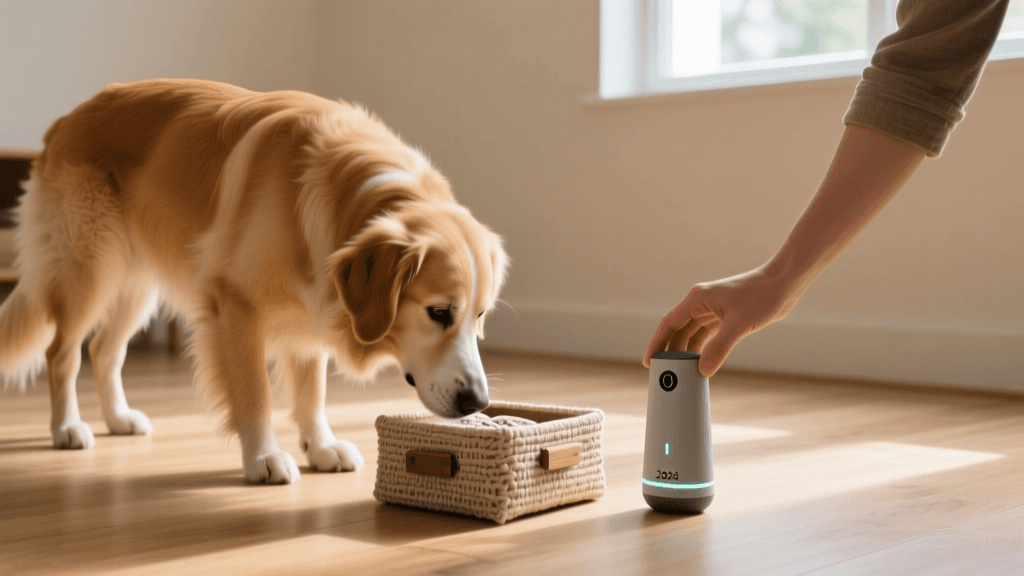
Setup: Sit on the floor with your dog in a quiet, familiar room. Hold a small tin with holes in the lid containing a Q-tip dipped in Birch essential oil (from your Nose-It kit).
Action: Present the tin near your dog's nose. The second they sniff it, click a clicker or say 'Yes!' and immediately feed a high-value treat right at the tin. Repeat this 10 times per session, twice a day. You are building a neurological bridge: Smell Birch = Chicken Liver appears. This builds immense trust because the dog learns that engaging with the environment yields predictable, positive outcomes.
Week 2: The Visual Hide and Handler Bonding
Objective: Introduce the concept of searching while maintaining handler connection.
Setup: Place the scent tin or a treat on the floor in plain sight, about three feet away from your dog.
Action: Give your cue word: 'Find it.' Encourage your dog with your body language and tone of voice. When they move to the tin/treat, celebrate enthusiastically. For anxious dogs, your joyful, calm celebration is a powerful bonding mechanism. It signals that the environment is safe and that you are a supportive teammate. Gradually increase the distance to five feet, then ten feet, always keeping the hide visible.
Week 3: The Blind Hide and Scent Cone
Objective: The dog must now rely entirely on their nose, not their eyes, to locate the source.
Setup: Have your dog wait in another room (or have a family member gently hold them). Place the scent tin behind a table leg, under a chair, or inside an open cardboard box.
Action: Bring your dog into the room and give the 'Find it' cue. Crucial Bonding Rule: Do not point, stare at the hide, or guide them. Let them work. When they find it, drop a 'jackpot' of 5-10 treats directly on the hide. This teaches the dog that the source of the odor is the most valuable place in the room, reinforcing their confidence in their own nose.
Week 4: Outdoor Introduction and Environmental Generalization
Objective: Transferring the calming effects of scent work to the stressful outdoor environment.
Setup: Move to a quiet, fenced backyard or a low-traffic park during off-peak hours. Start with very easy, visible hides in the grass.
Action: Anxious dogs often struggle to generalize behaviors. By bringing the scent work game outside, you are giving them a 'job' that helps them ignore environmental triggers like distant dogs or traffic. Keep sessions incredibly short (3-5 minutes) to prevent sensory overload. End on a massive success, and follow up with a gentle, calming massage back indoors to solidify the relaxed state.
Reading Canine Body Language During Scent Work
The International Association of Animal Behavior Consultants (IAABC) emphasizes that understanding subtle canine body language is the cornerstone of any successful behavior modification or training program. During scent work, your dog will communicate their emotional state clearly if you know what to look for.
- Signs of Engagement and Trust: A loose, sweeping tail wag; relaxed, open mouth; ears positioned forward or naturally neutral; deep, rhythmic sniffing; and a willingness to check in with you visually after finding the hide.
- Signs of Stress or Frustration: Lip licking, yawning out of context, 'whale eye' (showing the whites of the eyes), frantic scratching at the hide location, or abandoning the search to sniff the perimeter of the yard (avoidance behavior).
If you observe stress signals, the hide is too difficult, or the environment is too overwhelming. Immediately make the next hide incredibly easy, reward heavily, and end the session. Protecting your dog's confidence is how you protect your bond.
Troubleshooting Common Bonding Roadblocks
Problem: My dog is too anxious to eat treats during the search.
Solution: This indicates the environment is over threshold. Move back to Week 1 in the quietest room of your house. Use lower-value kibble for the search, but pay out with high-value treats, or switch to a favorite tug toy as the reward if your dog is toy-motivated.
Problem: My dog looks at me and waits for me to show them where it is.
Solution: This is common in dogs that have been heavily trained in strict obedience and lack independent problem-solving confidence. To fix this, throw a handful of treats on the floor and say 'Find it' to jumpstart their hunting motor. Once they are eating off the floor, place the scent tin near a treat. Gradually fade the visible treats until they are hunting the tin alone.
Conclusion: A Lifetime of Shared Discovery
In 2026, we recognize that true obedience is not born from dominance, but from a deep, cooperative relationship. Scent work is more than just a game; it is a profound dialogue between you and your dog. By dedicating just 15 minutes a day to at-home scent work, you are rewiring your anxious dog's brain to associate the world—and you—with safety, predictability, and joy. Grab your scent kit, prepare your high-value rewards, and start building an unbreakable bond today.
anouk-beaumont
All our authors care for dogs every day — read more of their work on the authors page.