How to Train Your Dog to Use an Indoor Treadmill Safely
Learn how to safely train your dog to use an indoor treadmill. Follow our step-by-step guide for positive reinforcement, pacing, and safety tips.
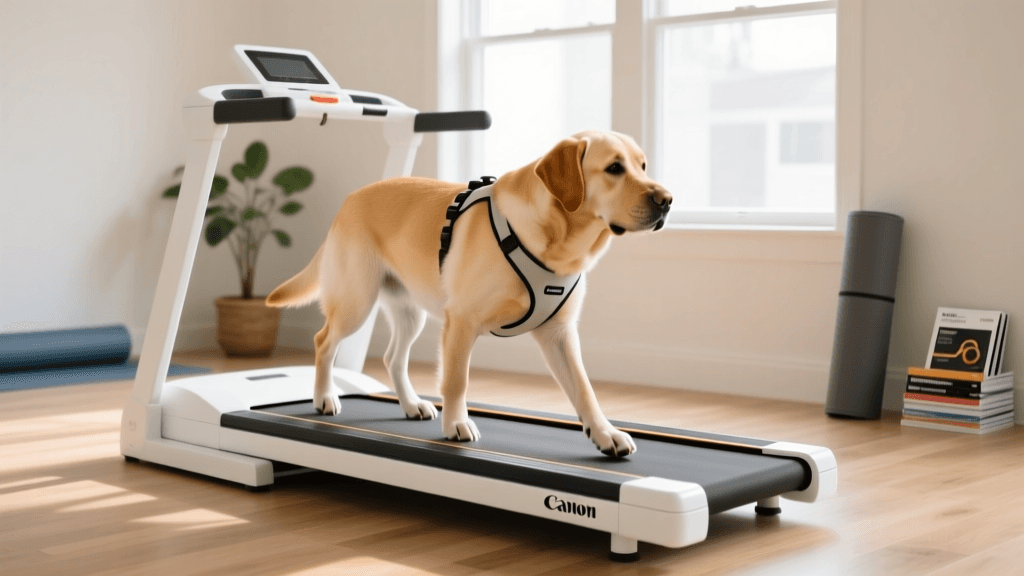
As a dedicated dog owner, you know that meeting your pup's daily exercise requirements is non-negotiable. However, extreme weather conditions, demanding work schedules, or physical limitations can make daily outdoor walks a challenge. Enter the indoor dog treadmill: a game-changing tool for maintaining your dog's physical and mental health year-round. While the idea of a dog walking on a motorized belt might seem unnatural at first, with patience and positive reinforcement, most dogs can learn to use a treadmill confidently and safely.
Why Invest in Treadmill Training?
Indoor treadmills are not just a luxury; they are a practical solution for many modern households. According to the Association for Pet Obesity Prevention, over 50% of dogs in the United States are overweight or obese. Controlled, consistent indoor exercise is one of the most effective ways to manage your dog's weight without relying solely on unpredictable outdoor conditions.
Furthermore, the American Kennel Club notes that while outdoor exploration is ideal for mental stimulation, controlled indoor exercise is a vital alternative for senior dogs, those undergoing physical rehabilitation, or high-energy working breeds that need to burn off excess steam during rainy or freezing days. Treadmill training also allows you to control the exact pace, incline, and duration of the workout, making it an excellent tool for canine athletes in training.
Essential Gear for Success
Before you begin, you need the right equipment. Attempting to train your dog on a treadmill without proper gear can lead to frustration or injury. Here is what you need:
- The Right Harness: Never attach a leash to a standard neck collar on a treadmill. If your dog slips, a collar can cause severe tracheal damage. Use a well-fitted, padded Y-front harness like the Ruffwear Front Range (approx. $40), which distributes pressure evenly across the chest.
- A Fixed-Length Leash: Use a 4-to-6-foot leather or biothane leash. Avoid retractable leashes (like the Flexi brand), as they offer poor control and can easily jam or snap under sudden tension.
- High-Value, Low-Calorie Treats: You will be rewarding your dog frequently. Use tiny, pea-sized treats like Zuke's Mini Naturals or freeze-dried beef liver to keep calorie intake in check while maintaining high motivation.
- Non-Slip Matting: Place a rubber rug pad (like the Gorilla Grip pad, approx. $20) under the treadmill to prevent the machine from creeping across your floor and to dampen the noise.
Choosing the Right Treadmill: Human vs. Dog-Specific
Many owners wonder if they can simply use their existing human treadmill. While small dogs can sometimes use human treadmills, medium to large breeds require specialized equipment. Below is a comparison to help you decide:
| Feature | Human Treadmill | Dog-Specific Treadmill |
|---|---|---|
| Belt Length | Shorter (45-55 inches) | Longer (up to 70+ inches for full stride) |
| Speed Range | Starts at 0.5 - 1.0 mph | Starts at 0.1 mph for ultra-slow acclimation |
| Side Panels | None (dogs can easily step off) | Enclosed blinders to keep the dog focused forward |
| Motor & Noise | Loud, designed for human footfalls | Quieter, designed to handle canine claw impacts |
| Average Cost | $300 - $800 | $600 - $1,500 (e.g., dogPACER, Firepaw) |
If you have a large breed like a German Shepherd or a Labrador Retriever, investing in a dog-specific treadmill like the dogPACER LF 3.1 is highly recommended to accommodate their natural gait and stride length.
Step-by-Step Treadmill Training Guide
Experts at Fear Free Pets emphasize that force-free, positive reinforcement is the only acceptable method for introducing dogs to novel equipment. Never physically force or drag your dog onto a moving belt. Follow these four phases for a stress-free introduction.
Phase 1: Desensitization (Days 1-3)
Keep the treadmill completely unplugged. The goal is to make the machine a source of good things. Lead your dog onto the stationary belt using a treat. Feed them their favorite high-value reward while they stand on the rubber surface. If they are hesitant, place treats on the floor leading up to the belt, and eventually on the belt itself. Keep these sessions short—no more than 3 to 5 minutes. End the session while your dog is still happy and eager for more.
Phase 2: Standing and Pacing (Days 4-7)
Once your dog comfortably stands on the unplugged belt, it is time to introduce movement. Plug in the machine and attach your dog's harness to your fixed-length leash. Stand in front of the treadmill, holding the leash loosely. Turn the machine on to the absolute lowest setting (usually 0.1 to 0.5 mph). Use an encouraging, upbeat voice and offer a continuous stream of tiny treats to keep them focused on you. The moment they take a step forward, praise them enthusiastically. If they panic or try to jump off, immediately hit the emergency stop button, calm them down, and revert to Phase 1 the next day.
Phase 3: Building Endurance (Weeks 2-3)
As your dog becomes comfortable walking at a slow pace, begin to gradually increase the speed to a normal walking gait (typically 1.5 to 2.5 mph for medium dogs). Start with 5-minute sessions and add 1 to 2 minutes every other day. Watch your dog's body language closely. A relaxed mouth, forward-facing ears, and a steady gait indicate they are enjoying the workout. Panting heavily, pinned ears, or lagging on the leash means it is time to cool down and stop.
Phase 4: Off-Leash and Independence (Week 4+)
Once your dog can walk confidently for 15 minutes on a loose leash, you can begin to transition to independent walking. Attach the treadmill's magnetic safety tether to the back of their harness. Slowly loosen your grip on the leash, eventually dropping it while remaining right beside them. Over several sessions, begin to step a few feet away, then across the room, always keeping your eyes on your dog. Never leave the room while the treadmill is in operation.
Sample Weekly Treadmill Routine
Consistency is key to maintaining your dog's fitness. Here is a sample weekly schedule for a healthy, adult, medium-energy dog (e.g., a 45-pound Border Collie mix) incorporating treadmill work alongside outdoor activities:
- Monday: 15-minute treadmill walk (moderate pace, 2.0 mph) + 10 minutes of indoor sniff-mat mental work.
- Tuesday: 30-minute outdoor hike or park visit (off-leash or long-line exploration).
- Wednesday: 20-minute treadmill interval training (alternate 2 mins at 2.5 mph with 2 mins at 1.0 mph).
- Thursday: Active rest day. 10-minute slow treadmill cool-down (1.0 mph) + stretching/massage.
- Friday: 30-minute outdoor structured heel-walk and obedience practice.
- Saturday: 20-minute treadmill endurance walk (steady 2.2 mph pace).
- Sunday: Free play, swimming, or dog sports (agility/flyball).
Crucial Safety Rules and Common Mistakes
Safety must always be your top priority when operating heavy machinery around pets. Memorize these critical rules:
Never tie your dog to a fixed object. Never clip your dog's leash to the treadmill handrails or a wall anchor. If the dog slips, stumbles, or falls to the back of the belt, they can be dragged, leading to severe friction burns, joint dislocations, or fatal strangulation. Always hold the leash in your hand, or use the manufacturer-provided quick-release safety tether.
- Never Leave Them Unattended: Even well-trained dogs can trip, get a claw caught in the belt seam, or become frightened by a sudden noise. You must be in the room, actively supervising, with the emergency stop remote in your pocket or hand.
- Avoid the 'Paws on the Rails' Trap: Some dogs will try to cheat by placing their front paws on the stationary side rails while their back legs walk. Correct this immediately by gently guiding them to the center of the belt and rewarding them for proper four-on-the-belt walking.
- Keep Claws Trimmed: Long claws can catch in the treadmill belt, causing painful torn nails or damaging the machine's motor. Maintain a strict nail-grinding routine using a tool like the Dremel PawControl.
- Warm-Up and Cool-Down: Just like human athletes, dogs need to prepare their muscles. Always start with a slow 3-minute warm-up and end with a 3-minute slow walk before turning the machine off completely.
Conclusion
Training your dog to use an indoor treadmill is a rewarding investment in their long-term health and your peace of mind. By selecting the right equipment, utilizing positive reinforcement, and strictly adhering to safety protocols, you can transform a scary piece of machinery into your dog's favorite rainy-day activity. Remember to celebrate the small victories, keep your training sessions upbeat, and always prioritize your dog's physical comfort and emotional well-being over hitting a specific mileage goal.
robin-maitland
All our authors care for dogs every day — read more of their work on the authors page.