The Science of Sniffaris: How Scent Walks Lower Dog Stress
Discover the science behind sniffaris. Learn how scent-focused walks lower canine cortisol, boost mental health, and transform your daily dog routine.
Redefining the Daily Walk: The Rise of the Sniffari
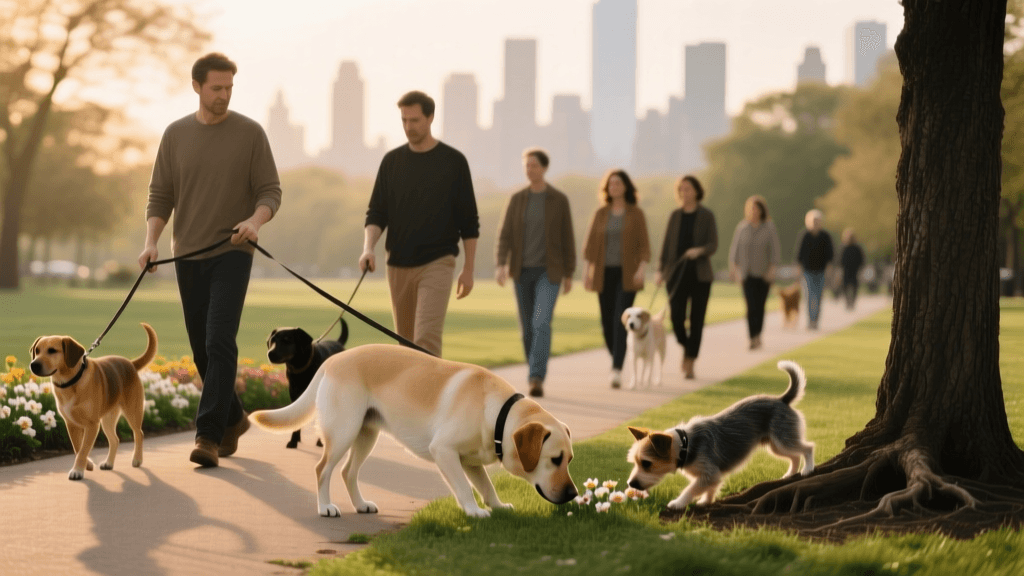
For decades, the standard dog walking routine has been defined by a singular goal: physical exercise. We measure our success in miles logged, steps counted, and the speed at which our dogs trot beside us. However, modern canine science is challenging this paradigm, revealing that a purely physical walk might be neglecting our dogs' most vital sensory organ. Enter the 'sniffari'—a science-backed, scent-focused walk that prioritizes olfactory enrichment over cardiovascular exertion. By understanding the biological and neurological mechanisms behind how dogs process the world, we can fundamentally transform our daily routines to improve their mental health, reduce anxiety, and deepen our bond.
The Biological Marvel of the Canine Olfactory System
To understand why a sniffari is so beneficial, we must first look at canine anatomy. While humans are primarily visual creatures, dogs are olfactory processors. According to research highlighted by the Horowitz Dog Cognition Lab at Barnard College, a dog's olfactory system is a biological marvel that dwarfs human capabilities. While the human nose contains roughly 6 million olfactory receptors, a dog's nose houses up to 300 million, depending on the breed. Furthermore, the area of the canine brain dedicated to analyzing odors is proportionally 40 times greater than ours.
When your dog presses their nose to a fire hydrant or a patch of grass, they are not just smelling 'urine' or 'dirt.' They are reading a complex, multi-layered chemical bulletin board. They can determine the sex, age, health status, and even the emotional state of the dogs and animals that passed by hours or even days ago. They possess a secondary olfactory system known as the vomeronasal organ (or Jacobson's organ), located in the roof of the mouth, which is specifically designed to detect pheromones. Denying a dog the time to process this information is akin to blindfolding a human on a walk through a bustling, vibrant city.
Neurological Benefits: How Sniffing Lowers Cortisol
The benefits of allowing your dog to sniff extend far beyond simple enjoyment; they are deeply rooted in endocrinology and neurology. Sniffing is an active, cognitively demanding task. When a dog engages in deep olfactory investigation, their brain is firing rapidly, processing microscopic scent particles and cross-referencing them with past memories. This intense cognitive load results in mental fatigue, which is often more tiring for a dog than physical exertion.
More importantly, sniffing has a direct, measurable impact on a dog's stress hormones. Engaging in natural foraging and scent-tracking behaviors triggers the release of dopamine and endorphins, which act as natural mood stabilizers. Conversely, rushing a dog through their environment without allowing them to sniff can lead to frustration and elevated cortisol levels. The American Kennel Club (AKC) notes that allowing dogs to dictate the pace and focus of the walk significantly reduces reactivity and anxiety, as the act of sniffing naturally lowers their heart rate and shifts their nervous system from a state of arousal to a state of calm.
Traditional Walk vs. Sniffari: A Data Comparison
How does a traditional neighborhood walk stack up against a dedicated sniffari? The following table outlines the key differences in execution and physiological outcomes.
| Metric | Traditional Heel Walk | Sniffari (Scent Walk) |
|---|---|---|
| Primary Sense Engaged | Visual / Kinesthetic | Olfactory |
| Pace | Steady, human-directed (3-4 mph) | Variable, dog-directed (0.5-2 mph) |
| Leash Tension | Often taut, corrective | Loose, exploratory |
| Mental Fatigue Factor | Low | Extremely High |
| Cortisol Impact | Neutral to Slightly Elevated | Significantly Reduced |
| Equivalence | 1 mile = 1 mile physical | 15 mins sniffing = 45 mins running |
Executing the Perfect Sniffari: An Actionable Guide
Transitioning from a traditional walk to a sniffari requires a shift in your own mindset, as well as a few specific adjustments to your gear and routine. Here is how to implement a science-backed scent walk.
1. Upgrade Your Gear
To allow your dog to move freely and investigate safely, you must abandon restrictive gear. Ditch the retractable leash, which offers poor control and can cause rope burn or tracheal damage. Instead, invest in a 15-foot to 20-foot Biothane leash. Biothane is waterproof, easy to clean, and doesn't become heavy when dragging on wet grass. Pair this with a Y-shaped harness (such as the Hurtta Weekend Warrior or Ruffwear Front Range). A Y-shaped harness sits below the scapula, allowing for full, unhindered shoulder extension, which is vital when your dog is stretching to reach a scent cone.
2. Choose the Right Environment
A busy sidewalk with heavy foot traffic and passing cars is not conducive to a sniffari. The environment should be rich in natural scents but low in immediate stressors. Opt for wooded trails, quiet grassy parks, or overgrown fields. As noted in the ASPCA's guide on canine enrichment, providing varied sensory environments is critical for preventing boredom and promoting cognitive health in domestic dogs.
3. Practice the 'Decompression Protocol'
When you arrive at your sniffari location, do not immediately demand your dog's attention. Stand still, let the leash go slack, and take three deep breaths yourself. Dogs are highly attuned to our breathing patterns and heart rates. By calming yourself, you signal to your dog that it is safe to decompress. Once they lower their head and begin to sniff, silently follow them. Let them dictate the route, the speed, and the duration of each stop.
Reading Your Dog's Scent Body Language
During a sniffari, your dog will communicate their level of engagement through subtle body language. Learning to read these cues will help you understand their mental state. Look for the 'scent cone posture': the dog's head is lowered, neck extended, and ears flicked back or forward depending on the breed. Their tail will usually be in a neutral, relaxed position, moving in slow, sweeping motions. You may also notice them 'scenting the air'—lifting their nose and slightly parting their lips to draw air over the vomeronasal organ. If your dog suddenly freezes, stiffens, or their hackles raise, they have detected a scent that triggers their prey drive or territorial instincts. In these moments, use a gentle, cheerful vocal cue to break their focus and encourage them to move to a new area.
Overcoming Common Sniffari Challenges
Many owners worry that allowing their dog to sniff and lead will encourage pulling or poor leash manners. It is crucial to separate 'training walks' from 'sniffaris.' Use a specific cue, such as 'Go sniff,' to release your dog into sniffari mode, and a different cue, like 'Let's walk,' when you need them to heel for safety near roads. If your dog pulls hard toward a scent, stop walking. Wait for the leash to slacken, even slightly, before moving forward. This teaches them that tension on the leash acts as a brake, while a loose leash acts as an accelerator. Over time, the sheer mental exhaustion of the sniffari will result in a calmer, more attentive dog when it is time to return to structured walking.
Conclusion: Quality Over Quantity
The science is unequivocal: dogs experience the world through their noses. By integrating sniffaris into your weekly routine, you are not just giving your dog a walk; you are providing vital cognitive enrichment, lowering their baseline stress levels, and honoring their biological imperatives. You may find that a 20-minute sniffari leaves your dog more relaxed and satisfied than a grueling hour-long run. Embrace the slow pace, observe the world from your dog's perspective, and let the science of scent transform your daily life together.
marcus-aldridge
All our authors care for dogs every day — read more of their work on the authors page.