Optimizing Your Dog's Daily Feeding Routine for Gut Health
Discover how to optimize your dog's daily feeding routine for better gut health, digestion, and energy. Learn timing, portions, and probiotic tips.
The Hidden Link Between Daily Routines and Canine Gut Health
When we think about 'Life with Your Dog', we often picture morning walks, playtime in the yard, or cuddling on the couch. However, one of the most critical aspects of your shared daily routine happens around the food bowl. How, when, and what you feed your dog plays a monumental role in their gastrointestinal health, immune system function, and overall vitality. The canine gut microbiome is a complex ecosystem of trillions of bacteria that influences everything from nutrient absorption to mood and behavior. Optimizing your dog's daily feeding routine is not just about preventing hunger; it is a proactive health strategy that can reduce inflammation, prevent digestive upset, and promote a thriving microbiome.
In this deep dive, we will explore the science of canine digestion, establish an ideal feeding schedule, break down the exact mathematics of portion control, and introduce actionable, cost-effective additions to your dog's daily bowl. Whether you have a highly active working breed or a sedentary senior companion, refining your daily feeding routine is one of the most impactful changes you can make for their long-term health.
Understanding the Canine Digestive Timeline
Unlike humans, dogs have a highly acidic stomach environment designed to break down raw meats, bones, and pathogens. A dog's stomach pH can drop as low as 1 to 2 during digestion, compared to the human average of 4 to 5. This intense acidity means that a dog's digestive transit time—the journey from mouth to elimination—typically ranges from 8 to 10 hours, though it can extend up to 12 hours depending on the fiber content of the diet and the dog's hydration levels.
Because of this relatively rapid transit time, the gut lining is constantly turning over cells. A consistent daily routine helps regulate the release of digestive enzymes and stomach acid. Irregular feeding times can lead to excess acid accumulation, resulting in bilious vomiting syndrome (commonly known as 'hunger pukes'), where a dog vomits yellow bile on an empty stomach. Establishing a predictable rhythm signals the dog's endocrine system to prepare for digestion, maximizing nutrient uptake and minimizing gastrointestinal distress.
Designing the Optimal Daily Feeding Schedule
The debate between free-feeding (leaving food out all day) and scheduled feeding is common among pet owners. For optimal gut health and weight management, scheduled feeding is overwhelmingly recommended by veterinary nutritionists. Scheduled feeding allows the gastrointestinal tract to rest, which is essential for the Migrating Motor Complex (MMC)—a cycle of electromechanical activity that sweeps undigested food and bacteria through the intestines between meals.
Below is a comparison of common feeding methods to help you choose the best routine for your household:
| Feeding Method | Pros | Cons | Best For |
|---|---|---|---|
| Free-Feeding | Convenient, reduces food anxiety in rescue dogs | High obesity risk, impossible to track appetite drops | Highly active working dogs, nursing mothers |
| Scheduled (2x Daily) | Establishes routine, monitors health, aids house-training | Requires strict owner adherence to timing | Most adult dogs, multi-pet households |
| Time-Restricted (12-16hr fast) | Mimics natural fasting, promotes cellular autophagy | Can cause begging if not managed properly | Overweight dogs, dogs with acid reflux |
For the average adult dog, a twice-daily scheduled feeding routine—such as 7:00 AM and 6:00 PM—provides a 13-hour overnight fasting window. This allows the gut to fully clear and repair itself overnight, leading to firmer stools and better morning energy levels.
Precision Nutrition: Ditch the Scoop, Use a Scale
One of the most common mistakes in a dog's daily routine is relying on the 'scoop' or measuring cup provided in the kibble bag. Studies show that measuring cups can result in portion inaccuracies of up to 20%, which easily leads to gradual weight gain and subsequent joint and metabolic issues. To truly optimize your dog's health, you must calculate their exact caloric needs and use a digital kitchen scale.
Calculating Resting Energy Requirement (RER)
Veterinarians use the RER formula to determine a dog's baseline caloric needs. The formula is: RER = 70 x (Body Weight in kg)^0.75.
- Step 1: Convert your dog's weight to kilograms (lbs / 2.2). For a 50 lb dog, this is 22.7 kg.
- Step 2: Calculate the exponent. 22.7^0.75 = 10.4.
- Step 3: Multiply by 70. 10.4 x 70 = 728 kcal/day (This is the resting baseline).
- Step 4: Multiply by the activity factor. For a typical neutered adult dog, the factor is 1.6. 728 x 1.6 = 1,164 kcal/day.
Once you know the daily caloric requirement, check your dog food label for the kcal/cup or kcal/kg metric, and weigh the exact grams needed on a digital scale. A reliable kitchen scale costs between $15 and $25 and is a one-time investment that can save you hundreds of dollars in future veterinary bills related to obesity and joint disease. According to AKC nutrition guidelines, precise portion control is the single most effective way to extend your dog's lifespan.
Gut-Boosting Additions to Your Daily Routine
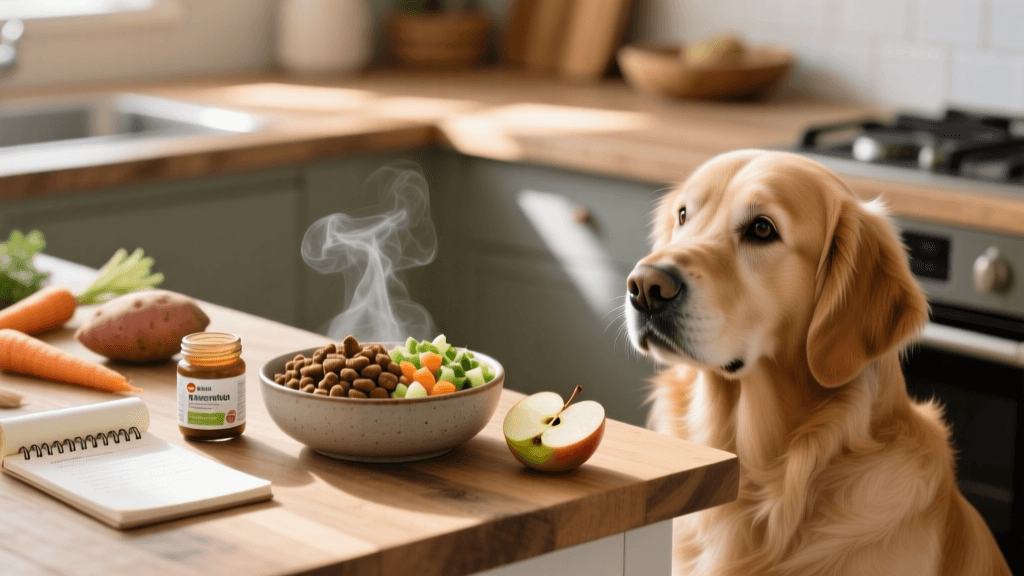
Kibble, while convenient and nutritionally complete, is heavily processed and lacks the natural enzymes and live bacteria found in raw or fresh diets. You can bridge this gap by adding cost-effective, gut-boosting toppers to your dog's daily routine.
1. Plain, Unsweetened Kefir
Kefir is a fermented milk drink packed with diverse strains of beneficial bacteria and yeast. Unlike standard yogurt, kefir contains up to 61 strains of microbes, making it a powerhouse for the canine microbiome. Dosage: 1 teaspoon per 10 lbs of body weight, added to their morning meal. Cost: Approximately $4.00 for a 32 oz tub of plain, unsweetened kefir, which will last a medium-sized dog over a month (roughly $0.12 per day).
2. Canine-Specific Probiotics
While human probiotics can sometimes help, canine-specific strains like Enterococcus faecium are more likely to survive the dog's highly acidic stomach. Products like Purina FortiFlora or Zesty Paws Probiotic Bites are formulated for canine GI tracts. Veterinary nutritionists at Tufts University Cummings Veterinary Medical Center note that while the canine microbiome is complex, targeted probiotic therapy can be highly effective for dogs experiencing stress-induced colitis or antibiotic-associated diarrhea. Cost: $0.50 to $1.00 per day.
3. Hydration via Bone Broth
Chronic mild dehydration is common in kibble-fed dogs, leading to hard, difficult-to-pass stools. Adding low-sodium, onion-and-garlic-free bone broth to the evening meal increases moisture intake and provides collagen for joint health. Dosage: 1 to 2 tablespoons per meal. Cost: $5 to $8 for a carton of pet-safe bone broth.
The Critical Post-Meal Rest Period
The routine immediately following your dog's meal is just as important as the meal itself. Vigorous exercise, jumping, or rough play right after eating drastically increases the risk of Gastric Dilatation-Volvulus (GDV), commonly known as bloat. Bloat occurs when the stomach fills with gas and twists on itself, cutting off blood supply. It is a fatal emergency if not treated surgically within hours.
'Bloat is a life-threatening emergency that can strike quickly. Deep-chested breeds like Great Danes, Standard Poodles, and Weimaraners are at the highest risk, but any dog can be affected.' - American Kennel Club (AKC)
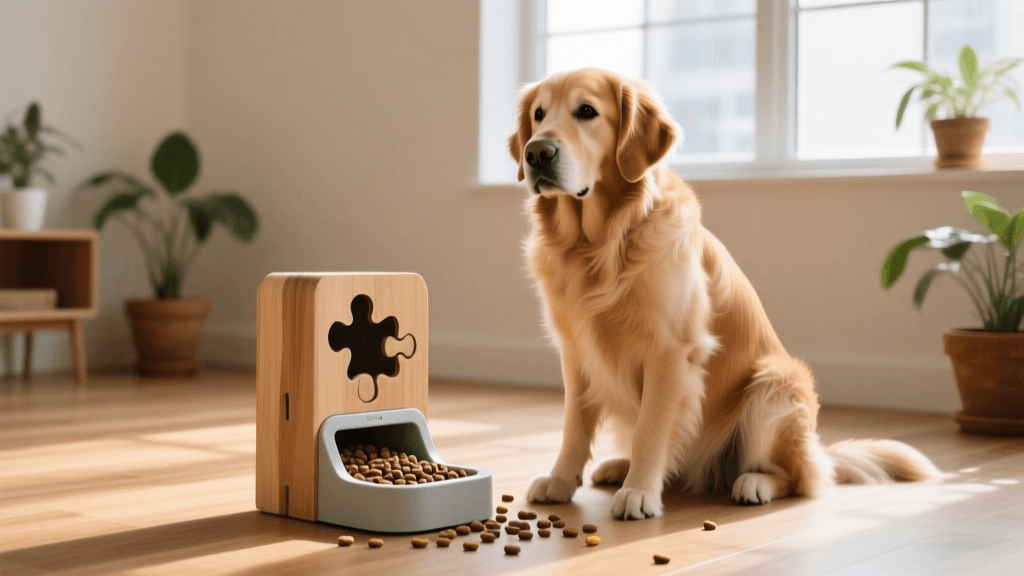
Actionable Rule: Enforce a strict 60 to 90-minute rest period after every meal. If your dog is a notoriously fast eater, which also increases bloat risk and causes aerophagia (swallowing air), invest in a slow-feeder bowl or a snuffle mat. These tools cost between $10 and $20 and force the dog to forage for their kibble, slowing down consumption and stimulating their natural hunting instincts, which provides excellent mental enrichment as part of your daily routine.
Summary: Your New Daily Feeding Checklist
Transforming your dog's gut health doesn't require a complete diet overhaul; it simply requires intentionality in your daily routine. Starting tomorrow, implement these practical steps:
- Weigh, Don't Scoop: Use a digital kitchen scale to measure meals based on exact RER calculations.
- Stick to a Schedule: Feed twice a day, 10 to 12 hours apart, to allow the Migrating Motor Complex to cleanse the gut.
- Add Fresh Toppers: Introduce a daily teaspoon of plain kefir or a pet-safe bone broth to boost moisture and microbiome diversity.
- Enforce the Rest: Mandate a 60-minute couch-cuddle or calm resting period post-meal to prevent GDV and aid digestion.
By treating your dog's feeding routine as a cornerstone of their preventative healthcare, you are investing in a happier, more comfortable, and significantly healthier life together. The food bowl is more than just a daily chore; it is the foundation of your dog's well-being.
hannah-wickes
All our authors care for dogs every day — read more of their work on the authors page.