The Science Behind Reward-Based Dog Training Methods
Discover the science behind reward-based dog training. Learn actionable, evidence-backed techniques, timing rules, and reward hierarchies for success.
The Neurological Basis of Reward-Based Learning
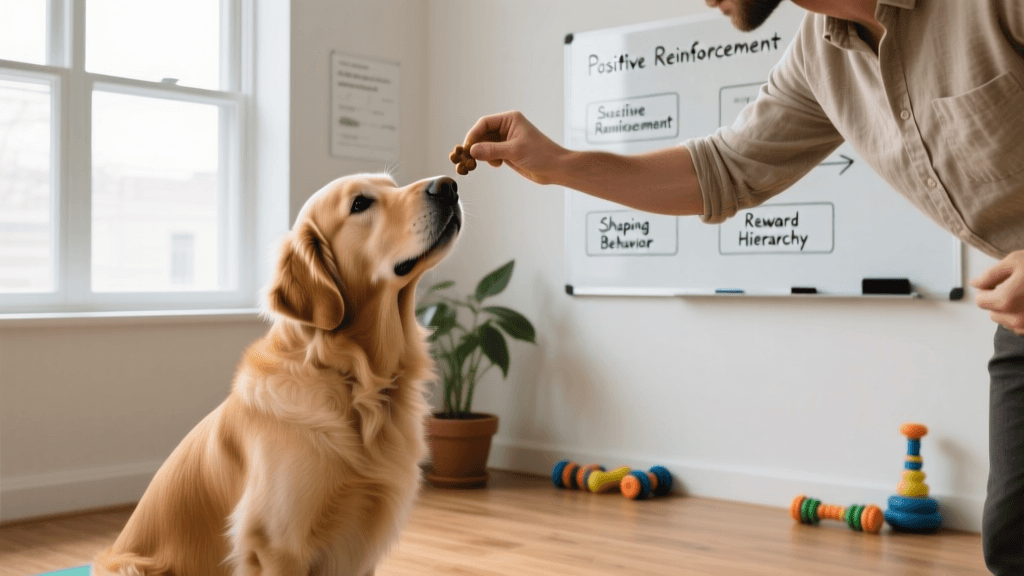
When it comes to canine behavioral conditioning, the debate between traditional dominance-based methods and modern, science-backed positive reinforcement is definitively over. The scientific and veterinary communities have reached a consensus: reward-based training is not only more humane, but it is also neurologically superior for long-term learning. To understand why, we must look at the canine brain.
Operant conditioning, the learning process where behavior is modified by its consequences, relies heavily on the brain's dopaminergic pathways. When a dog performs a behavior and receives a high-value reward, the brain releases dopamine. However, neuroscience reveals that dopamine is not just a 'pleasure chemical'; it is the primary driver of motivation and anticipation. According to the American Veterinary Society of Animal Behavior (AVSAB), reward-based methods leverage this dopamine release to build robust neural pathways, making the dog an eager, active participant in the learning process rather than a passive or fearful subject. You can read more about the veterinary consensus on the AVSAB Humane Dog Training Position Statement, which strongly advocates for positive reinforcement as the gold standard for canine behavioral modification.
Why Aversive Methods Fail: The Scientific Consensus
Aversive training methods—which include the use of prong collars, electronic shock collars, and physical corrections—operate on positive punishment and negative reinforcement. While these methods may temporarily suppress a behavior, they do not teach the dog what to do instead. More importantly, they trigger the amygdala, the brain's fear center, initiating a fight-or-flight response.
When a dog experiences fear or pain during training, the body floods with cortisol and adrenaline. This chemical cocktail actively inhibits the prefrontal cortex, the area of the brain responsible for higher-level learning and problem-solving. In a landmark 2020 study published in PLOS ONE by Vieira de Castro et al., researchers measured the cortisol levels and stress-related behaviors of dogs trained with aversive methods versus those trained with reward-based methods. The study found that dogs subjected to aversive training displayed significantly higher post-training cortisol levels and more stress-related behaviors, such as lip-licking, yawning, and lowered body postures. Furthermore, these dogs exhibited a higher cognitive bias toward pessimism, meaning they were more likely to interpret ambiguous situations as threatening. Science clearly shows that fear blocks the learning process and damages the human-animal bond.
The Mechanics of Operant Conditioning: Timing is Everything
In science-backed dog training, the timing of the reward is just as critical as the reward itself. The brain's synaptic plasticity—the ability to form new connections—requires precise temporal pairing between the behavior and the consequence. This is known as the 'Mark and Reward' protocol.
The 3-Step Mark and Reward Protocol
- The Behavior: The dog performs the desired action (e.g., their hindquarters touch the floor during a 'sit').
- The Mark (Within 300-500 milliseconds): You use a distinct, consistent sound (a clicker or a verbal marker like 'Yes!') to pinpoint the exact millisecond the behavior occurs. This bridges the gap between the action and the delivery of the food.
- The Reward (Within 1 to 2 seconds): You deliver the food reward. The dopamine release solidifies the neural connection between the specific physical action and the positive outcome.
If the reward is delayed by more than two seconds, the canine brain struggles to associate the reward with the specific behavior, leading to 'superstitious behaviors' where the dog associates the reward with whatever they happened to be doing at the exact moment the food arrived (e.g., scratching their ear or looking at a distraction).
Data Table: The Canine Reward Value Hierarchy
Not all rewards are created equal. The efficacy of positive reinforcement depends on the dog's perception of the reward's value, which fluctuates based on environmental distractions and the difficulty of the task. Below is a structured reward hierarchy to help you strategically deploy treats during training sessions.
| Reward Level | Examples | Best Use Case | Caloric Density |
|---|---|---|---|
| Low Value | Dry kibble, plain Cheerios, carrot bits | Low-distraction environments (e.g., quiet living room), repetitive drills, luring basic mechanics. | 1-3 calories per piece |
| Medium Value | Commercial soft training treats, string cheese, boiled chicken breast | Moderate distractions (e.g., backyard, quiet sidewalk), learning new cues, proofing known behaviors. | 3-5 calories per piece |
| High Value | Freeze-dried liver, boiled tripe, plain boiled beef, sardines | High-distraction environments (e.g., dog parks, busy streets), recall training, counter-conditioning fear triggers. | 5-10 calories per piece |
| Jackpot | Handful of high-value treats, a 'party' of praise and play, access to a favorite toy | Breakthrough moments, overcoming a major fear threshold, exceptional speed or precision in a known cue. | Variable (Monitor daily intake) |
Actionable Setup: Tools, Costs, and Measurements
Implementing science-backed training requires the right equipment to ensure your timing is flawless and your dog remains motivated. Here is a precise, actionable breakdown of the tools you need, including measurements and estimated costs.
- Treat Pouch ($12 - $20): Do not keep treats in your pockets; the delay in retrieval will ruin your timing. Invest in a treat pouch with a rigid, 6-to-8-inch magnetic or snap closure opening. This allows your hand to enter and exit in under 0.5 seconds without fumbling with zippers or drawstrings.
- Clicker Selection ($3 - $8): Sound sensitivity matters. For a standard environment, a traditional 'box clicker' emitting around 105 decibels is ideal. However, for sound-sensitive breeds (like herding dogs) or indoor apartment training, use a 'button clicker' or a clicker with an adjustable volume dial emitting around 75 decibels to prevent startling the dog, which can trigger an amygdala response and halt learning.
- Treat Sizing (The Pea Rule): Dogs do not care about the size of the treat; they care about the frequency and taste. Cut all training treats into exactly 1/4-inch cubes. A 1/4-inch cube of boiled chicken is approximately 1 to 2 calories. This allows you to deliver 30 to 50 rewards in a 15-minute session without causing gastrointestinal upset or obesity.
- The 10% Caloric Rule: According to veterinary nutritionists, treats should never exceed 10% of your dog's total daily caloric intake. If your dog requires 600 calories a day to maintain a healthy weight, your training treat budget is strictly 60 calories. Subtract this amount from their daily kibble allotment to maintain metabolic health.
Managing Environmental Thresholds and Stress Signals
Science-backed training also requires an understanding of 'thresholds.' A threshold is the distance or intensity at which a dog notices a trigger but remains under the cognitive threshold where learning can occur. If a dog is over-threshold (reacting, lunging, barking, or shutting down), their cortisol levels have spiked, and operant conditioning is biologically impossible.
When working on behavioral modification, such as leash reactivity or fear of strangers, you must work under threshold. This might mean starting your training 50 feet away from a trigger and using High Value rewards to build a positive conditioned emotional response (CER). As the dog remains relaxed and engaged with you, you can decrease the distance by 2 to 3 feet per successful session. For more insights on managing behavioral thresholds and understanding canine body language, the ASPCA's professional behavior guidelines offer excellent resources on recognizing subtle stress signals like whale eye, tight lips, and displaced panting.
Conclusion
Training a dog is not about establishing dominance or asserting control; it is about clear, cross-species communication rooted in neurobiology. By utilizing reward-based methods, respecting the 1-second timing rule, managing treat hierarchies, and keeping your dog under their stress threshold, you are working with your dog's brain rather than against it. The science is unequivocal: positive reinforcement builds faster, more reliable, and more joyful learners, ensuring a lifelong bond built on trust and mutual understanding.
marcus-aldridge
All our authors care for dogs every day — read more of their work on the authors page.