First-Time Owner Guide to Successful Puppy Crate Training
Master puppy crate training with our first-time owner guide. Learn crate sizing, daily schedules, cost estimates, and troubleshooting tips for success.
Welcome to Dog Ownership: The Magic of the Crate
Bringing home your first puppy is an exhilarating milestone, but it quickly becomes clear that puppies require immense structure, patience, and guidance. For first-time dog owners, the sheer volume of advice can be overwhelming. However, one foundational skill stands above the rest in importance: crate training. When introduced correctly, a crate is not a cage or a punishment zone; it is a sanctuary. Dogs are naturally den-dwelling animals, and a crate taps into this instinct, providing them with a secure, personal space where they can relax and feel safe.
According to the American Kennel Club (AKC), crate training is one of the most effective methods for housebreaking, preventing destructive behavior, and ensuring your puppy's safety when you cannot directly supervise them. This comprehensive guide is designed specifically for first-time owners, breaking down the exact products, measurements, timelines, and troubleshooting techniques you need to succeed.
Selecting the Perfect Crate: Types, Sizes, and Costs
Before you begin training, you need the right equipment. Walking into a pet store or browsing online can be daunting given the sheer variety of crates available. Here is a breakdown of the three most common types of crates, their average costs, and which puppies they suit best.
| Crate Type | Best For | Average Cost | Pros | Cons |
|---|---|---|---|---|
| Wire Crate (e.g., MidWest iCrate) | Most puppies, home use, training | $50 - $85 | Excellent ventilation, folds flat for storage, includes divider panel | Heavy, can be visually intrusive in home decor, noisy if puppy moves |
| Plastic Crate (e.g., Petmate Ultra Vari) | Travel, airline flights, den-loving dogs | $60 - $120 | Cozy and enclosed, airline-approved, easy to clean | Poor ventilation in hot weather, takes up space, not foldable |
| Soft-Sided Crate (e.g., EliteField) | Fully trained adult dogs, car trips | $40 - $70 | Lightweight, portable, comfortable | Easily destroyed by teething puppies, not suitable for housebreaking |
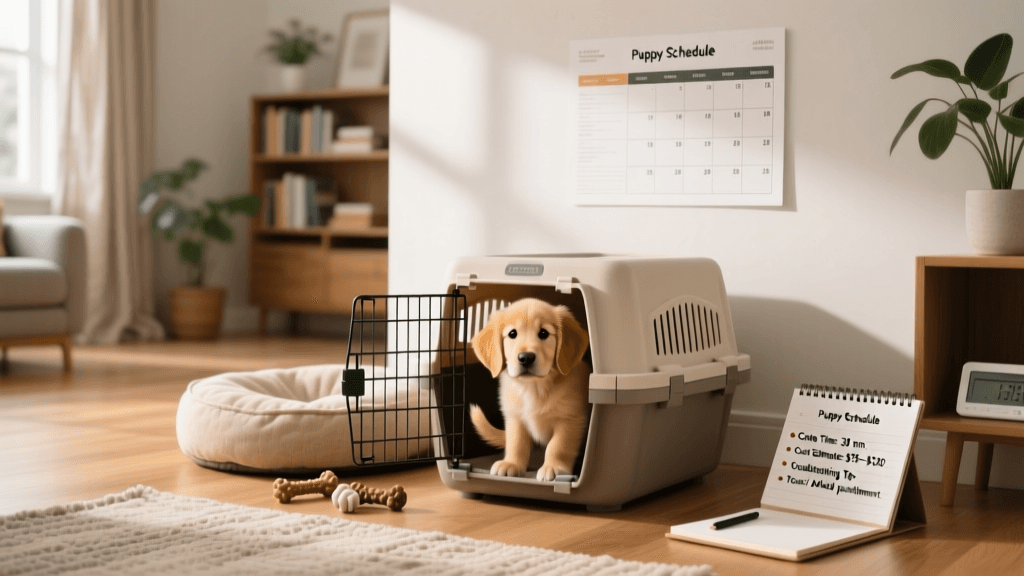
The First-Time Owner Verdict: For a new puppy, a Wire Crate with a divider panel is the undisputed champion. The divider allows you to buy a crate sized for your dog's adult dimensions while restricting the space to a puppy-appropriate size, which is critical for potty training.
Sizing Your Crate Correctly
Sizing is the most common area where first-time owners make mistakes. If a crate is too large, your puppy will designate one corner for sleeping and the opposite corner as a bathroom, completely undermining your housebreaking efforts. If it is too small, your puppy will be physically uncomfortable and develop negative associations with the crate.
To find the perfect fit, measure your puppy from the tip of their nose to the base of their tail (do not include the tail length), and add 2 to 4 inches. Measure their height from the floor to the top of their head (or ears, if they are erect) and add 2 inches. The puppy must be able to stand up without ducking, turn around in a full circle, and lie down stretched out. Use the wire divider panel to block off the excess space in an adult-sized crate, moving it back a few inches every month as your puppy grows.
Setting Up the Crate Environment
The environment inside the crate dictates how your puppy perceives it. You want to create a positive, soothing atmosphere. Avoid placing thick, plush blankets inside the crate during the first few months, as teething puppies often chew and ingest fabric, leading to costly and dangerous intestinal blockages.
- Bedding: Use a tightly woven, chew-resistant mat like the K9 Ballistics Tough Pad (approx. $120) or simply use old, tightly woven towels until the chewing phase passes.
- Enrichment: A classic KONG Red Rubber Toy (approx. $15) stuffed with dog-safe peanut butter and frozen is an invaluable tool. It keeps puppies occupied and creates a positive association with crate time.
- Comfort: For puppies experiencing separation anxiety at night, the SmartPetLove Snuggle Puppy (approx. $30) features a simulated heartbeat and heat pack that mimics the feeling of sleeping next to littermates.
- Placement: Place the crate in a high-traffic family area during the day so the puppy does not feel isolated. At night, move it to your bedroom so the puppy can hear and smell you, reducing nighttime whining.
The 4-Week Step-by-Step Crate Training Schedule
Patience is your greatest asset. Do not rush the process. Follow this 4-week timeline to build a lifelong positive association with the crate.
Week 1: Introduction and Positive Association
Leave the crate door open and secured so it does not swing shut and startle the puppy. Toss high-value treats (like boiled chicken or Zuke's Mini Naturals) inside the crate. Feed all of your puppy's daily meals inside the crate with the door open. The goal this week is simply to teach the puppy that the crate equals food, treats, and good things. Never force the puppy inside or close the door yet.
Week 2: Closing the Door and Short Durations
Once your puppy is happily walking in to eat, begin closing the door while they eat, then immediately opening it when they finish. Gradually increase the time the door stays closed after meals by 1 to 2 minutes per session. Introduce a verbal cue like "Crate" or "Kennel" right before they enter. Sit near the crate and offer calm verbal praise while the door is closed. If the puppy whines, wait for a brief moment of silence before opening the door so you do not reward the vocalization.
Week 3: Building Distance and Duration
Now, begin stepping away from the crate. Close the door, give your puppy a frozen KONG, and sit across the room. Gradually work up to leaving the room entirely for 5, 10, and eventually 30-minute intervals. Using a pet camera or baby monitor is highly recommended here so you can observe your puppy's behavior without them knowing you are watching. Most puppies will fuss for a minute, then settle down to chew their toy or sleep.
Week 4: Overnight Success and Departures
Begin using the crate for nighttime sleep and short departures from the house. Covering the top and sides of a wire crate with a breathable blanket can help reduce visual stimuli and encourage sleep. Keep your departures and arrivals incredibly low-key; do not make a big emotional fuss when leaving or returning, as this can trigger separation anxiety.
The Potty Training Connection: Timing is Everything
Crate training and potty training are inextricably linked. The ASPCA notes that dogs naturally avoid soiling their sleeping areas, which is why a properly sized crate is a housebreaking superpower. However, puppies have very small bladders and limited physical control.
The Golden Rule of Puppy Bladders: A puppy can generally hold their bladder for one hour per month of age, plus one. Therefore, a 2-month-old puppy can hold it for roughly 3 hours, while a 4-month-old can manage about 5 hours. Never exceed these limits, or you will force an accident and ruin the crate's cleanliness.
Set alarms for nighttime potty breaks. For an 8-week-old puppy, expect to wake up every 2 to 3 hours. Carry the puppy outside quietly, wait for them to eliminate, reward them with a treat, and immediately return them to the crate. Do not engage in play during midnight potty runs.
Troubleshooting Common First-Time Owner Mistakes
Even with the best intentions, first-time owners often fall into common traps. Here is how to avoid them:
- Using the Crate for Punishment: Never send your dog to the crate when you are angry. The Humane Society of the United States emphasizes that the crate must always be associated with positive experiences. If you need a time-out for bad behavior, use a small, puppy-proofed bathroom or pen instead.
- Leaving the Puppy Crated Too Long: A crate is a management tool, not a daycare solution. Puppies under 6 months should not be crated for more than 3 to 4 hours at a time during the day. If you work full-time, you must hire a dog walker or use a doggy daycare service.
- Caving to Whining: If you have ensured the puppy is fed, exercised, and has recently eliminated, they are likely whining simply because they want out to play. If you let them out while they are crying, you have just taught them that whining is the key to opening the door. Wait for 10 seconds of silence, or a distraction like a gentle tap on the top of the crate to interrupt the whining, before opening the door.
- Skipping Exercise Before Crating: A tired puppy is a quiet puppy. Always ensure your puppy has had 15 to 30 minutes of active play, training, or a sniffari walk before being asked to settle in the crate for a long nap.
Final Thoughts for the New Owner
Crate training requires a significant investment of time and emotional endurance during the first few weeks. There will be sleepless nights and moments of frustration. However, by sticking to a consistent schedule, utilizing the right tools like divider panels and frozen KONGs, and maintaining a patient, positive demeanor, you will give your puppy the gift of a safe haven. The effort you put in during these early months will pay dividends for the rest of your dog's life, resulting in a confident, well-adjusted, and securely house-trained companion.
marcus-aldridge
All our authors care for dogs every day — read more of their work on the authors page.