The Science of Dog Sleep: Optimizing Your Pet's Rest
Discover the science behind your dog's sleep cycles. Learn how to optimize their bed, room temperature, and routine for deeper, healthier rest.
The Polyphasic Nature of Canine Sleep
When you observe your dog dozing off for the third time before noon, it is easy to assume they are simply lazy. However, canine sleep architecture is fundamentally different from human sleep patterns, driven by evolutionary biology rather than boredom. Dogs are polyphasic sleepers, meaning they sleep in multiple short bouts throughout a 24-hour cycle rather than one consolidated block. According to the American Kennel Club, the average adult dog sleeps between 12 and 14 hours a day, with puppies and senior dogs requiring up to 18 hours.
Unlike humans, who take roughly 90 minutes to enter Rapid Eye Movement (REM) sleep, dogs can enter REM in as little as 20 minutes. However, their REM cycles are much shorter and they spend only about 10% of their total sleep time in this restorative phase (compared to 25% for humans). Because their sleep cycles are highly fragmented and less efficient at delivering deep REM rest per cycle, dogs require a higher total volume of sleep to achieve the same neurological and physical restoration. This biological reality means that optimizing the quality of their environment during these frequent naps is critical for their cognitive function, immune health, and emotional regulation.
Thermoregulation and the Sleep Environment
One of the most common disruptors of canine sleep is improper ambient temperature. Dogs do not possess the same eccrine sweat gland network as humans; they rely primarily on panting and vasodilation (expanding blood vessels near the skin's surface) to dissipate heat. When a dog is trying to sleep, their metabolic rate drops, and their ability to actively thermoregulate decreases.
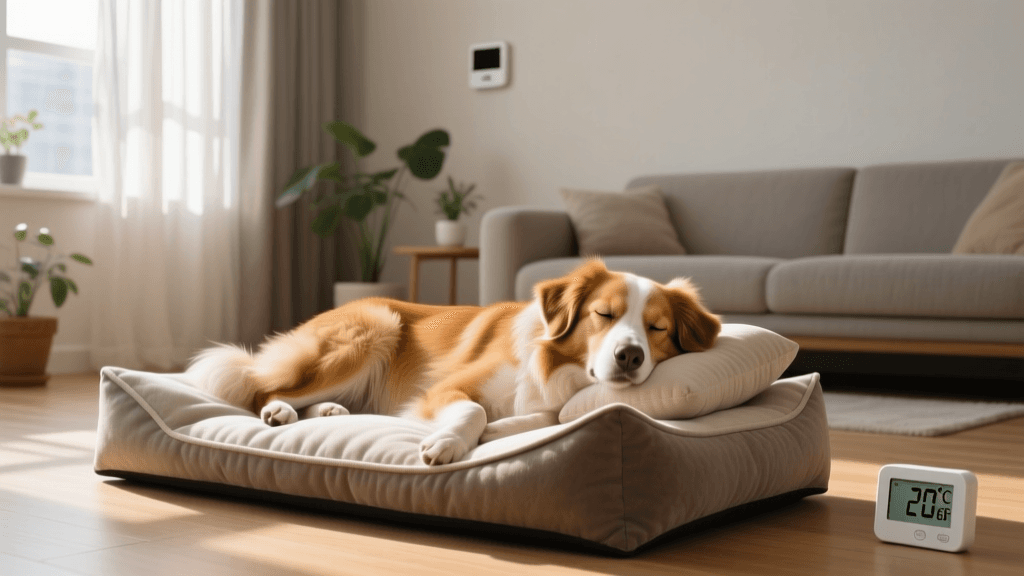
Scientific consensus suggests that the ideal ambient sleeping temperature for most indoor dogs ranges between 68°F and 72°F (20°C to 22°C). When the room exceeds 75°F, dogs with thick double coats (like Huskies or Golden Retrievers) or brachycephalic breeds (like Pugs or French Bulldogs) can experience micro-arousals—brief awakenings caused by thermal discomfort that prevent them from entering deep slow-wave sleep.
Actionable Cooling Strategies
- Gel-Infused Cooling Mats: These utilize pressure-activated endothermic gels that absorb body heat. They are highly effective for thick-coated breeds during summer months.
- Elevated Cot Beds: Raising the sleeping surface 4 to 6 inches off the floor allows for convective airflow beneath the dog, preventing heat from becoming trapped against their abdomen.
- Ceramic Tile Zones: If your dog prefers hard floors in the summer, ensure they have access to uncarpeted, naturally cool surfaces like ceramic or slate, which conduct heat away from the body.
Orthopedic Support and Joint Health
As dogs age, the cartilage cushioning their joints naturally degrades. The American Veterinary Medical Association notes that osteoarthritis affects a significant percentage of senior dogs, leading to chronic pain that severely disrupts sleep continuity. When a dog lies on a standard polyester-filled bed, their heaviest points (the hips, shoulders, and elbows) compress the filler until it bottoms out, creating localized pressure points that restrict blood flow and cause nerve discomfort.
To combat this, veterinary orthopedic specialists recommend high-density memory foam. When shopping for an orthopedic bed, look for a foam density rating of at least 4 to 5 pounds per cubic foot, and a minimum thickness of 4 inches. This density ensures the foam supports the dog's skeletal structure without collapsing under their weight, maintaining neutral spinal alignment throughout the night.
Data-Driven Bed Selection Guide
| Bed Type | Scientific Benefit | Ideal Candidate | Avg. Cost |
|---|---|---|---|
| High-Density Orthopedic Foam | Distributes weight evenly, reduces joint compression and pressure ulcers. | Senior dogs, giant breeds, post-surgery recovery. | $150 - $350 |
| Gel-Infused Cooling Mat | Absorbs and dissipates body heat, aiding passive thermoregulation. | Thick-coated breeds, brachycephalic dogs, summer months. | $40 - $90 |
| Bolster/Nesting Bed | Provides tactile security and head support, reducing cortisol in anxious dogs. | Toy breeds, rescue dogs with anxiety, cold climates. | $60 - $150 |
| Elevated Cot Bed | Maximizes convective airflow, prevents mold/mildew, reduces allergen contact. | Warm climates, dogs with severe environmental allergies. | $30 - $80 |
Circadian Rhythms and Light Exposure
Dogs possess a circadian rhythm heavily influenced by light exposure, just like humans. The pineal gland in a dog's brain produces melatonin, the hormone responsible for signaling that it is time to sleep. However, modern indoor living often disrupts this natural cycle. Artificial blue light emitted by LEDs, televisions, and smartphones suppresses melatonin production, tricking the canine brain into believing it is still daytime.
A study published in veterinary behavioral journals indicates that dogs exposed to bright artificial light late into the evening experience delayed sleep onset and increased nighttime restlessness. To optimize your dog's circadian rhythm, implement a 'digital sunset' in your home. Dim the overhead lights and switch to warm-toned, low-lumen lamps at least two hours before your dog's typical bedtime. If your dog sleeps in a room with streetlights shining through the window, invest in blackout curtains to ensure total darkness, which promotes uninterrupted melatonin synthesis.
The Psychology of the 'Safe Space'
Evolutionarily, dogs are denning animals. In the wild, canids seek out enclosed, structurally sound spaces to sleep because it protects their vulnerable flanks and conserves body heat. In a modern home, an open bed in the center of a high-traffic living room can leave a dog feeling hyper-vigilant, preventing them from achieving deep, restorative sleep.
Providing a dedicated, enclosed safe space—such as a properly sized crate—can significantly lower a dog's resting heart rate. The Humane Society of the United States emphasizes that a crate should be viewed as a sanctuary, not a punishment zone. For optimal sleep psychology, the crate should be just large enough for the dog to stand up, turn around, and lie down comfortably. A crate that is too large can make the dog feel insecure and drafty, while one that is too small will cause physical discomfort and joint stiffness.
Calculating the Perfect Crate Dimensions
To find the ideal sleeping dimensions, measure your dog from the tip of their nose to the base of their tail, and add 4 inches. Measure their height from the floor to the top of their head (or ears, if erect) and add 2 inches. This precise sizing creates a 'cocoon' effect that triggers the dog's innate denning instincts, signaling to their nervous system that they are safe to power down.
An Actionable Evening Protocol for Deeper Rest
Translating this science into a daily routine requires consistency. Here is a science-backed evening protocol designed to maximize your dog's slow-wave and REM sleep cycles:
- 7:00 PM - The Final Walk: Engage in a low-intensity, sniff-heavy walk. Sniffing lowers a dog's heart rate and provides mental enrichment that tires the brain without spiking adrenaline through high-intensity play.
- 8:00 PM - Digital Sunset: Turn off bright overhead LEDs. Switch to warm, amber-toned floor lamps. Draw the blackout curtains to eliminate external visual stimuli.
- 9:00 PM - Thermal Check: Ensure the sleeping zone is between 68°F and 72°F. If using a cooling mat or orthopedic bed, ensure it is free of debris and placed in a low-traffic, draft-free corner.
- 10:00 PM - Settling Routine: Offer a long-lasting, low-calorie chew (like a bully stick or a frozen Kong). The physical act of chewing releases endorphins and serotonin in the canine brain, acting as a natural sedative that bridges the gap between wakefulness and sleep.
By aligning your dog's environment with their biological needs—respecting their polyphasic sleep patterns, managing ambient temperature, providing orthopedic support, and honoring their circadian rhythms—you are not just giving them a place to sleep. You are actively investing in their neurological health, joint longevity, and overall quality of life.
beth-carrasco
All our authors care for dogs every day — read more of their work on the authors page.