The Science of Canine Sniffing: Brain Power and Enrichment
Discover the science behind your dog's sense of smell. Learn how sniffing boosts brain power and find actionable scent enrichment tips for daily walks.
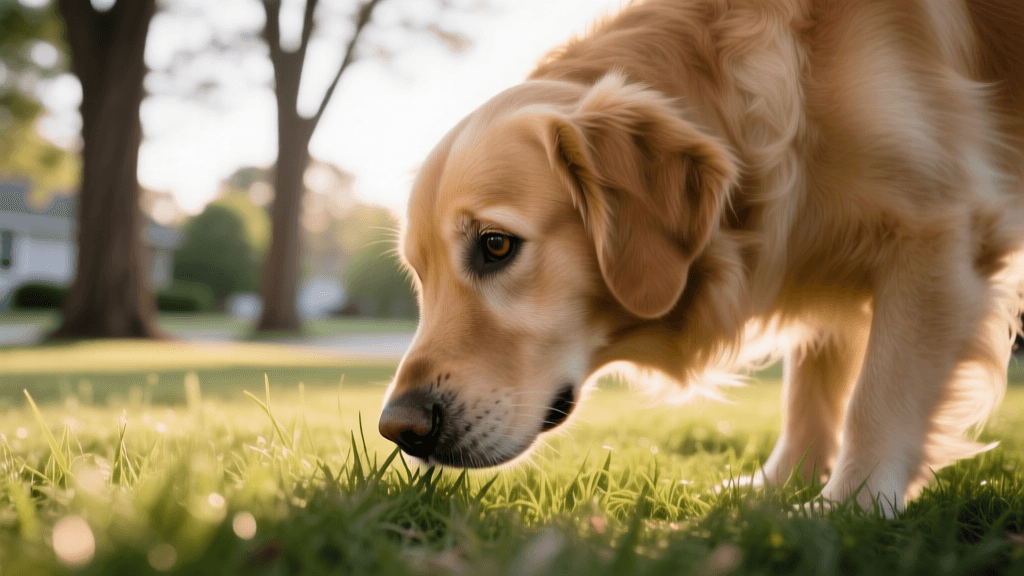
Every dog owner knows the familiar, sometimes frustrating, tug on the leash when their dog locks onto an invisible scent trail. You might be in a hurry to finish your evening walk, but your dog has just hit the brakes to investigate a seemingly uninteresting patch of grass. While it is easy to view this behavior as stubbornness or a simple distraction, science tells a vastly different story. Sniffing is not just a quirky canine habit; it is a complex, neurologically demanding process that serves as your dog's primary interface with the world.
Understanding the science behind canine olfaction can fundamentally change how you approach daily exercise, behavioral training, and mental enrichment. By shifting our perspective from 'walking the dog' to 'enriching the dog,' we can unlock profound benefits for their psychological well-being. Let us dive deep into the biology of the canine nose, explore how dogs literally smell time, and provide actionable, science-backed strategies to incorporate scent enrichment into your daily routine.
The Neurological Marvel of the Canine Nose
To understand why sniffing is so exhausting and rewarding for dogs, we must first look at their anatomy. Humans have approximately 5 million olfactory receptors in our nasal cavities. Depending on the breed, dogs possess anywhere from 100 million to 300 million receptors. A Bloodhound, for instance, has an estimated 300 million receptors, allowing them to detect odors at concentrations nearly 100 million times lower than humans can perceive.
However, the magic does not stop at the nose. The olfactory bulb—the part of the brain dedicated to analyzing smells—is proportionally about 40 times larger in dogs than in humans. When a dog inhales, a specialized tissue fold inside their snout separates the air into two distinct pathways: one for respiration and one exclusively for olfaction. This allows them to breathe and smell simultaneously without interruption.
Furthermore, dogs possess a secondary olfactory system known as the vomeronasal organ, or Jacobson's organ, located just above the roof of the mouth. This organ is specifically designed to detect heavy, moisture-borne chemical molecules, such as pheromones. According to the American Kennel Club (AKC), this is why dogs often exhibit the 'flehmen response'—that funny, open-mouthed grimace—when they encounter the urine markings of other animals. They are quite literally 'tasting' the air to gather complex social and biological data.
How Dogs 'Smell' Time and Emotion
One of the most fascinating discoveries in modern canine cognition is the concept that dogs can 'smell' time. Research conducted by the Horowitz Dog Cognition Lab at Barnard College has illuminated how dogs use the decay of scent molecules to understand the passage of time. Scent is not static; it is a dynamic physical phenomenon. When a person or another dog walks down a street, they leave behind a trail of skin rafts, bacteria, and environmental disturbances.
As time passes, these scent molecules break down, dissipate, and are carried away by wind currents. A strong, concentrated scent tells a dog that the subject was here very recently. A faint, degraded scent indicates the subject passed by hours or even days ago. Furthermore, because hot air rises and cold air falls, dogs can map the vertical movement of a scent plume to determine the direction of travel. In essence, your dog is reading a multi-dimensional, time-stamped chemical map of the neighborhood every time they lower their snout to the pavement.
Beyond time and physical movement, dogs can also smell human emotions. When humans experience stress, fear, or excitement, our bodies release specific chemosignals through sweat and breath, including spikes in cortisol and adrenaline. Studies have shown that dogs can accurately identify these chemical shifts, allowing them to 'smell' our anxiety or joy before we even exhibit physical body language cues. This profound sensory input is why a chaotic, scent-heavy environment can easily overstimulate a dog, while a controlled sniffing session can provide deep psychological grounding.
The Cognitive Toll: Physical Exercise vs. Mental Enrichment
A common misconception among dog owners is that physical exhaustion is the key to a well-behaved, calm dog. While physical exercise is vital for cardiovascular health and joint mobility, it does not fulfill a dog's neurological need for mental stimulation. In fact, forcing a dog to power-walk past interesting scent markers can lead to frustration, leash reactivity, and elevated stress hormones.
Studies published in journals such as Applied Animal Behaviour Science have demonstrated that sniffing actually lowers a dog's heart rate and activates the parasympathetic nervous system, which is responsible for 'rest and digest' functions. The intense cognitive processing required to decode complex scent environments tires a dog's brain in a way that physical running cannot. Many canine behaviorists agree that 20 minutes of uninterrupted, focused sniffing can provide the same level of mental fatigue and satisfaction as an hour of vigorous running.
Actionable Scent Enrichment: Tools, Timing, and Costs
If you want to harness the power of your dog's olfactory system, you need to provide structured scent enrichment. Below is a comparison chart of highly effective, science-backed enrichment tools, including estimated costs and setup times, to help you build a comprehensive mental stimulation routine.
| Enrichment Tool | Estimated Cost | Setup Time | Cognitive Load | Best Use Case |
|---|---|---|---|---|
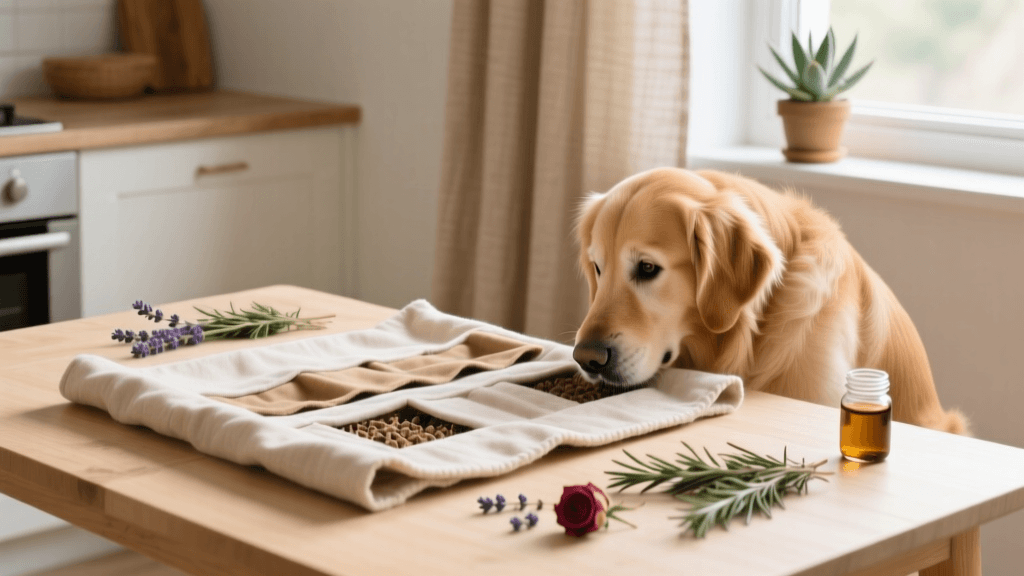
| Outward Hound Snuffle Mat | $25 - $35 | 3 - 5 minutes | Medium | Daily meal replacement; slowing down fast eaters. |
| Kong Classic (Frozen) | $15 - $25 | 10 minutes (plus freezing) | High | Crate training; separation anxiety management. |
| Dog Gone Smart Repelz-It Mat | $30 - $45 | 5 minutes | Medium-High | Outdoor or messy indoor foraging; easy to wash. |
| DIY Scent Trail (Kibble) | $0 (uses daily food) | 5 - 10 minutes | Very High | Weekend enrichment; building tracking confidence. |
| Lickimat Soother | $10 - $15 | 5 minutes | Low-Medium | Calming anxiety during grooming or thunderstorms. |
When utilizing these tools, it is crucial to measure your dog's daily caloric intake. If you use a Snuffle Mat or a DIY Scent Trail, subtract the exact weight of the kibble used from their daily meal allowance to prevent obesity. For high-value treats like freeze-dried liver or boiled chicken, use them sparingly—no more than 10% of their total daily caloric intake.
Implementing a 'Sniffari' Routine
Outside of the home, the most effective way to provide olfactory enrichment is by taking your dog on a 'Sniffari.' A Sniffari is a decompression walk where the primary goal is scent exploration rather than physical distance or obedience. Here is a step-by-step guide to executing a perfect Sniffari:
- Invest in the Right Gear: Ditch the standard 6-foot nylon leash and flat collar. Collars put dangerous pressure on the trachea when a dog pulls toward a scent. Instead, use a well-fitted Y-front harness, such as the Perfect Fit Harness or the Rabbit-Go Harness ($40-$60), which distributes pressure across the chest.
- Use a Long Line: Purchase a 15-foot to 30-foot Biothane long lead (e.g., from Mendota Pets or Chewy, typically $25-$40). Biothane is waterproof, easy to clean, and will not burn your hands if the dog suddenly lunges toward an interesting bush.
- Choose the Right Environment: Avoid high-traffic urban sidewalks. Opt for quiet parks, nature trails, or large grassy fields where the wind can carry diverse scent profiles from wildlife, other dogs, and changing flora.
- Let the Dog Lead: The golden rule of a Sniffari is that the dog chooses the route and the pace. If they want to spend four minutes sniffing a single oak tree, let them. Stand quietly, keep the long line slack, and observe their body language.
- Timing and Frequency: Aim for at least two 20-minute Sniffaris per week. The best time for a Sniffari is during the cooler parts of the day (early morning or late evening) when scent molecules are closer to the ground and less likely to evaporate rapidly in the heat.
Conclusion: Respecting the Canine Senses
As humans, we are highly visual creatures, and we often project our sensory preferences onto our pets. We want to see them running fast and covering miles. But for dogs, the world is primarily experienced through their noses. By denying them the opportunity to sniff, we are essentially blindfolding them during their daily exercise.
Embracing the science of canine olfaction allows us to meet our dogs' biological and psychological needs more effectively. Whether you are scattering kibble in the backyard, freezing a Kong for a rainy afternoon, or simply standing still while your dog decodes the chemical history of a fire hydrant, you are providing vital mental enrichment. The result is a calmer, more fulfilled, and cognitively engaged companion who is better equipped to navigate the human world.
priya-sutaria
All our authors care for dogs every day — read more of their work on the authors page.