Decoding the Border Collie Herding Instinct and Behavior
Discover the psychology behind the Border Collie's herding instinct. Learn actionable training tips, enrichment ideas, and how to manage nipping behaviors.
The Origins of the Herding Drive
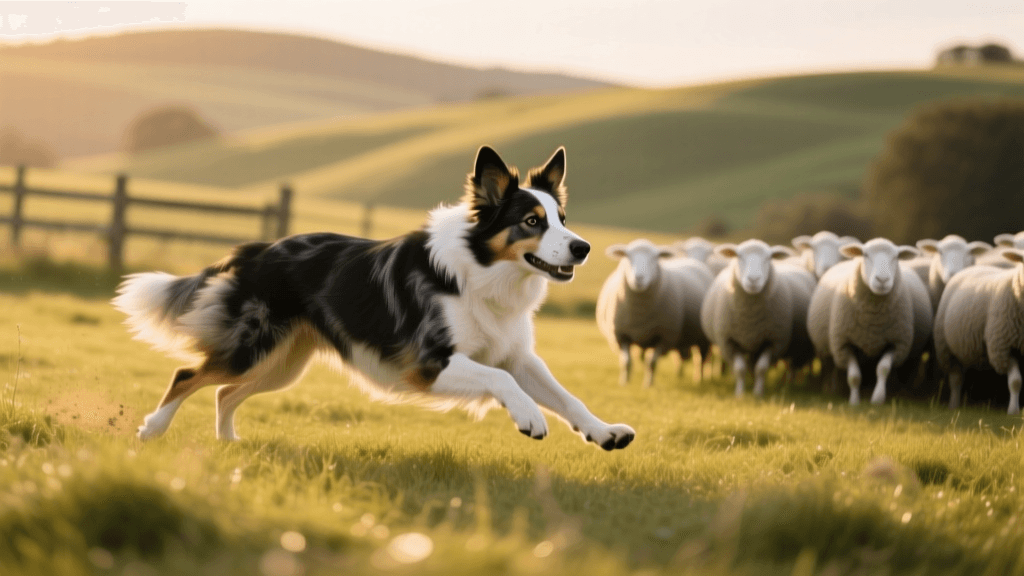
The Border Collie is widely celebrated as one of the most intelligent and energetic dog breeds in the world. Originating in the rugged, hilly border country between Scotland and England, these dogs were selectively bred for one primary purpose: to herd sheep over vast, unforgiving terrains. Unlike other herding breeds that rely on physical force or barking to move livestock, the Border Collie was bred to use psychological pressure. According to the American Kennel Club (AKC), this unique working style requires an intense level of focus, stamina, and an innate ability to read the subtle movements of prey animals. Understanding this breed-specific deep dive is crucial for any owner, as the instincts that make them unparalleled working dogs can manifest as challenging behavioral issues in a typical suburban household.
The Predatory Motor Sequence: A Modified Hunt
To truly understand why your Border Collie stares at the cat, chases bicycles, or nips at the heels of running children, you must look at canine behavior through the lens of the predatory motor sequence. In wild canids like wolves, hunting is a multi-step process that ends in consumption. However, as noted by animal behaviorists and documented by resources like Penn State Extension, selective breeding has artificially truncated this sequence in herding dogs. Border Collies have been bred to hyper-exaggerate the early stages of the hunt while completely suppressing the final, lethal stages.
| Behavior Stage | Wolf (Predatory) | Border Collie (Herding Modified) |
|---|---|---|
| 1. Search | Scenting and tracking prey over miles. | Visually scanning the environment for movement. |
| 2. Stalk | Crouching and sneaking to get close. | 'The Eye': Intense, hypnotic staring to apply psychological pressure. |
| 3. Chase | Sprinting to catch fleeing prey. | Running to cut off and direct the movement of the flock. |
| 4. Grab-Bite | Biting to hold and bring down prey. | 'Heeling': Nipping at the hocks of livestock to force movement. |
| 5. Kill-Bite | Lethal bite to the neck or throat. | Suppressed (Bred out to prevent livestock injury). |
| 6. Dissect/Consume | Tearing apart and eating the prey. | Suppressed (Bred out entirely). |
Because the 'Kill-Bite' and 'Consume' stages are genetically suppressed, the Border Collie is left in a state of perpetual, unfulfilled arousal when they engage in the first four stages. This is why a Border Collie will chase a tennis ball for hours but never actually 'finish' the job by destroying it; the drive is in the chase and the control, not the destruction.
Decoding 'The Eye' and Staring Behavior
One of the most defining characteristics of the breed is 'The Eye.' As outlined in the official Fédération Cynologique Internationale (FCI) breed standard, the Border Collie's expression should be keen, alert, and intense. When a Border Collie locks eyes with a target—whether that is a sheep, a squirrel, or a toddler running across the lawn—they are initiating the 'Stalk' phase of the predatory sequence. This staring is not a sign of aggression; it is a tool of control. However, in a home environment, this intense fixation can lead to severe frustration, reactivity, and obsessive-compulsive behaviors if the dog is not taught how to disengage and settle.
Managing Nipping, Heeling, and Children
The 'Grab-Bite' stage manifests as heeling or nipping. In the pasture, a quick nip at a sheep's heel convinces the stubborn animal to move forward. In the living room, a nip at a child's heel is a highly undesirable and potentially dangerous behavior. It is vital to understand that the dog is not being malicious; they are simply responding to the rapid, erratic movement of the child, which triggers their instinct to 'gather' and control the flock.
Actionable Redirection Techniques
- Interrupt and Redirect: The moment your dog drops into a crouch or fixes their gaze on a running child, use a neutral interrupter word like 'Oops' or 'Look.' Immediately redirect them to an incompatible behavior, such as fetching a specific toy.
- Flirt Pole Training: To satisfy the chase and grab-bite instinct safely, invest in a flirt pole. The Squishy Face Studio Flirt Pole V2 (approx. $35) is an excellent, durable option. Use it in 10-to-15-minute intervals in a fenced yard, teaching the dog to 'drop' the lure on command to build impulse control.
- Bite Inhibition and Mat Work: Teach your dog that settling on a mat yields high-value rewards. Use a raised cot like the Coolaroo Elevated Pet Bed (approx. $40) and reward calm behavior with low-calorie treats like Zuke's Mini Naturals (under 3 calories each, approx. $12/bag). This teaches the dog that observing chaos from a distance is more rewarding than participating in it.
Actionable Enrichment: Beyond the Physical Walk
A common mistake owners make is trying to physically exhaust a Border Collie. You cannot out-run a breed that was designed to cover 50 miles a day over rocky terrain. Instead, you must exhaust their brain. Mental enrichment burns energy far more efficiently than physical exercise alone.
Treibball and Herding Balls
Treibball is a competitive sport originally designed for herding dogs that do not have access to livestock. It involves the dog using their nose and shoulders to push large exercise balls into a designated goal area. For backyard practice, purchase a Jolly Megaball (40-inch diameter, approx. $75). Set up a 20x40 foot area in your yard using inexpensive PVC pipes or garden stakes as a 'pen.' Spend 20 minutes teaching your dog to push the ball toward you using targeting commands. This satisfies the spatial pressure and gathering instincts inherent to the breed.
Scent Work and Foraging
While Border Collies are primarily visual hunters, engaging their olfactory senses forces them to slow down and process information differently, which has a profound calming effect on the canine nervous system. Utilize a snuffle mat, such as the AWOOF Snuffle Mat Pet Dog Feeding Mat (approx. $25), to hide their daily kibble. Alternatively, use a Hyper Pet IQ Treat Mat (approx. $12) smeared with plain pumpkin puree or xylitol-free peanut butter, and freeze it for two hours. Licking and chewing release endorphins in the dog's brain, actively lowering their heart rate and reducing herding-related anxiety.
Recognizing Canine Compulsive Disorders
Because Border Collies are hyper-aware of their environment and possess intense focus, they are highly susceptible to Canine Compulsive Disorder (CCD). Behaviors such as shadow-chasing, light-reflection fixation, and repetitive fly-snapping are not quirky habits; they are neurological misfires often triggered by stress, under-stimulation, or conflicting training methods. If your dog spends hours staring at walls, snapping at invisible flies, or chasing shadows to the point of ignoring food and water, this is a veterinary emergency. Punishment or physical correction will only exacerbate the anxiety driving the compulsion. In these cases, consult a board-certified veterinary behaviorist. Expect to pay between $150 and $300 for an initial consultation, which may include a combination of behavioral modification protocols and SSRIs (Selective Serotonin Reuptake Inhibitors) to help balance your dog's brain chemistry.
Conclusion
Living with a Border Collie is a profound commitment to understanding the deep-seated genetic wiring of a working animal. Their herding instinct is not a behavior that can be 'trained out' of them; it is the very essence of who they are. By shifting your perspective from frustration to appreciation, and by providing structured, breed-specific outlets like Treibball, flirt pole sessions, and intensive mental enrichment, you can help your Border Collie navigate the modern world. When you honor their need for a 'job' and teach them the vital skill of settling, you unlock the true potential of the world's most brilliant canine companion.
marcus-aldridge
All our authors care for dogs every day — read more of their work on the authors page.