The Science of Canine Sleep: Optimizing Daily Rest
Discover the science behind canine sleep cycles. Learn actionable tips on temperatures, bed types, and routines to optimize your dog's daily rest.
The Hidden Architecture of Canine Sleep
As dog owners, we often marvel at our pets' ability to sleep through the day, only to wonder if they are getting the right kind of rest. According to the American Kennel Club, dogs spend about 50% of their day asleep, 30% resting awake, and only 20% being active. However, the architecture of canine sleep is vastly different from human sleep. Understanding the science behind your dog's circadian rhythms, sleep cycles, and environmental needs is crucial for optimizing their physical health, immune function, and cognitive processing.
Unlike humans, who are typically monophasic sleepers (consolidating sleep into one long nightly bout), dogs are polyphasic sleepers. This means they distribute their sleep across multiple shorter bouts throughout a 24-hour cycle. While this evolutionary trait allowed their wild ancestors to remain somewhat alert to predators and conserve energy between hunts, it means that the quality of each individual sleep session is paramount for your domestic dog's overall well-being.
The Biology of REM and Slow-Wave Sleep in Dogs
Canine sleep is divided into two primary stages: Slow-Wave Sleep (SWS) and Rapid Eye Movement (REM) sleep. SWS is the lighter stage of sleep where the body begins to repair tissues and consolidate basic memories. REM sleep, on the other hand, is the deep, restorative phase where brain activity spikes, dreams occur, and complex neural pathways are forged.
Fascinatingly, dogs enter REM sleep much faster than humans. While it takes a human roughly 90 minutes to enter the first REM cycle, a dog can transition into REM within 10 to 20 minutes of closing their eyes. However, because their sleep bouts are shorter, they must sleep more frequently to accumulate the necessary total hours of REM sleep required for optimal brain health. Deprivation of REM sleep in dogs has been linked to increased irritability, reduced trainability, and a weakened immune response.
Quantifying Rest: How Much Sleep Does Your Dog Need?
Sleep requirements are not one-size-fits-all. They fluctuate dramatically based on age, breed size, and daily energy expenditure. Large and giant breeds expend more energy simply maintaining their body mass and regulating their core temperature, necessitating longer recovery periods. Below is a science-backed breakdown of daily sleep requirements.
| Life Stage | Size Category | Daily Sleep Requirement | REM Sleep Characteristics |
|---|---|---|---|
| Puppy (0-6 months) | All Sizes | 18 - 20 Hours | High frequency; critical for CNS development |
| Adult (1-7 years) | Small & Medium | 12 - 14 Hours | Stable cycles; ~12% of total sleep time |
| Adult (1-7 years) | Large & Giant | 14 - 16 Hours | Longer SWS phases for joint/muscle repair |
| Senior (8+ years) | All Sizes | 16 - 18 Hours | Fragmented; decreased REM efficiency |
Monitoring your dog against these baselines is essential. If your adult medium-sized dog is consistently sleeping 18 hours a day, it may indicate underlying metabolic issues, hypothyroidism, or depression, warranting a veterinary visit.
Environmental Optimization: Thermoregulation and Light
The environment in which your dog sleeps directly dictates the depth of their rest. The Sleep Foundation highlights that ambient room temperature and light exposure are the two most critical external factors influencing canine circadian rhythms.
Temperature Control
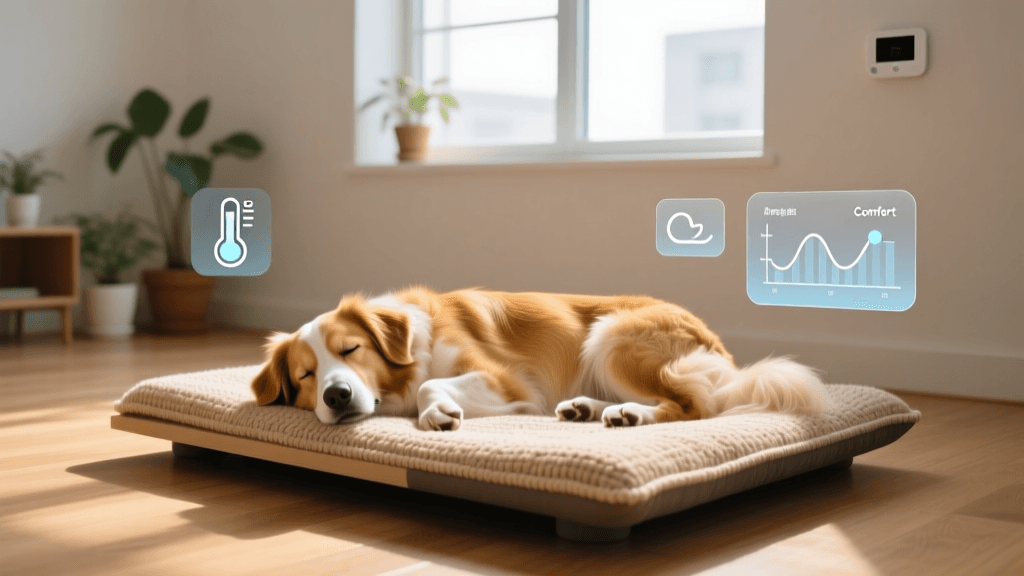
During the onset of sleep, a dog's core body temperature naturally drops. To facilitate this thermoregulation, the ambient room temperature should be maintained between 68°F and 72°F (20°C - 22°C). For double-coated breeds like Huskies or Malamutes, temperatures at the lower end of this spectrum (or even slightly cooler) are ideal. Conversely, short-coated breeds like Greyhounds may require a fleece blanket to prevent their core temperature from dropping too low, which triggers micro-arousals that fracture their REM cycles.
Light and Melatonin Production
Melatonin, the hormone responsible for signaling sleep onset, is suppressed by blue light. Leaving LED televisions or bright overhead lights on in the evening can delay your dog's melatonin production. Dimming household lights to warm, amber tones (under 3000 Kelvin) two hours before bedtime mimics the natural sunset, signaling to your dog's suprachiasmatic nucleus (the brain's biological clock) that it is time to wind down.
Selecting the Right Sleep Surface: Biomechanics and Comfort
The ASPCA emphasizes the importance of providing a dedicated, supportive resting space to prevent orthopedic degradation. The surface your dog sleeps on must distribute their weight evenly to prevent pressure points on the elbows, hocks, and hips.
- Orthopedic Memory Foam Beds: For large breeds and seniors, high-density orthopedic foam is non-negotiable. Products like the Big Barker Orthopedic Dog Bed ($250-$350) utilize a 7-inch triple-layer foam system that has been clinically shown by the University of Pennsylvania to reduce joint pain and improve mobility in large dogs.
- Elevated Cot Beds: For dogs that run hot or suffer from severe allergies, elevated beds like the Kuranda Chewproof Cot ($150-$180) allow for maximum airflow underneath the dog, aiding in heat dissipation while providing firm, hammock-like joint support.
- Cooling Mats: For summer months or heat-prone breeds, pressure-activated cooling gel mats, such as the K&H Pet Products Cool Bed III ($40-$60), can absorb and dissipate body heat, preventing thermal disruptions during deep sleep.
Acoustic Environment: Managing High-Frequency Noise
Dogs possess a hearing range that extends up to 45,000 Hz, more than double the human limit of 20,000 Hz. This means that high-frequency sounds—such as distant sirens, electronic hums, or neighborhood wildlife—can easily penetrate their sleep environment, causing spikes in cortisol and adrenaline even if the dog does not fully wake up.
To combat this, utilize a white noise machine to create an acoustic blanket. The LectroFan Classic ($40) generates non-repeating digital white noise that effectively masks high-frequency environmental sounds. Place the machine about five feet from your dog's bed and set it to a volume of roughly 50 decibels (equivalent to a quiet conversation) to mask disruptive frequencies without causing acoustic stress.
Designing a Science-Backed Evening Routine
Just as humans benefit from a wind-down routine, dogs require a structured transition from the high-arousal state of the day to the low-arousal state of sleep. Implementing a 45-minute pre-sleep routine can significantly improve sleep latency (the time it takes to fall asleep).
- T-Minus 45 Minutes (Physical Decompression): Engage in a slow, structured "sniffari" walk. Allowing your dog to sniff at their own pace lowers their heart rate and engages the parasympathetic nervous system, unlike high-intensity fetch which spikes adrenaline.
- T-Minus 30 Minutes (Nutritional Support): Offer a science-backed calming supplement containing L-theanine and colostrum calming complex. Products like Virbac Anxitane or Solliquin ($25-$35 for a 30-day supply) have been clinically proven to increase alpha brain waves, promoting a state of relaxed alertness that transitions smoothly into sleep.
- T-Minus 15 Minutes (Environmental Shift): Dim the lights, turn on the white noise machine, and guide your dog to their designated sleep surface. Avoid high-energy play or emotionally charged interactions during this window.
Conclusion: Sleep as Preventative Medicine
Viewing your dog's sleep through a scientific lens transforms it from a passive daily occurrence into an active pillar of preventative healthcare. By optimizing their ambient temperature, investing in biomechanically sound sleep surfaces, managing acoustic and light pollution, and enforcing a biologically aligned evening routine, you are directly contributing to your dog's longevity, emotional stability, and cognitive sharpness. Remember, a well-rested dog is not just a quiet dog; they are a healthier, happier, and more resilient companion.
beth-carrasco
All our authors care for dogs every day — read more of their work on the authors page.