First-Time Puppy Owner Guide: Week One Daily Routine
Master your puppy's first week home with our expert daily routine guide. Discover potty training schedules, essential gear, and sleep tips for new owners.
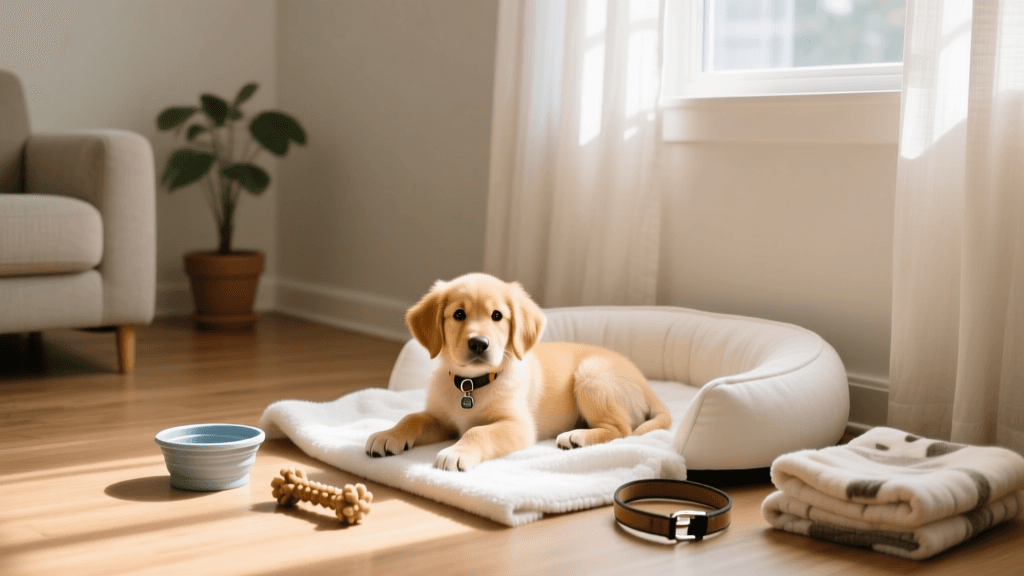
Welcome to the Pack: Navigating the First Week Home
Bringing a new puppy home is one of the most exciting milestones in life, but it can also be overwhelmingly chaotic. As a first-time dog owner, the transition from the breeder or shelter to your living room is a critical period that sets the foundation for your dog's entire life. The first seven days are not about teaching complex tricks; they are about establishing trust, creating a predictable daily routine, and setting up a safe environment. Puppies thrive on predictability. When they know what to expect, their anxiety decreases, making them more receptive to house training and basic obedience.
This comprehensive guide will walk you through the exact daily schedule, essential gear, and practical protocols you need to survive and thrive during your puppy's first week home.
Setting Up the Ultimate Safe Space
Before your puppy's paws ever touch your floor, you must establish a "safe zone." This is typically a crate or an exercise pen (x-pen) where your puppy will sleep, eat, and decompress. According to canine behaviorists, a dog's den should be a sanctuary, never a place of punishment.
When selecting a crate, sizing is crucial. A crate that is too large will allow your puppy to eliminate in one corner and sleep in the other, which ruins potty training. For a growing puppy, purchase a wire crate with an adjustable divider panel. For example, if you have a Golden Retriever, buy a 42x28x30-inch crate (like the MidWest Homes for Pets iCrate) but use the divider to restrict the space to just enough room for the puppy to stand up, turn around, and lie down comfortably. As your dog grows, you move the divider back.
Line the crate with a washable, chew-resistant bed. Avoid plush, stuffing-filled beds for the first few months, as ingested stuffing can cause life-threatening intestinal blockages. Opt for a tightly woven canvas bed or a self-warming pad like the K&H Pet Products Self-Warming Crate Pad.
First-Time Owner Essential Gear Checklist
Walking into a pet store can result in hundreds of dollars spent on unnecessary gadgets. Below is a curated, practical table of the exact gear you need for week one, complete with specifications and estimated costs to help you budget effectively.
| Item | Recommended Specs & Brands | Estimated Cost |
|---|---|---|
| Enzymatic Cleaner | Nature's Miracle or Rocco & Roxie. Must break down uric acid crystals. | $15 - $20 |
| Front-Clip Harness | Ruffwear Front Range or PetSafe Easy Walk. Prevents tracheal damage from pulling. | $25 - $40 |
| Long-Line Leash | 15 to 30-foot biothane or cotton leash for safe outdoor exploration and recall training. | $15 - $25 |
| Interactive Chew Toys | Kong Classic (Red or Black) and Nylabone Puppy Chew. Freezable for teething relief. | $12 - $18 |
| Treat Pouch | Outward Hound Treat Tote or similar silicone-lined pouch for easy cleaning. | $10 - $15 |
Pro-Tip on Harness Fitting: When fitting your puppy's harness, you should be able to slide exactly two fingers flat between the harness straps and your dog's body at the neck and the girth. Any looser, and they can slip out; any tighter, and you risk chafing.
The 24-Hour Puppy Schedule: Timing is Everything
Puppies between 8 and 12 weeks old require 18 to 20 hours of sleep per day. A common mistake first-time owners make is keeping the puppy awake to "tire them out." This actually leads to an overtired, biting, hyperactive puppy. You must enforce nap times. Here is a highly effective, actionable daily schedule for a 10-week-old puppy:
- 6:30 AM - Wake Up & Potty: Carry the puppy outside immediately. Do not let them walk, as they may get distracted and forget to eliminate. Use a cue word like "Go potty."
- 7:00 AM - Breakfast: Serve measured kibble. Remove the bowl after 15 minutes to establish a strict feeding schedule, which regulates their digestive tract.
- 7:30 AM - Play & Train: 10 minutes of gentle play and basic name-recognition training.
- 8:00 AM - Potty & Morning Nap: Back outside, then straight into the crate for a 2-hour nap.
- 10:00 AM - Potty, Play, Socialization: Outdoor potty, followed by gentle exposure to household sounds (vacuum in another room, TV on).
- 11:00 AM - Midday Nap: Crate time while you work or do chores.
- 1:00 PM - Potty & Lunch: Follow the same 15-minute feeding rule.
- 1:30 PM - Potty & Afternoon Nap: Enforced crate rest.
- 4:00 PM - Potty & Evening Activity: A short, structured walk or a sniffing session in the yard.
- 5:30 PM - Dinner: Final meal of the day. (Feeding too late leads to midnight potty breaks).
- 6:30 PM - Potty & Wind Down: Quiet chew time on a frozen Kong. No high-energy wrestling.
- 8:00 PM - Water Removed: Pick up the water bowl 2 hours before bed to help them sleep through the night.
- 9:30 PM - Final Potty & Bedtime: Into the crate, cover it with a breathable blanket to simulate a den.
- 2:00 AM - Midnight Potty (Optional): Set an alarm to take an 8-to-10-week-old puppy out once in the middle of the night until their bladder matures.
Potty Training Fundamentals
Accidents will happen, but how you handle them dictates your success. According to the ASPCA, the most effective method for house training is consistent supervision and positive reinforcement. Never punish a puppy for an accident you find after the fact; they cannot connect the punishment with the action they took 20 minutes ago.
When an accident occurs, interrupt them with a neutral "Oops!" if you catch them in the act, scoop them up, and carry them outside to finish. Praise heavily and offer a high-value treat (like boiled chicken or Zuke's Mini Naturals) when they finish outdoors. To clean indoor accidents, use an enzymatic cleaner. Standard household cleaners do not break down uric acid, meaning your dog can still smell the marker and will return to the same spot. Spray the enzyme cleaner generously, let it sit for 10 to 15 minutes, and blot it dry with paper towels.
Crate Training and Nighttime Survival
Crate training is essential for your dog's safety and your sanity. The Humane Society of the United States recommends making the crate a positive space associated with meals and high-value chews. During the day, feed your puppy their meals inside the crate with the door open so they build a positive association.
The first few nights will likely involve whining. How do you tell the difference between "I'm lonely" whining and "I need to potty" whining? Take the puppy out on a leash in the middle of the night. Keep the lights off and do not speak to them. If they potty, praise quietly and return them to the crate. If they do not potty after 5 minutes, return them to the crate. This teaches them that nighttime wake-ups are strictly for business, not play.
The 7-Day Food Transition Protocol
Sudden changes in diet will cause severe gastrointestinal upset, leading to diarrhea, which complicates potty training and risks dehydration. When switching from the breeder's food to your preferred brand, follow this strict 7-day transition schedule:
- Days 1 & 2: 75% old food, 25% new food.
- Days 3 & 4: 50% old food, 50% new food.
- Days 5 & 6: 25% old food, 75% new food.
- Day 7: 100% new food.
Monitor your puppy's stool daily. If it becomes loose, pause the transition at the current ratio for an extra day and consider adding a spoonful of plain, canned pumpkin (not pie filling) to firm things up.
Safe Socialization Before Vaccinations
The critical socialization window closes around 14 to 16 weeks of age. However, your puppy is not fully vaccinated against Parvovirus or Distemper until roughly 16 weeks. This creates a dilemma for first-time owners. The solution is safe socialization. Carry your puppy in a sling or backpack to hardware stores, outdoor cafes, and parks. Let them observe people, hear traffic, and see other dogs from a safe distance without their paws touching public soil. Invite friends who have fully vaccinated, healthy dogs to your private, fenced backyard for supervised playdates.
Coping with the "Puppy Blues"
Finally, it is vital to acknowledge the emotional toll of raising a puppy. The American Kennel Club (AKC) and veterinary behaviorists frequently note that new owners often experience the "Puppy Blues"—a period of intense regret, exhaustion, and overwhelm that usually peaks around week three. You are sleep-deprived, your hands are covered in bite marks, and your house smells like enzymatic cleaner.
"Remember that raising a puppy is a marathon, not a sprint. The sleepless nights and potty accidents are temporary, but the bond you are building will last a lifetime. Give yourself grace, stick to the routine, and ask for help when you need a break."
Stick to your schedule, rely on your crate for enforced naps, and remember that every single day, your puppy is learning how to be a dog in a human world. By the end of week one, you will see the first glimpses of the loyal, loving companion you are raising.
marcus-aldridge
All our authors care for dogs every day — read more of their work on the authors page.