Science-Backed Guide to Choosing Your Perfect Dog Breed
Discover the science behind dog breed selection. Learn how genetics, energy levels, and health data help you choose the perfect dog for your lifestyle.

The Biology of the Human-Canine Bond
The decision to bring a dog into your home is one of the most rewarding choices you can make, but it is also a profound biological and environmental commitment. Far too often, prospective owners select a dog based purely on aesthetic preferences or pop-culture trends, leading to mismatched lifestyles, behavioral relinquishment, and compromised canine welfare. At Paws-Tales, we believe that the foundation of a successful human-canine bond is rooted in empirical data, veterinary science, and behavioral genetics. This comprehensive, science-backed guide will walk you through the biological, metabolic, and developmental metrics you must consider when selecting and preparing for your new dog, ensuring a harmonious match based on facts rather than fiction.
The Genetics of Behavior: Separating Fact from Fiction
For decades, the pet industry has relied on broad breed stereotypes to predict a dog's behavior. However, modern genomics has fundamentally shifted our understanding of canine psychology. In 2022, a landmark peer-reviewed study published in the journal Science by researchers at UMass Chan Medical School analyzed the DNA and behavioral surveys of over 18,000 dogs. The researchers discovered that breed explains only about 9% of the behavioral variation in individual dogs. While genetics do play a role, a dog's environment, socialization, and individual epigenetic factors are vastly more influential.
However, the study did identify specific traits with higher heritability. 'Biddability' (a dog's willingness to respond to human direction) and 'human-directed play' showed stronger genetic correlations in certain lineage groups, such as retrievers and herding breeds. Conversely, traits like aggression or fearfulness were found to be highly individual and not reliably predicted by breed alone.
Actionable Advice: Do not assume a breed label guarantees a specific personality. If you are adopting a mixed-breed dog from a shelter, visual breed identification is notoriously inaccurate. Instead, invest in an Embark Breed + Health DNA Test (approximately $199). This veterinary-grade microarray test analyzes over 230,000 genetic markers, providing you with an accurate breakdown of your dog's ancestry and, more importantly, screening for over 250 genetic health risks that could influence their lifelong care requirements.
Metabolic Science: Matching Energy Levels and BMR
Canine exercise needs are not arbitrary; they are deeply tied to a dog's Basal Metabolic Rate (BMR) and historical working purpose. Working and herding breeds, such as the Belgian Malinois or Siberian Husky, have been selectively bred for high-stamina aerobic output. A Border Collie, for instance, may require 90 to 120 minutes of vigorous, heart-rate-elevating activity daily to maintain neurological and physical homeostasis. Conversely, giant breeds like the Great Dane or brachycephalic breeds like the English Bulldog possess lower metabolic thresholds and require carefully monitored, low-impact exercise to prevent joint degradation and respiratory distress.
Actionable Advice: Before committing to a breed or an individual dog, quantify your own lifestyle. Use your smartwatch (like an Apple Watch or Garmin) to track your average daily steps and active minutes. If you average fewer than 5,000 steps a day, adopting a high-drive working breed will almost certainly result in behavioral destruction born of pent-up kinetic energy. If you are fostering or adopting an adult dog, use a GPS and activity tracker like the Whistle GO ($69.95) or the Fi Series 3 Smart Collar ($149) for a two-week trial period. These devices measure the dog's rest-to-activity ratio, providing hard data on their baseline energy requirements before you finalize the adoption.
Predictive Veterinary Science: Anatomy and Longevity
Understanding canine anatomy is critical for predicting long-term veterinary costs and quality of life. Brachycephalic (flat-faced) breeds, such as French Bulldogs and Pugs, are highly susceptible to Brachycephalic Obstructive Airway Syndrome (BOAS). This anatomical reality means they struggle with thermoregulation and require climate-controlled environments, as their shortened maxillas prevent efficient panting. On the other end of the spectrum, large and giant breeds are predisposed to orthopedic issues like hip and elbow dysplasia.
According to data from the Orthopedic Foundation for Animals (OFA), certain breeds have statistically significant rates of joint dysplasia. For example, the OFA database shows that over 20% of certain large breed lineages exhibit signs of hip dysplasia.
Actionable Advice: If you are purchasing a purebred puppy, demand to see the parents' OFA-certified hip and elbow scores, as well as OFA cardiac and thyroid clearances. Reputable breeders will provide these verifiable documents. For mixed breeds or rescues, prepare for proactive joint support. Consult your veterinarian about starting a clinically proven joint supplement containing glucosamine hydrochloride, chondroitin sulfate, and MSM (such as Dasuquin Advanced, approximately $65 for a 60-day supply for a medium dog) once the dog reaches skeletal maturity.
Data Table: Breed Traits vs. Lifestyle Compatibility
The following table synthesizes veterinary and behavioral data to help match specific breed profiles with scientifically compatible human lifestyles.
| Breed Profile | Baseline Energy Needs | Primary Health Risks | Biddability / Trainability | Ideal Owner Lifestyle |
|---|---|---|---|---|
| Border Collie | Very High (90-120+ mins aerobic) | MDR1 Gene Mutation, Epilepsy | Exceptionally High | Active runners, hikers, dog sport enthusiasts |
| Golden Retriever | Moderate to High (60-90 mins) | Hip Dysplasia, Hemangiosarcoma | Very High | Active families, therapy work, outdoor play |
| Greyhound | Low (Sprinters, not endurance; 30 mins) | Osteosarcoma, Anesthesia sensitivity | Moderate (Independent thinkers) | Apartment dwellers, short-burst exercise routines |
| French Bulldog | Low (20-30 mins low-impact) | BOAS, IVDD, Allergies | Moderate | Urban residents, climate-controlled homes |
The Neurobiology of the Socialization Window
Canine developmental science dictates that a puppy's brain undergoes a highly plastic critical socialization period between 3 and 14 weeks of age. During this window, the amygdala (the brain's fear center) is highly receptive to novel stimuli. If a puppy is not exposed to a wide variety of surfaces, sounds, human demographics, and other vaccinated animals during this timeframe, they are statistically much more likely to develop fear-based reactivity and anxiety later in life.
Actionable Advice: Do not wait until your puppy is fully vaccinated at 16 weeks to begin socialization; you will miss the neurological window. The American Veterinary Society of Animal Behavior (AVSAB) recommends starting socialization classes 7 days after the puppy's first set of vaccines. Enroll in a structured, positive-reinforcement puppy kindergarten class (typically costing $150 to $250 for a 6-week course). Use high-value, single-ingredient treats like freeze-dried beef liver (approx. $12 for 4 oz) to create strong, positive dopamine associations with novel experiences.
The Actuarial Science of Dog Ownership Costs
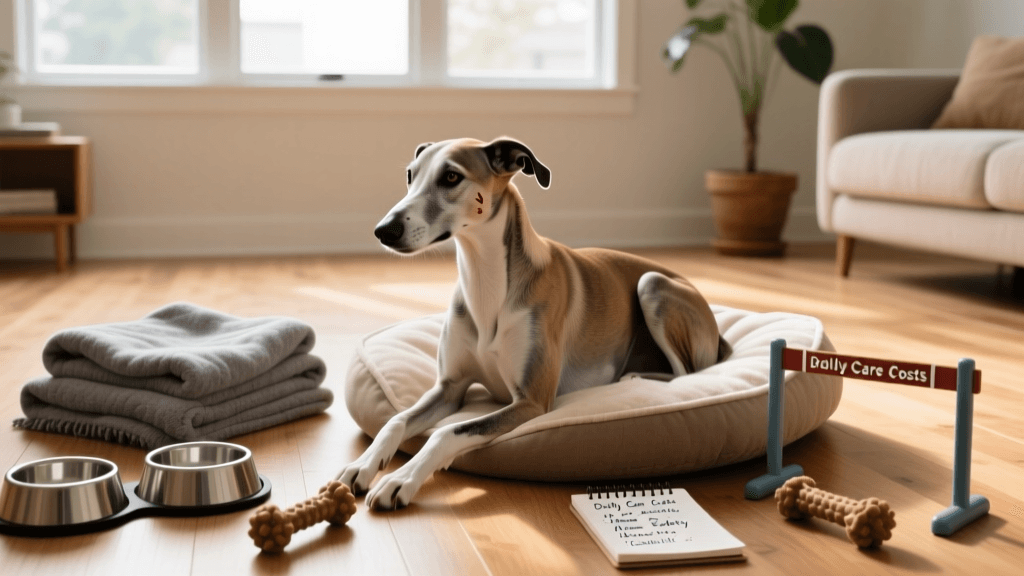
Financial preparation is a critical, yet often overlooked, aspect of responsible dog ownership. According to the ASPCA, the average annual cost of owning a medium-sized dog is roughly $1,771. However, this baseline data excludes emergency veterinary care, specialized surgeries, and chronic disease management, which can easily push first-year costs well over $4,000.
Actionable Advice: Treat pet insurance as a non-negotiable financial tool. Secure a comprehensive pet insurance policy (such as Trupanion or Healthy Paws, averaging $50 to $80 per month depending on your ZIP code and deductible) before the dog turns 6 months old. This ensures that any emerging orthopedic or allergic conditions are not classified as 'pre-existing' and permanently excluded from your coverage.
First-Day Environmental Prep: Measurements and Essentials
Setting up your home requires an understanding of canine spatial awareness and denning instincts. A crate should not be a cavernous room; it should mimic a secure den. To determine the correct crate size, measure the dog from the tip of the nose to the base of the tail, and add 2 to 4 inches. For an adult Labrador Retriever, a 42-inch L x 28-inch W x 30-inch H wire or heavy-duty plastic crate is scientifically optimal. This allows the dog to stand, turn around, and lie down comfortably, but is small enough to discourage them from soiling one corner and sleeping in the other, leveraging their natural biological instinct to keep their sleeping area clean.
For mental enrichment, stock up on food-puzzle toys. The Kong Classic ($15-$20, size-appropriate) is an industry standard. Stuff it with plain, unsweetened pumpkin puree and low-sodium chicken broth, then freeze it for 4 hours. This provides up to 45 minutes of sustained licking behavior, which neurologically releases endorphins and lowers cortisol levels in the dog's brain during the stressful transition to a new home.
Conclusion
Choosing and preparing for a dog is a multifaceted process that extends far beyond picking a cute face. By applying scientific principles—ranging from behavioral genetics and metabolic tracking to veterinary epidemiology and neurobiology—you can make an informed, empathetic choice. Relying on data ensures that you provide the right environment for your new companion, setting the stage for a long, healthy, and deeply fulfilling life together.
priya-sutaria
All our authors care for dogs every day — read more of their work on the authors page.