Poodle vs Goldendoodle: Which Doodle Breed is Right for You?
Compare the Poodle and Goldendoodle to find your perfect match. Explore costs, grooming, health, and temperament in our detailed breed selection guide.
Introduction to the Doodle Dilemma
Choosing the right dog is one of the most exciting yet daunting decisions a prospective pet owner can make. When browsing for low-shedding, highly intelligent, and family-friendly companions, two names consistently rise to the top of the list: the purebred Poodle and the wildly popular designer crossbreed, the Goldendoodle. While they share the Poodle's signature curly coat and sharp intellect, their differences in lineage, predictability, and care requirements are significant. This comprehensive breed comparison will help you navigate the decision-making process, ensuring you bring home a canine companion that perfectly aligns with your lifestyle, budget, and household dynamics.
Breed Origins and Official Recognition
The Standard Poodle is an ancient breed with roots tracing back to Germany, where they were originally bred as water retrievers. Despite their elegant, show-ring appearance, Poodles are rugged, athletic working dogs. They are fully recognized by the American Kennel Club (AKC), meaning their breed standard, temperament, and physical traits are highly predictable and strictly regulated by reputable breeders.
The Goldendoodle, on the other hand, is a 'designer dog'—a deliberate cross between a Golden Retriever and a Poodle. First bred in the late 1960s and popularized in the 1990s, the goal was to combine the Golden Retriever's gentle, eager-to-please nature with the Poodle's low-shedding coat. Because the Goldendoodle is a hybrid and not a recognized purebred, it lacks a unified breed standard. This means their size, coat type, and temperament can vary wildly, even within the exact same litter.
Size, Weight, and Physical Characteristics
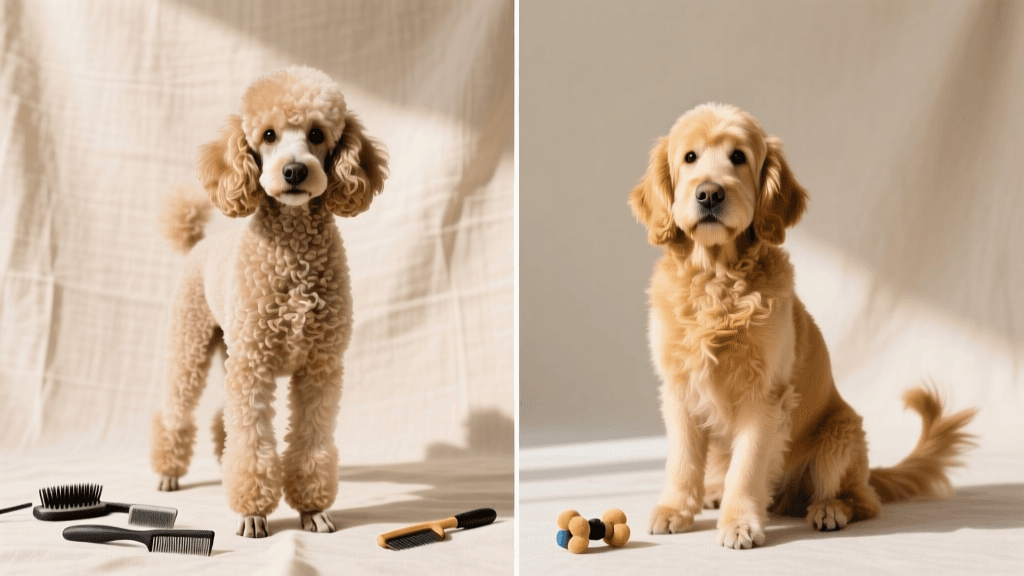
When selecting a breed, understanding their physical footprint in your home is crucial. Poodles come in three distinct sizes: Standard, Miniature, and Toy. Goldendoodles are generally categorized by the size of the Poodle parent used in the cross (Standard, Medium, or Miniature). Below is a comparison of the Standard variations of both breeds:
| Feature | Standard Poodle | Standard Goldendoodle |
|---|---|---|
| Height (at shoulder) | 15+ inches | 20 to 26 inches |
| Average Weight | 40 to 70 lbs | 50 to 90 lbs |
| Coat Type | Curly, dense, single-layer | Wavy to curly, fleece-like |
| Shedding Level | Very Low | Low to Moderate |
| Lifespan | 10 to 18 years | 10 to 15 years |
Temperament and Family Compatibility
Poodles are renowned for their exceptional intelligence, ranking second among all dog breeds in working and obedience intelligence. They are deeply bonded to their families, highly observant, and sometimes aloof with strangers. They thrive on mental stimulation and can develop neurotic behaviors or excessive barking if left bored or isolated for long periods.
Goldendoodles typically inherit the Golden Retriever's outgoing, jovial, and universally friendly disposition. They are often described as 'everyone's best friend' and tend to be more forgiving of clumsy children or chaotic household environments. However, this extreme sociability means they make terrible guard dogs and are highly prone to separation anxiety if left alone in a crate for an eight-hour workday.
Remember that a dog's temperament is shaped not just by genetics, but by early socialization, consistent training, and the environment you provide during their critical developmental months.
Grooming Requirements, Tools, and Costs
Neither breed is truly 'hypoallergenic,' but both are low-shedding, which traps dander in their hair rather than releasing it into the environment. This hair grows continuously and requires rigorous maintenance to prevent painful matting.
At-Home Maintenance
You must brush your dog thoroughly at least three to four times a week. Invest in high-quality tools to reach the undercoat. The Chris Christensen Big G Slicker Brush is widely considered the gold standard for doodle and poodle coats, effectively detangling without scratching the skin. For bathing, use a soothing, dog-specific formula like Earthbath Oatmeal & Aloe Shampoo to prevent skin dryness, which occurs every 3 to 4 weeks.
Professional Grooming Costs
Expect to visit a professional groomer every 6 to 8 weeks for a haircut, nail trim, and ear cleaning. Depending on your geographic location and the condition of the coat, professional grooming for a Standard Poodle or large Goldendoodle will cost between $85 and $150 per session. This translates to an annual grooming budget of roughly $700 to $1,300.
Health Span and Common Genetic Issues
Purebred Poodles have a well-documented genetic profile. While generally robust, they are predisposed to specific conditions such as Addison's disease, sebaceous adenitis, and von Willebrand's disease. Reputable breeders will provide OFA (Orthopedic Foundation for Animals) certifications for hips, elbows, and eyes.
Goldendoodles are often marketed with the promise of 'hybrid vigor'—the idea that mixed breeds are inherently healthier. However, because both Golden Retrievers and Poodles are prone to hip dysplasia and certain cancers, the crossbreed is equally at risk. According to the Orthopedic Foundation for Animals (OFA), hip dysplasia remains a prevalent issue in both parent breeds, meaning Goldendoodle owners must carefully monitor their dog's weight and joint health, supplementing with glucosamine and avoiding high-impact jumping during their first year of growth.
Training, Intelligence, and Exercise Needs
Both breeds require a minimum of 60 minutes of dedicated physical exercise daily, alongside rigorous mental enrichment. A simple walk around the block will not suffice for these intelligent canines.
- Physical Exercise: Fetch, swimming, agility courses, and brisk hiking are excellent outlets.
- Mental Stimulation: Utilize puzzle toys like the Outward Hound Nina Ottosson Dog Brick or stuff a KONG Classic with frozen peanut butter and kibble to keep their minds engaged while you work.
- Training: Positive reinforcement methods work best. Poodles excel in precision obedience and agility, while Goldendoodles shine in therapy work, scent tracking, and retrieving games.
Puppy Costs and Adoption Considerations
The financial investment required to acquire these dogs varies significantly. A well-bred Standard Poodle from an AKC-registered breeder who conducts full health testing typically costs between $2,000 and $3,500. Goldendoodles, driven by intense market demand and trendy aesthetics, often command prices ranging from $2,500 to $5,000 or more from boutique breeders.
However, prospective owners should strongly consider adoption. Doodles and Poodles frequently end up in breed-specific rescues due to owners underestimating their grooming needs and exercise requirements. Organizations listed via The Humane Society of the United States can help you locate local rescues. Adopting an adult dog not only saves a life but also bypasses the grueling puppy potty-training phase, and allows you to adopt a dog with a fully formed, predictable personality.
First-Year Expense Breakdown
Beyond the initial purchase or adoption fee, budget for the following first-year essentials:
- Initial Veterinary Exam & Vaccinations: $250 - $400
- Spay/Neuter Surgery: $300 - $600
- High-Quality Kibble (e.g., Purina Pro Plan or Royal Canin): $600 - $900/year
- Crates, Beds, and Harnesses: $200 - $350
- Pet Insurance (Highly Recommended): $500 - $900/year
Final Verdict: Making Your Selection
If you prioritize predictability, a documented health history, and a deeply loyal, highly trainable companion, the purebred Standard Poodle is an unparalleled choice. They are ideal for active individuals or families who appreciate a dog with a sharp mind and an elegant, athletic build.
If your household is bustling, noisy, and filled with young children or frequent visitors, and you prefer a goofy, universally affectionate dog with a slightly softer temperament, the Goldendoodle may be your perfect match. Just be prepared for the unpredictability of their adult coat and size, and ensure you source your puppy from an ethical breeder who health-tests both parent breeds, rather than a commercial puppy mill.
marcus-aldridge
All our authors care for dogs every day — read more of their work on the authors page.