Science of Decompression Walks: Sniffing for Dog Health
Discover the science behind decompression walks. Learn how sniffing lowers your dog's heart rate and how to structure a scent-based daily routine.
The Misconception of Physical Exhaustion
For decades, the prevailing wisdom in dog ownership has centered around a single, dominant philosophy: a tired dog is a good dog. Owners frequently rely on high-intensity physical exercise, such as running, fetch, or brisk neighborhood heel-walking, to manage their dog's energy levels. However, modern veterinary behaviorists and canine cognition researchers have revealed a significant flaw in this approach. While physical exercise is undeniably important for cardiovascular health and joint mobility, it does little to satisfy the complex neurological needs of the canine brain. In fact, relying solely on physical exertion can sometimes create an 'endurance athlete' effect, where the dog builds stamina but remains in a state of chronic hyperarousal. The science-backed solution to this modern behavioral dilemma is the decompression walk, often referred to as a 'Sniffari.' By shifting the focus from physical mileage to olfactory engagement, owners can profoundly impact their dog's neurological health, stress levels, and overall behavioral balance.
The Anatomy of the Canine Olfactory System
To understand why decompression walks are so vital, we must first examine the extraordinary anatomy of the canine olfactory system. While humans possess approximately six million olfactory receptors, dogs possess up to 300 million, depending on the breed. Furthermore, the olfactory bulb—the region of the brain dedicated to processing scent—is proportionally about 40 times larger in dogs than in humans. When a dog sniffs, they are not merely detecting odors; they are engaging in a complex cognitive exercise that involves mapping their environment, detecting pheromones, and processing time-based data (such as which dog passed by and how long ago).
Additionally, dogs possess a secondary olfactory system known as the vomeronasal organ, or Jacobson's organ, located between the nasal cavity and the roof of the mouth. This specialized structure is designed to detect heavy, moisture-based molecules like pheromones, providing the dog with intricate social and biological information about other animals in the area. Denying a dog the opportunity to sniff during a walk is akin to blindfolding a human while walking through an art museum. The decompression walk allows the dog to fully utilize their primary sensory interface with the world, providing deep, exhausting mental stimulation that physical exercise simply cannot replicate.
The Physiology of Sniffing: Heart Rate and Stress Reduction
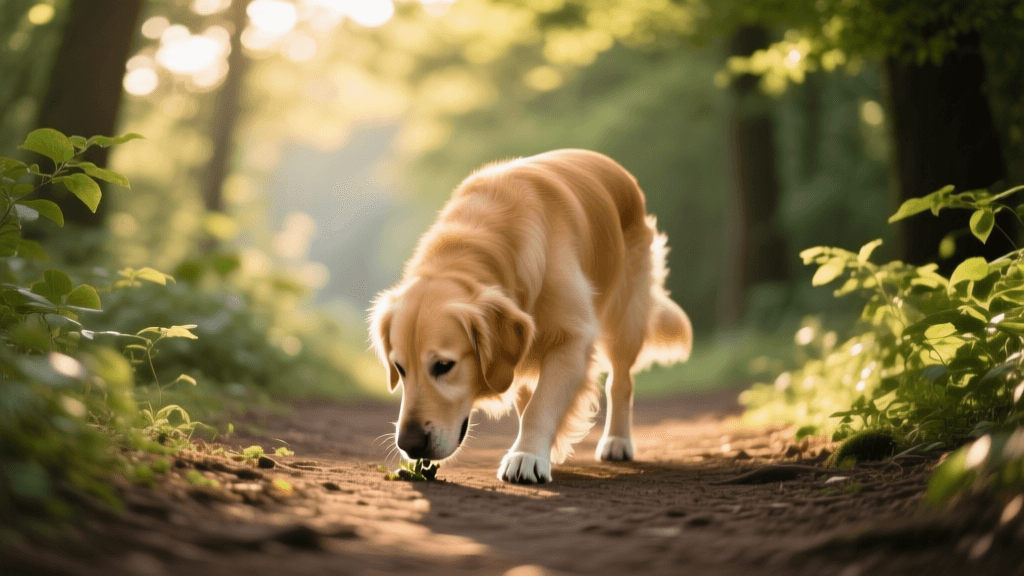
The physiological benefits of sniffing extend far beyond mere entertainment. Recent studies in canine behavior have demonstrated that continuous, self-directed sniffing actively engages the parasympathetic nervous system—the body's 'rest and digest' network. When a dog is allowed to lower their head and investigate scents at their own pace, their heart rate naturally begins to decelerate. This drop in heart rate is accompanied by a reduction in circulating cortisol levels, the primary hormone associated with stress.
According to the ASPCA, mental enrichment activities that allow dogs to engage in natural, species-specific behaviors are critical for preventing anxiety and destructive habits. A widely cited metric among canine behaviorists is that 20 minutes of continuous, uninterrupted sniffing can provide the same level of mental exhaustion and behavioral satisfaction as one full hour of vigorous physical running. For high-strung breeds, reactive dogs, or senior dogs with mobility issues, the science of the sniffari offers a low-impact, high-reward alternative to traditional exercise.
Traditional Neighborhood Walks vs. Decompression Walks
Understanding the structural differences between a standard walk and a decompression walk is essential for implementing this science-backed routine. Below is a comparative analysis of the two methodologies:
| Feature | Traditional Neighborhood Walk | Decompression Walk (Sniffari) |
|---|---|---|
| Primary Goal | Physical exercise, leash obedience, bathroom breaks | Mental stimulation, stress reduction, environmental processing |
| Pace and Direction | Human-led, steady pace, frequent direction changes | Dog-led, meandering, allowing the dog to dictate the route |
| Leash Tension | Short leash (4-6 ft), tension often present | Long line (15-30 ft), slack maintained to allow head lowering |
| Heart Rate Impact | Elevates heart rate, maintains sympathetic arousal | Lowers heart rate, activates parasympathetic nervous system |
| Environmental Focus | Ignoring distractions, focusing on the handler | Deep investigation of grass, trees, and natural substrates |
Essential Gear for Science-Backed Sniffaris
Executing a proper decompression walk requires specific equipment designed to maximize the dog's freedom of movement while maintaining safety. Standard 6-foot nylon leashes and restrictive collar setups are counterproductive to the goals of a sniffari. Here is the recommended, science-aligned gear list:
- Y-Front Harness: A Y-front harness ensures that the dog's shoulder joints remain completely unrestricted, allowing for natural gait and full range of motion when leaning into a scent cone. The Ruffwear Front Range Harness (approx. $49.95) or the Perfect Fit Harness (approx. $65.00) are excellent, ergonomically designed options that do not impede the scapula.
- Biothane Long Line: A long line measuring 15 to 30 feet is mandatory to give the dog the spatial autonomy required to follow scent trails. Biothane material is highly recommended over nylon or cotton because it is waterproof, easy to sanitize, and does not absorb mud or bacteria from the ground. A 15-foot Biothane leash from Mendota Pets or a specialized maker like Thin Blue Leashes typically costs between $30.00 and $45.00.
- Hands-Free Waist Belt: To prevent accidental leash corrections when the dog suddenly lunges toward an interesting odor, a hands-free waist belt (such as the Kurgo Cross-Trainer Belt, approx. $25.00) absorbs the shock and keeps the handler's center of gravity stable.
- High-Value Foraging Treats: Scatter-feeding during the walk encourages ground-sniffing behavior. Bring a mix of freeze-dried liver or low-calorie training treats to scatter in tall grass, simulating natural foraging.
The Step-by-Step Sniffari Protocol
The American Kennel Club (AKC) emphasizes that a Sniffari requires a fundamental shift in the owner's mindset. You are no longer the director of the walk; you are merely the anchor. Follow this protocol for optimal cognitive enrichment:
- Select the Right Location: Avoid high-traffic urban sidewalks. Seek out quiet parks, nature trails, empty fields, or wooded areas where natural scents (wildlife, other dogs, decaying flora) are abundant.
- The Decompression Transition: When you arrive at the location, stand still for 2 to 3 minutes before unclipping the long line. Allow the dog to shake off the car ride and take a few deep sniffs. This 'shake off' is a recognized canine calming signal that helps reset their nervous system.
- Release and Follow: Give a specific release cue, such as 'Go sniff.' Follow the dog from behind, keeping the long line loose. If the dog stops to investigate a single blade of grass for three minutes, stand patiently and wait. Do not urge them forward.
- Scatter Feeding: Periodically toss a handful of treats into the grass or leaves. This encourages the dog to use their nose to locate food, further engaging the olfactory cortex and reinforcing the value of ground-sniffing.
- The Cool Down: End the walk before the dog becomes overtired. A typical decompression walk should last between 30 and 45 minutes. The goal is a relaxed, slow return to the vehicle, not a frantic rush.
Managing Multi-Dog Households
For households with multiple dogs, executing a decompression walk requires careful logistical planning. Walking two or more dogs on long lines simultaneously can lead to tangled leashes and competitive arousal, which completely negates the parasympathetic benefits of the walk. Canine behaviorists recommend 'solo sniffaris' for multi-dog homes. While this requires a larger time investment, the behavioral return is vastly superior. If time is constrained, implement a rotation system: Dog A goes on a 20-minute solo Sniffari while Dog B engages in an indoor mental enrichment task, such as licking a frozen Kong or working on a snuffle mat. This ensures both dogs receive targeted, stress-reducing mental stimulation without the interference of pack dynamics.
Long-Term Behavioral Outcomes and Cognitive Health
Incorporating decompression walks into your weekly routine yields measurable, long-term behavioral outcomes. Owners frequently report a significant decrease in hyperactive behaviors indoors, a reduction in nuisance barking, and deeper, more restorative sleep patterns. For reactive dogs, the decompression walk serves as a vital tool for lowering their baseline arousal threshold, making subsequent behavioral modification training significantly more effective. As noted by the Humane Society of the United States, consistent mental stimulation is a cornerstone of responsible pet care, directly correlating with a higher quality of life and a reduction in shelter surrenders due to behavioral issues. By embracing the science of the canine nose and prioritizing olfactory enrichment, owners can provide a profound, biologically appropriate service to their dogs, transforming the daily walk from a mundane chore into a vital pillar of canine cognitive health.
aaron-whyte
All our authors care for dogs every day — read more of their work on the authors page.