Best Apartment Dogs: Greyhound vs. Cavalier vs. Frenchie
Compare Greyhounds, Cavaliers, and French Bulldogs for apartment living. Discover costs, exercise needs, and daily routines for busy owners.
The Apartment Dilemma: Finding the Perfect Canine Roommate
Living in an apartment or condo doesn't mean you have to sacrifice the joy of dog ownership. However, shared walls, limited square footage, and a lack of a private backyard mean that breed selection is not just a preference—it is a necessity for your sanity and your dog's well-being. Many first-time owners mistakenly believe that 'small' automatically equals 'apartment-friendly.' In reality, a small terrier might bark at every hallway noise, while a large, deep-chested hound might sleep quietly on the sofa for 18 hours a day.
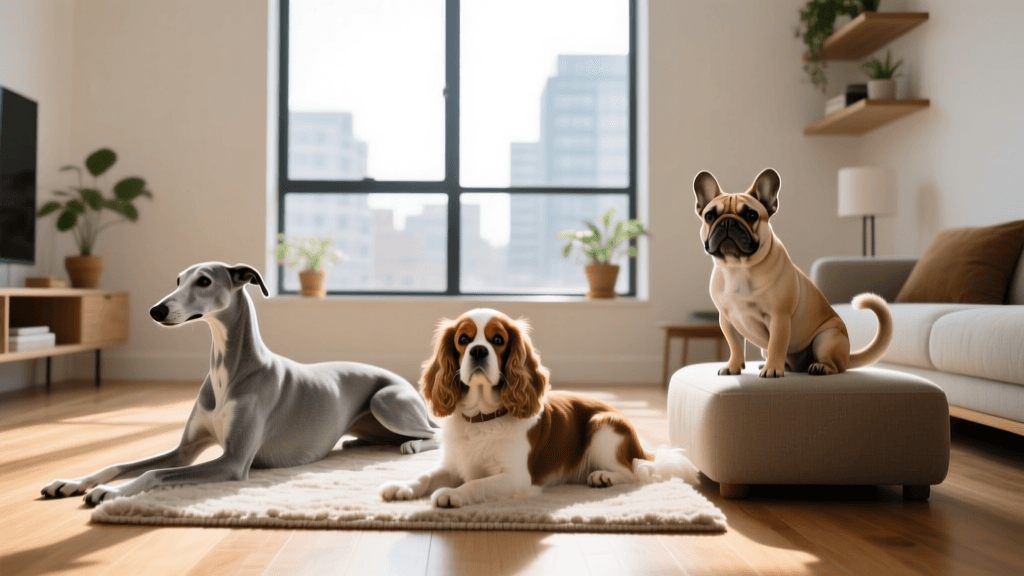
In this comprehensive guide, we are comparing three highly recommended but vastly different apartment breeds: the Greyhound, the Cavalier King Charles Spaniel, and the French Bulldog. We will break down their daily routines, space requirements, financial costs, and health considerations to help you make an informed, practical decision.
'The biggest mistake apartment dwellers make is assuming small size equals low energy. A Frenchie is small and low-energy, but a Jack Russell Terrier is small and a nightmare for thin walls. Always prioritize temperament and energy level over physical footprint.'
— Certified Canine Behaviorist
Meet the Contenders: Breed Profiles
The Greyhound: The 45-MPH Couch Potato
Despite their racing background, retired Greyhounds are famously lazy indoors. According to the American Kennel Club, Greyhounds are surprisingly quiet, gentle, and independent. They are sprinters, not marathon runners. Once they have had a good 30-to-40-minute walk or a short sprint in a fenced dog park, they are more than happy to curl up on a dog bed and ignore the world. They rarely bark, making them excellent neighbors in high-density housing.
The Cavalier King Charles Spaniel: The Velvet Shadow
If you want a dog that wants to be on your lap at all times, the Cavalier is your match. Weighing between 12 and 18 pounds, they are highly adaptable and thrive on human companionship. They are generally quiet but do suffer from separation anxiety if left alone in an apartment for 10 hours a day. They require moderate exercise—about 30 to 45 minutes of sniffing and walking daily—and are highly food-motivated, which makes indoor trick training a great way to burn off their mental energy.
The French Bulldog: The Low-Energy Entertainer
The Frenchie is the quintessential city dog. They are small, sturdy, and require minimal physical exercise due to their brachycephalic (flat-faced) anatomy. The AKC notes that French Bulldogs are highly adaptable and do well in small spaces. However, they are prone to snoring, grunting, and occasional flatulence. They are alert and will notify you of a knock at the door, but they are not excessive yappers.
Space, Exercise, and Gear Requirements
Apartment living requires specific gear to manage the environment and keep your dog comfortable. Here is what you need for each breed:
- Greyhound: Because they have virtually no body fat and thin coats, Greyhounds get cold easily. You will need a well-fitting fleece or puffer coat, such as the Kurgo Loft Dog Coat ($60-$80), for winter potty breaks. Indoors, they need a thick orthopedic bed (like the Big Barker 7-inch Orthopedic Dog Bed, ~$250) to prevent pressure sores on their bony joints.
- Cavalier: Cavaliers need mental stimulation indoors. A KONG Classic stuffed with frozen peanut butter will keep them occupied while you work from home. For walks, a standard 6-foot leather leash and a flat collar are usually sufficient, though a harness is recommended to protect their delicate tracheas.
- French Bulldog: Never use a neck collar on a Frenchie for walks; their compromised airways mean any pulling could cause choking or tracheal collapse. Invest in a front-clip harness like the Ruffwear Front Range ($40). In the summer, a cooling mat (like the Arf Pets Self-Cooling Mat, ~$30) is mandatory to prevent heatstroke in un-air-conditioned apartments.
Financial Breakdown: What Will It Cost You?
Budgeting for a dog in the city involves more than just kibble. Grooming, specialized veterinary care, and pet deposits add up quickly. Below is a comparative cost analysis for the first year of ownership.
| Expense Category | Greyhound | Cavalier King Charles | French Bulldog |
|---|---|---|---|
| Adoption / Purchase Price | $300 - $500 (Rescue) | $2,500 - $4,000 | $3,000 - $5,500 |
| Monthly Food Cost | $60 - $80 | $30 - $45 | $40 - $60 |
| Annual Grooming | $50 (Nails/Baths) | $600 - $900 (Pro Groomer) | $150 (Wipes/Nail Trims) |
| Annual Vet & Insurance | $800 - $1,200 | $1,000 - $1,500 | $1,500 - $2,500 |
| Initial Gear Setup | $350 (Large bed, coats) | $150 (Small bed, brushes) | $200 (Harness, cooling mat) |
Note: French Bulldogs are significantly more expensive to insure and treat due to high rates of respiratory, spinal, and allergy issues. Greyhounds are generally very healthy but require specialized anesthesia protocols, which can increase surgical costs.
The 9-to-5 Survival Guide: Daily Routines
How do these breeds handle being left alone in an apartment while you work? Routine veterinary care and behavioral guidelines, as outlined by the American Veterinary Medical Association, emphasize that all dogs need structured routines, but their tolerance for solitude varies wildly.
The Greyhound Routine
Greyhounds are incredibly independent and handle an 8-hour workday with ease, provided they are properly crate-trained or given a gated-off 'chill zone.' Sample Schedule: 7:00 AM: 20-minute brisk walk and potty break. 7:30 AM: Breakfast and crate/gate time. 5:30 PM: Return home, 30-minute walk or visit to a fenced dog park for a sprint. 6:30 PM: Dinner and couch time.
The Cavalier Routine
Cavaliers are prone to severe separation anxiety. Leaving them alone in a quiet apartment for 8 hours can result in destructive chewing and stress. They are best suited for owners who work from home, have hybrid schedules, or can afford a midday dog walker. Sample Schedule: 7:30 AM: 15-minute neighborhood sniffari. 8:00 AM: Breakfast and indoor fetch. 12:30 PM: Midday dog walker for a 30-minute potty and play break. 5:00 PM: Owner returns, lap time, and training sessions.
The Frenchie Routine
Frenchies are companion dogs but are generally more tolerant of being alone than Cavaliers, provided they have a comfortable, temperature-controlled environment. They sleep up to 14 hours a day. Sample Schedule: 8:00 AM: 15-minute slow walk (avoiding heat/humidity). 8:30 AM: Breakfast and puzzle toys. 5:00 PM: Return home, 20-minute evening stroll. 6:00 PM: Dinner and indoor wrestling/playtime.
Health Considerations and Vet Visits
Apartment living often means carrying your dog up stairs or navigating busy elevators, which can exacerbate certain health conditions.
- French Bulldogs: Brachycephalic Obstructive Airway Syndrome (BOAS) is a major concern. Stairs can leave them winded. You must be prepared to carry a 25-pound dog up three flights of stairs on hot days or if they refuse to walk. They also require daily cleaning of their facial folds with hypoallergenic wipes to prevent yeast infections.
- Cavalier King Charles Spaniels: This breed is tragically prone to Mitral Valve Disease (MVD), a heart condition that can lead to coughing. In a quiet apartment, you will easily notice the early signs of a heart murmur or nighttime coughing, allowing for early veterinary intervention. They are also prone to Syringomyelia, a neurological condition affecting the brain and spine.
- Greyhounds: Greyhounds are generally robust but are susceptible to Gastric Dilatation-Volvulus (Bloat). To prevent this in your apartment, feed them using a slow-feeder bowl and enforce a strict 'no vigorous exercise one hour before or after meals' rule. They also have unique blood chemistry (lower white blood cell counts, higher red blood cell counts), so ensure your local vet is experienced with sighthounds.
Final Selection Checklist
Before signing a pet addendum on your lease, ask yourself these practical questions:
- What is my work schedule? If you are in the office 5 days a week, choose the Greyhound or Frenchie. If you work from home, the Cavalier will be your perfect shadow.
- What is my budget for emergencies? If you cannot afford a $3,000 emergency airway surgery or specialized allergy meds, avoid the French Bulldog.
- Am I willing to deal with grooming? If you don't want to vacuum dog hair daily or pay for professional grooming every six weeks, skip the Cavalier and opt for the short-coated Greyhound.
- Are there breed restrictions in my building? While rare for these three, some buildings have weight limits (which rules out the Greyhound) or ban specific breeds. Always check your lease first.
Ultimately, the best apartment dog is one whose energy level matches your lifestyle. Whether you choose the silent elegance of a Greyhound, the velvet affection of a Cavalier, or the clownish charm of a Frenchie, preparing your space and your schedule will ensure a harmonious life together in your urban home.
marcus-aldridge
All our authors care for dogs every day — read more of their work on the authors page.