Top Dual-Clip No-Pull Dog Harnesses for City Walks 2026
Compare the best dual-clip no-pull dog harnesses for 2026. Expert fitting tips and training advice for urban walks with strong pullers.
Navigating the 2026 Urban Landscape with a Strong Puller
Walking a dog in a modern city in 2026 presents a unique set of challenges. Sidewalks are more crowded than ever, and the silent approach of electric bikes, e-scooters, and delivery robots can easily trigger a reactive or excitable dog. If you share your life with a strong puller, these urban obstacles can turn a simple daily routine into a frustrating tug-of-war. Choosing the right equipment is no longer just about comfort; it is about safety, control, and effective communication.
For urban dog owners, the dual-clip no-pull harness has become the undisputed gold standard. Unlike traditional collars or basic back-clip harnesses, dual-clip models offer both a front chest ring and a top back ring. This versatile design allows you to guide your dog gently while providing a secure backup attachment point. In this comprehensive guide, we break down the biomechanics of pulling, compare the top harnesses available this year, and provide a step-by-step training protocol to help you achieve loose-leash walking.
The Biomechanics of Pulling: Why Back-Clips Fail
To understand why a no-pull harness works, we first need to look at canine biomechanics. Dogs naturally possess an opposition reflex, meaning that when they feel pressure against their chest or back, their instinct is to push forward against it. When you use a standard back-clip harness, the leash attaches over the dog's center of gravity. If your dog pulls, the pressure is distributed across their strong chest and shoulders, essentially turning them into a sled dog. You are inadvertently rewarding and facilitating the pulling behavior.
According to training experts at the American Kennel Club (AKC), front-clip harnesses disrupt this mechanical advantage. When the leash is attached to the chest ring and the dog pulls, the tension gently redirects the dog's momentum back toward the handler. This physical redirection breaks the dog's forward focus and encourages them to turn and look at you, creating a vital window of opportunity for positive reinforcement.
Furthermore, avoiding neck collars is critical for strong pullers. The canine neck houses the trachea, thyroid gland, and delicate cervical spine. Repeated jerking on a flat collar or choke chain can lead to long-term respiratory and neurological issues. A well-fitted harness distributes force safely across the sternum and ribcage.
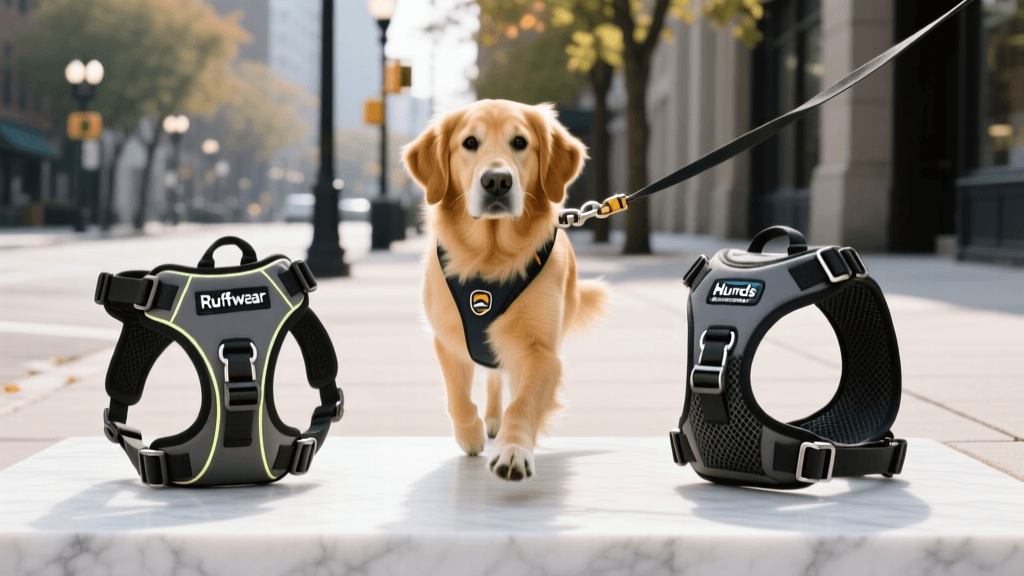
2026 Harness Showdown: Ruffwear vs. 2 Hounds vs. Kurgo
This year, manufacturers have focused on sustainable materials, enhanced visibility for nighttime urban walks, and improved buckle durability. Here is how the top three dual-clip harnesses stack up for city living in 2026.
1. Ruffwear Front Range (2026 Edition)
The Ruffwear Front Range remains a favorite among urban adventurers. The 2026 update features a shell made from recycled ocean-bound plastics, maintaining its lightweight yet durable profile. It features a foam-padded chest and belly, making it ideal for dogs with sensitive skin or short coats. The front webbing ring is reinforced with anodized aluminum, ensuring it will not snap under the sudden lunges of a 70-pound Labrador.
2. 2 Hounds Design Freedom No-Pull Harness
This harness is renowned for its unique velvet-lined chest strap, which virtually eliminates armpit chafing—a common complaint with cheaper nylon harnesses. It features a patented two-point leash connection system that comes with a specialized dual-clip leash. When connected to both the front and back rings simultaneously, it provides unparalleled steering control for highly reactive dogs navigating busy crosswalks.
3. Kurgo Tru-Fit Smart Harness
Budget-friendly but incredibly robust, the Kurgo Tru-Fit is designed like a climbing harness. It includes a padded chest plate that disperses pressure evenly. While it is slightly heavier than the Ruffwear, its steel nesting buckles offer peace of mind for owners of escape artists. It also doubles as a car safety harness, making it a great two-in-one investment for city dwellers who rely on rideshares.
Feature Comparison Chart
| Feature | Ruffwear Front Range | 2 Hounds Freedom | Kurgo Tru-Fit |
|---|---|---|---|
| 2026 Retail Price | $44.95 | $39.95 | $29.99 |
| Weight | Lightweight (6 oz) | Medium (8 oz) | Heavy-Duty (12 oz) |
| Clip Locations | Front (Aluminum) & Back | Front (Stainless) & Back | Front (Nylon Loop) & Back |
| Best For | Active dogs, long walks | Sensitive skin, escape artists | Car travel, heavy chewers |
| Chafing Risk | Low | Very Low (Velvet lined) | Medium |
Step-by-Step Fitting Guide for Maximum Comfort
Even the most expensive no-pull harness will fail if it is fitted incorrectly. A harness that is too loose will cause severe friction burns in the armpits, while one that is too tight will restrict shoulder extension and alter your dog's gait. Follow these steps for a perfect fit:
- Measure the Girth: Use a soft tailor's measuring tape to measure the widest part of your dog's ribcage, usually just behind the front legs and over the back. Do not guess based on weight charts; a deep-chested Greyhound and a barrel-chested Bulldog of the same weight require vastly different sizes.
- The Two-Finger Rule: Once the harness is on, you should be able to slide exactly two fingers flat under any strap. If you can fit your whole hand, it is too loose and will shift during a lunge. If you cannot fit two fingers, it is restricting blood flow and breathing.
- Check the Shoulder Clearance: Ensure the front chest plate sits below the suprasternal notch (the dip at the base of the throat) and does not press into the front of the shoulder joints. Your dog should have a full range of motion when trotting.
The Redirection Training Protocol
A no-pull harness is a training tool, not a magic cure. To achieve loose-leash walking, you must pair the front-clip hardware with a consistent behavioral protocol. The ASPCA emphasizes that consistency and positive reinforcement are the keys to modifying leash manners.
The 'Tree' Method
When your dog hits the end of the leash and pulls, immediately stop walking. Become a 'tree.' Do not yank the leash back; simply stand still and wait. Because the leash is attached to the front chest ring, your dog will naturally turn toward you when they hit the end of the line. The moment they turn their head back toward you and the leash goes slack, mark the behavior with a 'Yes!' or a clicker, and reward with a high-value treat at your hip. Then, resume walking.
Managing Urban Triggers
In 2026, e-scooters and silent delivery bots are major triggers for urban dogs. When you see a trigger approaching, do not wait for your dog to react. Use the front clip to gently guide your dog into a 'U-turn' or ask them to sit on a nearby stoop before the trigger enters their threshold distance. Reward heavily for maintaining eye contact with you while the scooter passes. This proactive management prevents the rehearsal of reactive lunging.
Maintenance and Safety Inspections
Urban environments are tough on gear. Road salt, mud, and daily friction can degrade materials over time. To ensure your harness remains safe and effective, perform a quick inspection every Sunday evening. Check the stitching around the D-rings for any fraying or pulled threads. Inspect the plastic buckles for micro-cracks, especially if you live in a climate with freezing winters, as cold temperatures can make certain plastics brittle.
For cleaning, avoid putting your harness in the washing machine, as the agitation can warp the structural integrity of the buckles and foam. Instead, soak the harness in a basin of warm water with a mild, pet-safe enzymatic detergent. Use a soft bristle brush to scrub away dried mud and street grime, then hang it to air dry in a well-ventilated area away from direct sunlight to prevent UV fading.
By investing in a high-quality dual-clip harness and committing to a positive reinforcement training protocol, you can transform your daily urban walks from a stressful chore into a joyful bonding experience. Your dog will learn to navigate the bustling city by your side, and you will finally be able to enjoy the journey.
beth-carrasco
All our authors care for dogs every day — read more of their work on the authors page.