Best No Pull Dog Harness for Puppies: 2026 Training Guide
Discover how to fit and train your puppy with a front-clip no pull dog harness in 2026. Stop leash pulling safely during early socialization walks.
The Critical Role of a No Pull Dog Harness in Early Puppyhood
Bringing a new puppy home is one of the most exciting milestones in a dog owner's life, but it also marks the beginning of crucial developmental training. Among the most important skills your puppy will learn during their first year is how to walk politely on a leash. In 2026, veterinary behaviorists and professional dog trainers universally recommend ditching traditional flat collars for early leash training in favor of a specialized no pull dog harness. This shift is not just a trend; it is rooted in canine anatomy, behavioral science, and the urgent need to protect your puppy's developing joints and airway.
The primary socialization window for puppies closes around 14 to 16 weeks of age. During this critical period, you will be taking your puppy on short, controlled walks to expose them to new sights, sounds, and surfaces. If a puppy learns that pulling on a leash results in forward movement, that behavior becomes deeply ingrained. A front-clip no pull dog harness gently redirects the puppy's momentum back toward the handler without causing pain or fear, making it the ultimate tool for positive reinforcement training during these formative months.
Why Flat Collars Pose a Risk to Developing Puppies
Puppies have incredibly fragile tracheas and developing cervical spines. When a young dog pulls against a flat nylon or leather collar, the concentrated pressure on the front of the neck can lead to tracheal collapse, chronic coughing, or even long-term thyroid damage. This is especially true for small and toy breeds, but large breed puppies are equally susceptible to acute neck injuries due to their sudden, forceful lunges.
According to training guidelines published by the American Kennel Club, utilizing a harness distributes the pressure across the puppy's chest and shoulders rather than their delicate throat. By removing the choking sensation, puppies are less likely to trigger an opposition reflex—a natural instinct where a dog pulls harder against pressure. When a puppy feels restricted by a collar, they pull harder; when guided by a well-fitted no pull dog harness, they remain calm and receptive to learning.
Must-Have Features in 2026 Puppy Harnesses
The pet gear industry has seen significant innovations leading into 2026. When shopping for a no pull dog harness for a growing puppy, you must prioritize adjustability, safety, and comfort. Puppies grow at an astonishing rate, often requiring a new harness size every few months. Look for these specific features:
- Four-Point Adjustment: A harness must have sliders on both the neck and the girth (chest) to accommodate the uneven growth spurts of a puppy's body.
- Breathable Aerospace Mesh: Puppies cannot regulate their body temperature as efficiently as adult dogs. The latest 2026 models feature ultra-lightweight, moisture-wicking mesh that prevents chafing and overheating.
- Dual Clip Options: The best harnesses feature both a front chest ring (for no-pull training) and a back ring (for casual walks once the puppy has mastered loose-leash walking).
- Integrated GPS Pockets: With the rise of smart pet tracking in 2026, many premium harnesses now include discreet, secure pockets designed to hold lightweight GPS trackers like the Tractive or Apple AirTag, ensuring your puppy is safe during outdoor adventures.
Harness Comparison Chart for Puppy Leash Training
Understanding the mechanics behind different walking tools is essential for making the right choice. Below is a comparison of common puppy walking gear available in 2026.
| Gear Type | Mechanism of Action | Best Use Case | Safety Risk for Puppies |
|---|---|---|---|
| Front-Clip No Pull Harness | Redirects forward momentum sideways toward the handler. | Active leash training and high-distraction environments. | Very Low (When fitted correctly) |
| Back-Clip Harness | Distributes pressure across the back; encourages pulling. | Car travel, hiking, or fully trained adult dogs. | Low (But encourages pulling) |
| Flat Buckle Collar | Applies direct pressure to the trachea and neck. | Holding ID tags only. | High (Risk of tracheal damage) |
| Head Halter | Controls the muzzle to steer the body. | Reactive adult dogs under professional guidance. | High (Risk of neck whip in puppies) |
How to Properly Fit a No Pull Dog Harness
A poorly fitted harness can cause severe chafing under the armpits or restrict a puppy's shoulder extension, leading to gait abnormalities. Follow the Humane Society's general guidelines for fitting a harness to ensure your puppy's comfort:
- The Head and Leg Loop: Gently slip the harness over the puppy's head. Ensure the front D-ring sits squarely in the middle of the chest, right over the sternum.
- The Girth Strap: Bring the belly strap behind the puppy's front legs. It should sit far enough back so it does not rub against the sensitive skin of the armpits.
- The Two-Finger Rule: You should be able to comfortably slide exactly two fingers under any strap. If you can fit three or more, it is too loose and the puppy could slip out. If you can only fit one, it is too tight and will restrict breathing.
- The Shoulder Check: Observe your puppy's gait while trotting. The harness should not alter their natural stride or cause them to waddle.
8-Week to 16-Week Leash Training Protocol
Training a puppy to walk on a no pull dog harness requires patience and a structured timeline. Keep sessions incredibly short to match their limited attention spans and physical stamina.
Phase 1: Indoor Desensitization (Weeks 8-9)
Before ever stepping outside, let your puppy wear the harness indoors for 5 to 10 minutes at a time while they eat meals or play with a favorite toy. This builds a positive emotional association. Attach a lightweight, 4-foot biothane leash and let them drag it around the house under strict supervision so they get used to the feeling of weight on the harness.
Phase 2: The 'Stop and Wait' Technique (Weeks 10-12)
When you begin outdoor walks, use the front-clip ring. The general rule of thumb for puppy exercise is 5 minutes of structured walking per month of age. A 10-week-old puppy should only walk for about 10 to 12 minutes at a time. If the puppy pulls and the leash goes tight, immediately stop walking. Become a tree. Do not yank the leash. Wait for the puppy to look back at you or take a step backward to release the tension. The moment the leash is loose, mark the behavior with a 'Yes!' and reward with a high-value treat. This teaches the puppy that a loose leash is the only key to moving forward.
Phase 3: Distraction Proofing (Weeks 13-16)
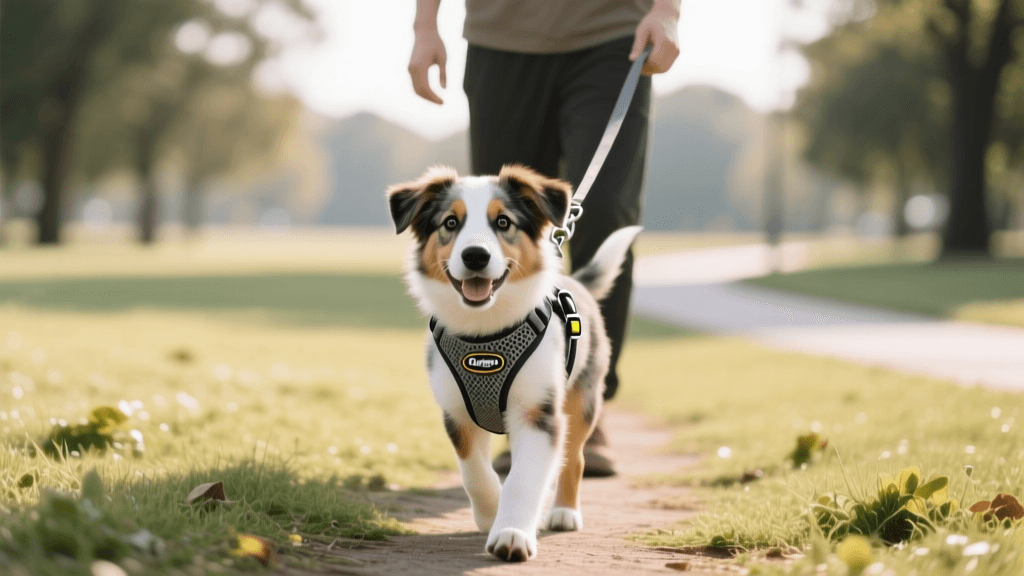
As your puppy's confidence grows, introduce mild distractions. Practice your loose-leash walking in the driveway, then on the sidewalk, and eventually near other people or dogs. If the puppy lunges toward a distraction, the front-clip no pull dog harness will gently turn them back toward you. Reward heavily for voluntary eye contact in the presence of distractions.
Troubleshooting Common Puppy Leash Behaviors
The Leash Biter: Many puppies view the leash as a tug toy. If your puppy bites the leash, do not pull back, as this triggers a game of tug-of-war. Instead, carry a secondary 'decoy' toy. When they bite the leash, immediately offer the decoy toy and reward them for releasing the leash.
The Anchor (Refusing to Move): Some puppies will simply sit down and refuse to walk, overwhelmed by the harness or the outdoors. Never drag a puppy. Crouch down, use an encouraging voice, and toss a treat a few feet ahead to lure them forward. Keep early sessions in low-traffic, quiet areas to prevent sensory overload.
Budgeting for Puppy Gear in 2026
Because puppies outgrow their gear rapidly, budgeting is a practical concern for new owners. In 2026, a high-quality, adjustable no pull dog harness typically costs between $35 and $55. Premium models featuring eco-friendly recycled ocean plastics and integrated GPS pockets range from $65 to $95. To save money, look for brands that offer a 'puppy growth guarantee,' where you can send back the outgrown harness for a 50% discount on the next size up. Always invest in a quality harness during the first year; it is an investment in your dog's lifelong physical health and behavioral foundation.
robin-maitland
All our authors care for dogs every day — read more of their work on the authors page.