Resource Guarding in Dogs: Expert Behavior Modification Guide
Learn expert behavior analysis techniques to safely modify resource guarding in dogs using desensitization and counter-conditioning protocols.
Understanding Resource Guarding Through a Behavioral Lens
Resource guarding is one of the most frequently presented behavioral issues in clinical canine behavior practice. From an ethological perspective, guarding valuable resources—such as food, chews, toys, or even specific humans and locations—is a natural, adaptive survival mechanism. In the wild, canids that successfully defended their caloric intake were more likely to survive and reproduce. However, in a domestic environment, this behavior poses a significant safety risk and severely strains the human-animal bond. As an expert behavior analyst, approaching resource guarding requires moving beyond simplistic and outdated "dominance" theories. Instead, we must apply the rigorous, evidence-based frameworks of operant and classical conditioning. This comprehensive guide outlines a clinical, data-driven behavior modification protocol designed to safely and effectively alter your dog's emotional and behavioral responses to perceived threats against their resources.
The ABC Model of Guarding Behavior
To modify any behavior, a certified behavior consultant first breaks it down using the ABC model of applied behavior analysis. Understanding this contingency is critical for identifying the reinforcement maintaining the guarding behavior.
- Antecedent (The Trigger): The environmental stimulus that precedes the behavior. For example, a human walking within a three-foot radius of the dog while they are chewing a high-value item like a bully stick or interacting with a Kong Classic stuffed with peanut butter.
- Behavior (The Response): The observable action the dog takes. This can range from subtle body language shifts (freezing, hard staring) to overt aggressive displays (lip curling, growling, snapping, or biting).
- Consequence (The Reinforcer): What happens immediately after the behavior. If the dog growls and the human retreats or drops the item they were reaching for, the dog experiences negative reinforcement. The aversive stimulus (the approaching human) was removed, thereby increasing the mathematical probability that the dog will growl again in the future under similar antecedent conditions.
Identifying the Threshold and Early Warning Signs
A core tenet of expert behavior analysis is recognizing that dogs do not typically escalate to biting without warning. Veterinary behaviorist Dr. Kendal Shepherd developed the concept of the "Aggression Ladder," which illustrates how dogs escalate through various calming signals and distance-increasing behaviors when they feel threatened. Early rungs on the ladder include yawning, lip licking, turning the head away, and "whale eye" (showing the whites of the eyes). If these subtle antecedents are ignored or punished by the owner, the dog is forced to climb the ladder to more overt warnings like stiffening, low-pitched growling, and eventually, snapping or biting. Identifying your dog's specific threshold—the exact distance or intensity of a trigger that causes the first sign of discomfort—is the baseline data required for a successful desensitization protocol.
Phase 1: Environmental Management and Control
Before active training begins, strict environmental management is non-negotiable. Every time a dog successfully guards a resource or rehearses the guarding sequence, the neural pathways associated with that behavior are myelinated, making the response faster and more ingrained. Management prevents rehearsal while keeping your household safe.
- Spatial Boundaries: Utilize hardware-mounted baby gates (such as the Carlson Pet Products Walk-Through Gate, typically costing between $40 and $60) to restrict access to high-traffic areas during feeding times or when high-value chews are distributed.
- Leash Tethering: When indoors and not in a secure, isolated room, keep the dog on a 6-foot leather or biothane leash. This allows you to guide the dog away from dropped items without reaching into their guard zone with your hands.
- Resource Inventory: Temporarily remove all mid-value toys and bones from the environment. Only provide high-value items (like raw meaty bones or stuffed puzzle toys) when the dog is safely confined in a crate or a separate, locked room.
Phase 2: Desensitization and Counter-Conditioning (DSCC)
Desensitization involves exposing the dog to the trigger (a human approaching) at a sub-threshold intensity, while counter-conditioning pairs that trigger with a highly potent primary reinforcer to change the dog's underlying emotional state from anxiety to anticipation of a reward. According to the American Kennel Club (AKC) Training Resources, building a foundation of positive reinforcement is vital for trust, but severe guarding requires a structured DSCC protocol.
The "Trade-Up" Mechanics
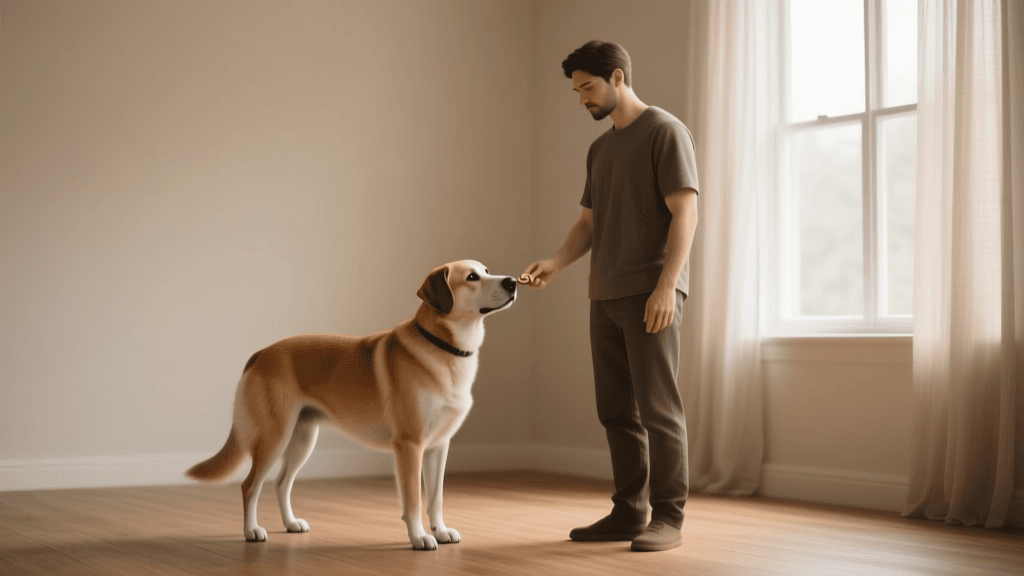
Teaching a dog to willingly relinquish an item relies on the economic principle of trading up. The item you offer must be of significantly higher value than the item the dog possesses. If your dog is guarding a $5 cotton rope toy, you must offer a high-value treat such as Ziwi Peak air-dried beef or Stella and Chewy's freeze-dried raw patties (which cost approximately $25 to $35 per bag). The sequence is critical: present the high-value treat, wait for the dog to drop the toy to eat the treat, pick up the toy, and then immediately return the toy to the dog. This proves to the dog that giving up a resource does not result in a permanent loss, thereby reducing the anxiety that fuels the guarding behavior.
Structured Training Data: The DSCC Progression Chart
The following table outlines a systematic desensitization protocol for a dog that guards their food bowl when a human approaches. The handler must track the dog's body language and only progress to the next phase when the dog displays relaxed, approach-oriented behavior (e.g., loose wagging, soft eyes, relaxed ears) for at least five consecutive sessions.
| Phase | Distance / Trigger Intensity | Human Action | Canine Emotional / Cognitive Shift |
|---|---|---|---|
| 1 | 15 Feet (Sub-threshold) | Toss high-value treats (e.g., freeze-dried liver) toward the dog while they eat their standard kibble. | Classical conditioning begins; human presence predicts high-value caloric intake. |
| 2 | 10 Feet | Take one step toward the dog, toss a high-value treat, and immediately take a step back. | Dog learns that human approach results in a bonus reward, reducing spatial anxiety. |
| 3 | 5 Feet | Approach to 5 feet, drop a handful of premium treats into the periphery of the bowl area, and retreat. | Anticipatory joy replaces defensive posturing; the dog begins to welcome the approach. |
| 4 | 2 Feet (Near Bowl) | Stand 2 feet away, offer a high-value chew (like a bully stick) by hand, allowing the dog to take it. | Trust is established; the dog associates the human's proximity with the delivery of premium resources. |
Common Pitfalls and Punishment Fallacies
One of the most dangerous mistakes owners make is applying positive punishment—such as alpha rolls, leash corrections with prong collars, or forcefully prying items from a dog's mouth—to suppress growling. While punishment may temporarily suppress the visible warning signs, it does absolutely nothing to address the underlying fear or anxiety. In fact, it exacerbates it. The dog learns that the human's approach is indeed a threat and that growling results in physical conflict, leading them to skip the warning phase entirely and proceed straight to biting. The American Veterinary Society of Animal Behavior (AVSAB) explicitly warns against the use of punishment in behavior modification, noting that it can increase aggression and cause severe fallout to the human-animal bond.
"Behavior modification is not about suppressing a symptom; it is about rewiring the emotional response to a trigger. When we punish a growl, we are simply removing the dog's smoke detector while the fire continues to burn."
When to Seek Professional Help
While mild guarding over low-value toys can often be managed with the trade-up protocol outlined above, severe resource guarding—especially cases involving bites that have broken the skin, guarding of humans, or guarding in multi-dog households—requires the intervention of a qualified professional. Owners should seek out a Certified Applied Animal Behaviorist (CAAB), a Diplomate of the American College of Veterinary Behaviorists (DACVB), or a certified professional through the International Association of Animal Behavior Consultants (IAABC). These experts can conduct a functional behavior assessment, design a customized DSCC protocol, and, if necessary, collaborate with a veterinarian to incorporate psychopharmacological support (such as SSRIs) to lower the dog's baseline anxiety and facilitate neuroplasticity during the training process.
hannah-wickes
All our authors care for dogs every day — read more of their work on the authors page.