Behavior Analysis of Dog Resource Guarding: The ABC Model
Discover how expert behavior analysis and the ABC model can safely modify dog resource guarding. Learn actionable steps, timing, and tools.
Understanding Resource Guarding Through Applied Behavior Analysis
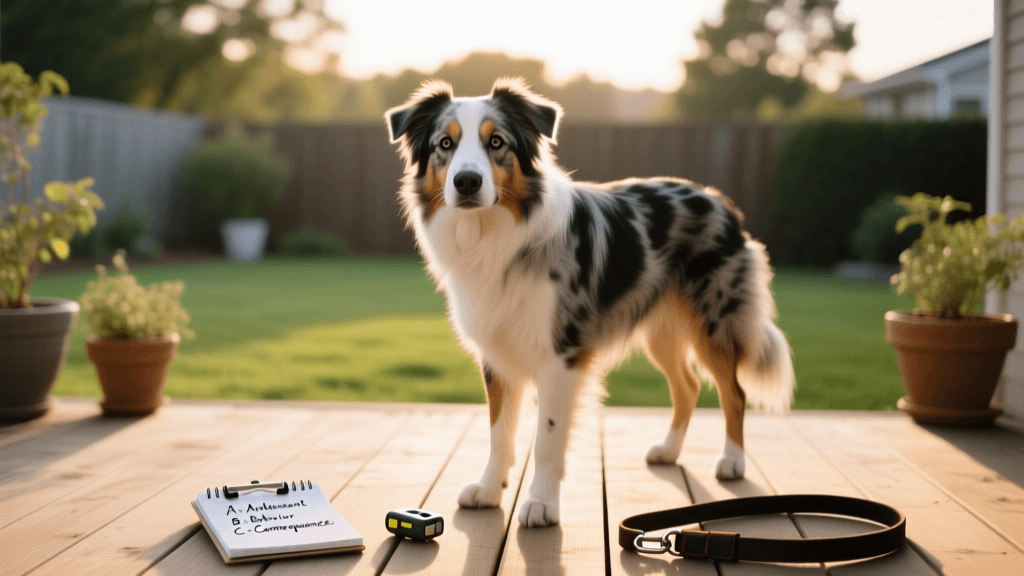
Resource guarding is one of the most misunderstood behaviors in canine ethology. Often mislabeled as 'dominance' or 'stubbornness,' resource guarding is, from an expert behavior analysis perspective, a highly functional and naturally selected survival behavior. When a dog growls, snaps, or freezes over a bone, toy, or sleeping space, they are communicating a clear contingency: 'If you come closer, I will escalate to protect my resource.' To effectively and humanely modify this behavior, we must abandon outdated dominance theories and apply the rigorous framework of Applied Behavior Analysis (ABA).
According to the ASPCA, resource guarding is a common behavioral issue that requires careful management and positive reinforcement-based modification. By analyzing the environmental variables that control the behavior, we can systematically alter the dog's emotional and behavioral responses without suppressing warning signs through aversive punishment.
The ABC Model: Antecedent, Behavior, Consequence
In behavior analysis, every behavior is a function of the environment. We use the ABC model to dissect the contingency:
- Antecedent (A): The environmental trigger or stimulus that occurs immediately before the behavior. In guarding, this is typically a human or another animal approaching within a specific proximity to a high-value item.
- Behavior (B): The observable and measurable action. This ranges from subtle 'whale eye' and freezing to overt growling, lip curling, lunging, or biting.
- Consequence (C): What happens immediately after the behavior. If the dog growls and the human backs away, the consequence is negative reinforcement (removal of the aversive threat), which increases the likelihood of the dog growling again in the future.
Motivating Operations: The Hidden Variable
Before the antecedent even occurs, we must consider Motivating Operations (MOs). An Establishing Operation (EO) increases the value of a resource. For example, a dog that has been fed a low-satiety diet or has been deprived of chew time will find a raw hide significantly more reinforcing, lowering their threshold for guarding. Conversely, an Abolishing Operation (AO), such as allowing the dog to chew on a Kong Wobbler for 20 minutes prior to a training session, decreases the value of the resource and raises the threshold for guarding.
Data Collection: Tracking the Behavior
Expert behaviorists do not guess; they collect data. Below is a standard ABC data collection chart used to identify patterns in resource guarding.
| Date/Time | Antecedent (Trigger) | Behavior (Response) | Consequence (Result) | Hypothesized Function |
|---|---|---|---|---|
| Mon 18:00 | Owner walks within 4 ft of dog eating kibble | Freeze, hard stare, low growl | Owner stops and backs away | Negative Reinforcement (Increase distance) |
| Tue 08:15 | Toddler reaches for dog's plush toy | Snatch toy, retreat to corner, snap | Toddler cries, parent removes toddler | Negative Reinforcement (Remove threat) |
| Wed 19:30 | Owner approaches while dog chews bully stick | Lip lick, yawning, no vocalization | Owner tosses piece of chicken | Positive Reinforcement (Gain higher value item) |
Actionable Behavior Modification Protocols
Modifying resource guarding requires a multi-tiered approach focusing on antecedent arrangement, differential reinforcement, and classical counterconditioning.
Step 1: Antecedent Arrangement (Management)
Management prevents the rehearsal of the unwanted behavior. Every time a dog successfully guards a resource and keeps the 'threat' away, the neural pathway for that behavior is strengthened. Management costs very little but requires strict environmental control.
- Spatial Separation: Use a 36-inch tall hardware-mounted baby gate (Cost: $40-$60) to separate the dog from high-traffic areas during meal times.
- Crate Feeding: Feed all meals inside a 42-inch wire crate. Cover the crate with a breathable canvas cover ($25) to reduce visual stimuli and lower the dog's arousal level.
- Pick-Up Protocol: Do not leave high-value chews (e.g., Himalayan yak chews, marrow bones) lying around. These items should only be given in a secure, isolated space and traded back before the dog finishes them entirely.
Step 2: Differential Reinforcement of Alternative Behavior (DRA)
DRA involves reinforcing a specific alternative behavior while withholding reinforcement for the problem behavior. The most common DRA protocol for guarding is teaching a reliable 'Trade' or 'Drop It' cue.
- Establish the Baseline Value: Identify the guarded item (e.g., a standard nylon chew toy).
- Identify the Reinforcer: The trade item must be of significantly higher biological value. If guarding kibble, use boiled chicken breast or freeze-dried beef liver, cut into 1/4-inch cubes.
- The Mechanics of the Trade: Present the high-value treat at the dog's nose level, approximately 6 inches away from the guarded item. Wait for the dog to voluntarily release the item. The exact millisecond the item leaves their mouth, use a marker word ('Yes!') and deliver the treat.
- Timing and Latency: Keep inter-trial intervals between 10 to 15 seconds. Limit sessions to 3 to 5 minutes to prevent satiation and cognitive fatigue.
Step 3: Desensitization and Counterconditioning (DS/CC)
DS/CC alters the dog's underlying emotional response (classical conditioning) to the antecedent. The goal is to change the human's approach from a predictor of 'resource loss' to a predictor of 'resource gain'.
As highlighted by Fear Free Pets, reducing stress and recognizing subtle fear signals are paramount before initiating any active training. If the dog is already stiff or freezing, you are over threshold and must increase your distance.
- Find the Sub-Threshold Distance: Identify the distance at which the dog notices the human but does not exhibit guarding behaviors (e.g., 12 feet).
- The Approach and Toss: The handler walks toward the dog's space, stops at the 12-foot mark, and immediately tosses a high-value treat (e.g., a piece of string cheese) directly to the dog, then turns and walks away.
- Repetition and Shaping: Repeat this 10 times per session. Over successive weeks, decrease the distance by 1-foot increments, provided the dog remains relaxed (loose body posture, soft eyes, relaxed tail carriage).
According to the American Veterinary Society of Animal Behavior (AVSAB), the use of punishment (such as alpha rolls, leash corrections, or yelling) to suppress resource guarding is contraindicated. Punishment does not change the underlying emotional state of fear or anxiety; it merely suppresses the warning signs, often resulting in a dog that bites without prior growling or freezing.
Recommended Tools and Budgeting
Implementing an ABA-based behavior modification plan requires specific tools to ensure safety, accurate timing, and high rates of reinforcement. Below is a breakdown of recommended products and estimated costs for a comprehensive guarding protocol.
- Kurgo Treat Training Pouch ($15 - $20): Essential for keeping high-value treats accessible during DS/CC exercises. Allows for a treat delivery latency of under 0.5 seconds.
- Snuffle Mat by Paw5 ($35 - $45): Utilizes foraging behaviors to increase satiation and lower the Establishing Operation (EO) for food guarding. Use 1 cup of kibble mixed with 10 high-value treats.
- Royal Canin Veterinary Diet Calm ($80 - $100 per bag): A nutritionally complete diet supplemented with alpha-casozepine and L-tryptophan to support baseline neurological calmness during intensive behavior modification.
- Professional Consultation ($150 - $350 per hour): For cases involving Level 3 bites (skin punctures) or severe multi-dog household guarding, hiring a board-certified veterinary behaviorist (DACVB) or a Certified Applied Animal Behaviorist (CAAB) is strongly recommended to ensure safety and accurate functional assessments.
Conclusion
Resource guarding is not a character flaw; it is a predictable behavioral response to environmental contingencies. By utilizing the ABC model, managing antecedents, and applying rigorous differential reinforcement and counterconditioning protocols, we can systematically reshape the dog's behavior. Expert behavior analysis prioritizes data, precise timing, and the emotional well-being of the dog, ensuring a safer and more harmonious relationship between canines and their human families. Always prioritize safety, utilize sub-threshold distances, and consult with certified professionals when dealing with severe aggression.
tom-renshaw
All our authors care for dogs every day — read more of their work on the authors page.