Breed Selection Guide: Matching Training Styles to Dog Types
Discover how to select the right dog breed based on your training capacity. Compare herding, toy, and hound breeds with actionable conditioning tips.
Choosing a dog is a profound commitment that extends far beyond selecting a cute face or a preferred coat color. For many prospective owners, the biggest point of friction arises not from a lack of love, but from a fundamental mismatch between the owner's lifestyle and the dog's genetic predispositions. When it comes to obedience training, behavioral conditioning, and socialization, a dog's breed group dictates how they learn, what motivates them, and how much daily mental enrichment they require to remain balanced.
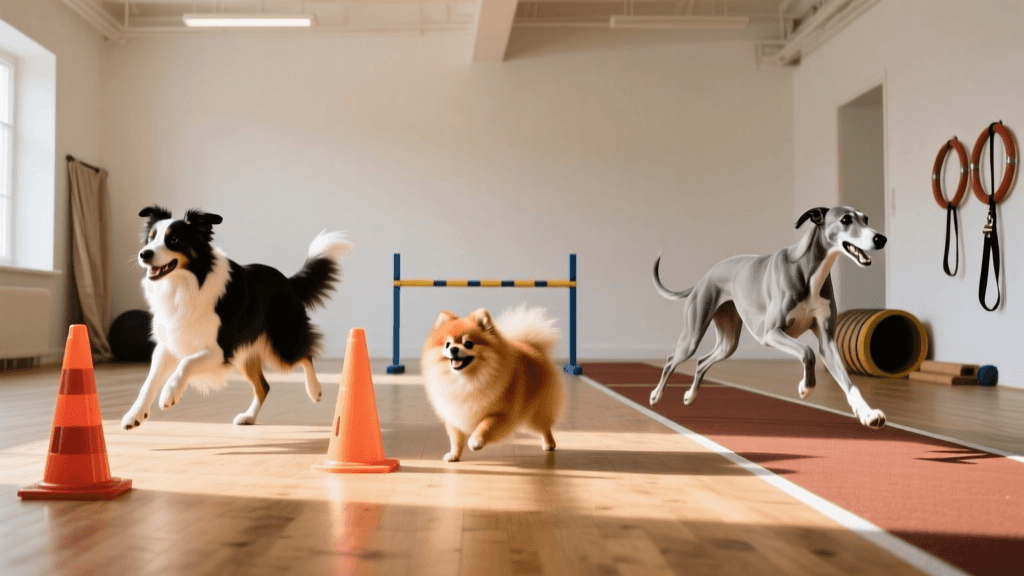
According to the American Kennel Club's training guidelines, understanding a breed's original purpose is the key to unlocking their potential. A Border Collie bred to herd sheep across rugged terrain will approach a training session very differently than a Basset Hound bred to track scents over miles of dense brush. This guide breaks down the training demands of three distinct breed groups—Herding, Hound, and Toy—to help you select a companion that aligns with your training capacity, budget, and daily routine.
The Genetics of Trainability: Why Breed Selection Matters
Canine intelligence is not a monolith. In his seminal research on dog psychology, Dr. Stanley Coren categorized canine intelligence into three distinct types: instinctive (what the dog was bred to do), adaptive (how well the dog learns from its environment to solve problems), and working/obedience (how well the dog learns from humans). When selecting a breed, many first-time owners mistakenly equate high working intelligence with being an 'easy' pet. In reality, highly intelligent herding and working breeds require constant mental conditioning; without it, they will invent their own 'jobs,' which often manifests as destructive behavior, neurotic pacing, or obsessive barking.
Conversely, breeds with high instinctive intelligence but lower working obedience (like many scent hounds) are not 'stubborn' or 'unintelligent.' They are simply genetically hardwired to follow their noses rather than human vocal cues. Understanding this distinction is critical for setting realistic training timelines and selecting the right behavioral conditioning tools.
Breed Group Comparison Chart: Training Demands and Costs
The following table provides a structured comparison to help you evaluate which breed group aligns with your available time, financial budget, and training patience.
| Breed Group | Primary Drive | Daily Training Requirement | Recall Difficulty (1-10) | Est. Annual Enrichment Cost |
|---|---|---|---|---|
| Herding (e.g., Border Collie, Aussie) | Movement & Control | 45-60 mins (Mental & Physical) | 3 (Highly Responsive) | $250 - $400 (Puzzles, Agility gear) |
| Hound (e.g., Beagle, Coonhound) | Scent & Tracking | 30-45 mins (Scent work, Long walks) | 8 (Highly Distractable) | $150 - $250 (Long lines, Scent kits) |
| Toy (e.g., Cavalier, Pomeranian) | Companionship & Comfort | 15-20 mins (Short, positive bursts) | 5 (Moderate, Prone to Small Dog Syndrome) | $100 - $150 (Small treats, Indoor pads) |
Herding Breeds: High-Octane Conditioning and Impulse Control
Herding breeds are the athletes of the canine world. They possess an intense prey drive that has been selectively modified into 'eye, stalk, and chase' behaviors, minus the final kill sequence. If you select a herding breed, your training focus must heavily emphasize impulse control and mental fatigue over simple physical exercise.
Actionable Training Protocol
- The Tool: Invest in a flirt pole, such as the Outward Hound Tail Teaser (36-inch wand, approx. $15). This allows you to simulate erratic prey movements while keeping the dog at a safe distance from your body, preventing inappropriate nipping.
- The Routine: Conduct three 10-minute sessions daily. Begin with a 'drop it' or 'leave it' command while the toy is moving. The dog only gets to chase when they offer calm, seated eye contact.
- Mental Enrichment: Physical exercise is not enough. Feed your herding dog their daily kibble out of a KONG Classic (Red, Medium size, approx. $16) or a snuffle mat to force them to forage, satisfying their need to problem-solve.
Owners who lack the time for this intensive conditioning should avoid herding breeds, as under-stimulated herders frequently develop severe behavioral issues, including shadow-chasing and heel-nipping.
Scent Hounds: Mastering the Art of Recall
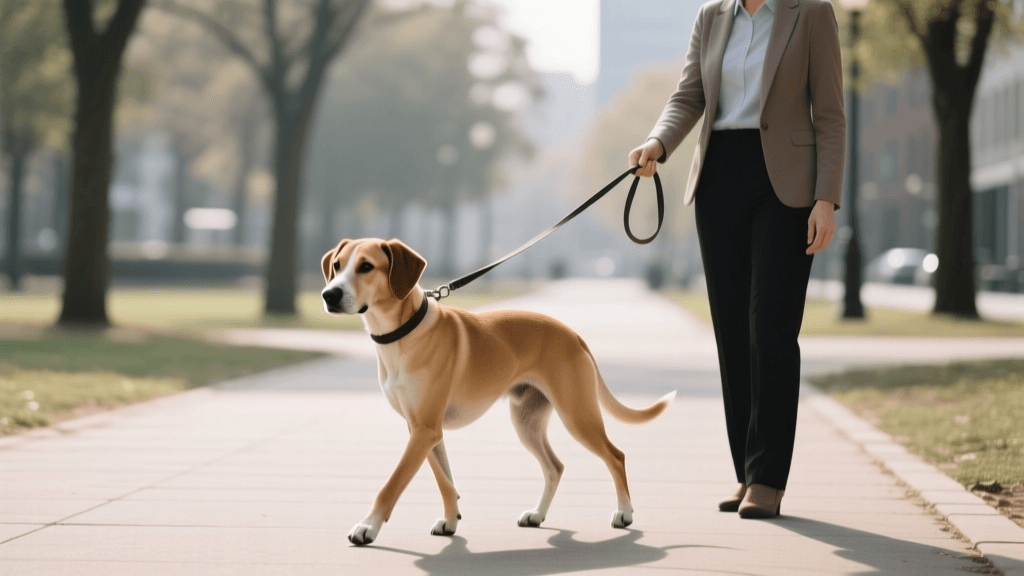
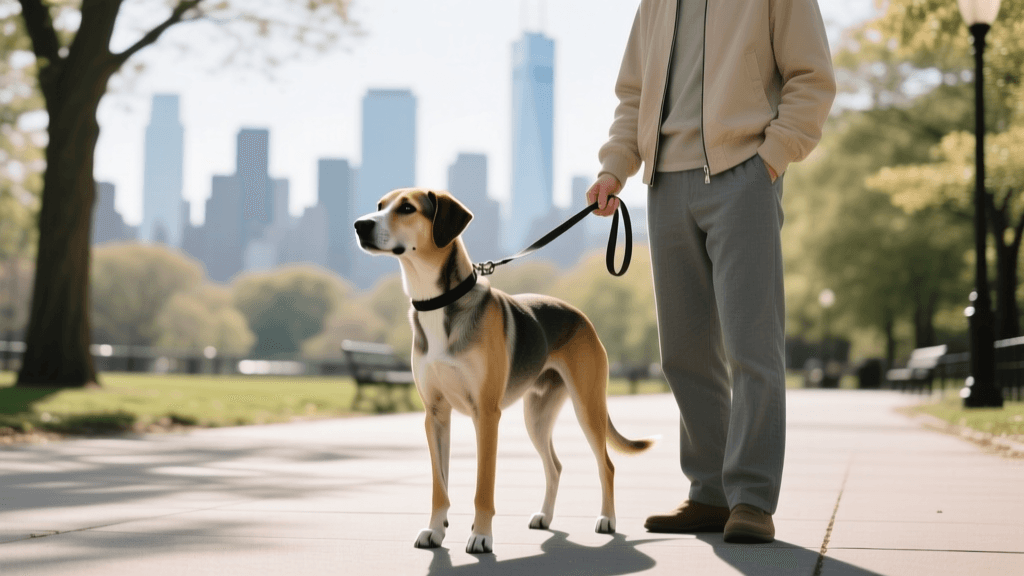
Hounds were bred to work independently at great distances from their handlers, following invisible scent trails. Consequently, the Humane Society of the United States notes that hounds are notoriously difficult to train for off-leash recall. When a Beagle or a Bloodhound catches an interesting scent, their brain literally tunes out human vocal commands. This is not defiance; it is a biological override.
Actionable Training Protocol
- The Tool: Never trust a hound off-leash in an unsecured area. Purchase a Mendota Pets Biothane Long Line (30 ft length, 3/8 inch width, approx. $25). The biothane material is waterproof, tangle-resistant, and easy to clean after dragging through brush.
- The Routine: Practice 'scent-tracking' as a reward. Hide high-value treats (like freeze-dried beef liver) in the yard. Command your dog to 'find it.' This channels their instinctive drive into a cooperative game with you.
- The 3-Second Rule: When practicing recall on the long line, the reward must be delivered within 1.5 seconds of the dog returning to you. If you are fumbling with a treat bag, the dog will associate the recall with the delay, not the reward.
Selecting a hound means accepting that off-leash hikes in open spaces may never be a safe reality. If your dream of dog ownership involves running completely off-leash through national parks, a hound is the wrong selection for you.
Toy Breeds: Overcoming Small Dog Syndrome
Toy breeds, such as the Pomeranian, Shih Tzu, and Toy Poodle, are highly capable of learning complex tricks, yet they frequently suffer from 'Small Dog Syndrome.' This behavioral phenomenon occurs when owners inadvertently reinforce fearful or aggressive behaviors because the dog is small enough to be perceived as 'cute' or non-threatening. Furthermore, toy breeds present unique logistical challenges in housebreaking due to their tiny bladders and high metabolisms.
Actionable Training Protocol
- The Tool: Use micro-treats to avoid obesity, which is a severe risk for small joints. Zuke's Mini Naturals contain under 2 calories per treat (approx. $6.50 per bag). For potty training, use a defined indoor space like a Fresh Patch or specific washable pee pads if you live in a high-rise apartment.
- The Routine: Implement 'Nothing in Life is Free' (NILIF) conditioning. Your toy dog must perform a 'sit' or 'touch' (hand target) before receiving meals, treats, or being picked up. This establishes you as the provider of resources, reducing resource-guarding and anxiety.
- Socialization: The ASPCA's behavioral resources emphasize that small dogs need just as much early socialization as large breeds. Carry your puppy in a sling to expose them to loud noises, traffic, and strange surfaces before their vaccination cycle is complete, ensuring they do not develop fear-based reactivity.
Trainer's Note: Never punish a toy breed for potty accidents. Their bladders are the size of a walnut, and they physically cannot hold it for an 8-hour workday. If you work long hours, hiring a midday dog walker is a mandatory cost of selecting a toy breed.
The 5-Point Training Compatibility Checklist
Before finalizing your breed selection, honestly evaluate your lifestyle against this checklist:
- Time Allocation: Can you dedicate 45+ minutes a day strictly to active training and mental enrichment? (If no, avoid Herding/Working breeds).
- Recall Expectations: Are you okay with a dog that must remain on a leash in 90% of outdoor environments? (If no, avoid Scent Hounds and Terriers).
- Financial Budget: Have you budgeted $300-$500 annually for specialized training tools, puzzle toys, and potential group classes?
- Physical Space: Do you have a secure, fenced yard for long-line training, or will you be relying on public parks where prey drive can be easily triggered?
- Patience for Milestones: Are you prepared for a housebreaking timeline that may take 4-6 months for a toy breed, or a recall training timeline that takes over a year for a hound?
Conclusion
Successful obedience training and behavioral conditioning begin long before you bring a puppy home; they begin with informed breed selection. By matching your personal training capacity, daily schedule, and environmental constraints to a breed's genetic drives, you set the stage for a harmonious, lifelong partnership. Whether you are channeling a herder's energy through agility, engaging a hound's nose through tracking, or building a toy breed's confidence through structured boundaries, understanding the 'why' behind your dog's behavior is the ultimate key to training success.
robin-maitland
All our authors care for dogs every day — read more of their work on the authors page.