Best Dog Breeds for Remote Workers: 2026 WFH Training
Discover the best dog breeds for remote workers in 2026. Learn WFH boundary training, Zoom-quiet commands, and mat training for home office harmony.
The Evolution of the WFH Dog in 2026
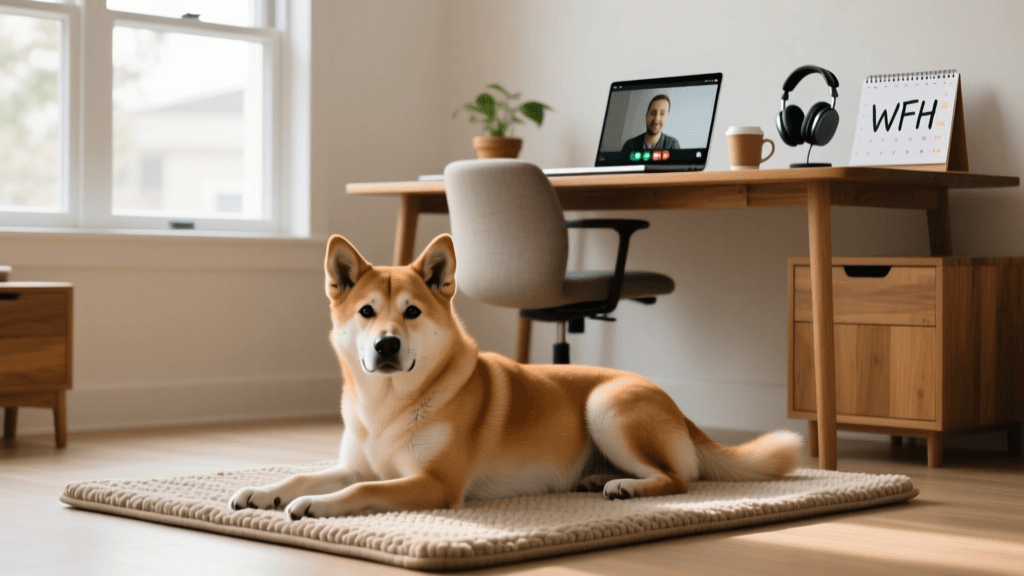
As we navigate the permanent remote-work landscape of 2026, the home office has officially merged with the living room. According to recent workforce data, over 45% of knowledge-based professionals now work from home full-time. While having a canine companion during the workday is a massive perk for mental health, it introduces unique behavioral challenges. A dog that barks at every delivery driver or demands attention during a critical Zoom presentation can quickly derail your productivity.
Choosing the right breed is only half the battle; the real secret to a harmonious home office lies in specialized behavioral conditioning. In this guide, we explore the best dog breeds for remote workers and provide actionable, 2026-tested training protocols to ensure your furry coworker respects your professional boundaries.
Top 3 Trainable Breeds for the Home Office
Not all dogs are suited for the quiet, confined environment of a home office. The best breeds for remote workers share three traits: low indoor energy, a quiet disposition, and an eagerness to learn boundary commands. Here are the top three breeds and their specific training needs.
1. The Greyhound: Mastering the 'Off-Switch'
Often misunderstood as high-strung racing dogs, retired Greyhounds are famously known as '45-mph couch potatoes.' They sleep up to 18 hours a day, making them exceptional companions for remote workers who need long stretches of uninterrupted deep work. Their primary training challenge is recall and establishing a designated 'settle' zone, as their sighthound instincts can make them easily distracted by movement outside the window.
2. The Cavalier King Charles Spaniel: Curing 'Velcro Dog' Syndrome
Cavaliers are affectionate, highly adaptable, and generally very quiet, making them perfect for small apartments and shared home offices. However, their intense devotion can lead to severe separation anxiety if you ever need to leave the house for a co-working session or a grocery run. Training a Cavalier requires a heavy emphasis on independence conditioning and crate training to prevent 'velcro dog' behaviors.
3. The Standard Poodle: Impulse Control and Quiet Alerts
Highly intelligent and low-shedding, the Standard Poodle is the genius of the home office. They learn complex tricks and boundaries faster than almost any other breed. The training focus for Poodles in a WFH environment is impulse control and teaching a 'quiet alert' system, ensuring they notify you of a stranger at the door without resorting to frantic, meeting-ruining barking.
Core WFH Training Protocols for 2026
To maintain professionalism during your remote work hours, you must implement specific behavioral conditioning routines. According to the American Kennel Club's training resources, consistency and positive reinforcement are the cornerstones of modern canine obedience. Here are the three essential protocols for the WFH dog owner.
Protocol A: Mat Training for Uninterrupted Zoom Calls
Mat training teaches your dog to go to a specific bed or mat and stay there until released. This is the ultimate 'meeting mode' command.
- Step 1: The Lure. Place a high-value treat on the mat. When all four paws step onto the mat, use a clicker or a marker word like 'Yes!' and reward.
- Step 2: The Down. Lure the dog into a lying down position on the mat. Reward heavily for the down-stay.
- Step 3: Duration. Delay the reward by 3 seconds, then 5, then 10. Build up to 5 minutes of continuous mat-staying.
- Step 4: Distance and Distraction. Sit at your desk. Pretend to talk on a headset. If the dog stays on the mat, toss a treat to them. Gradually increase the 'fake meeting' intensity.
Protocol B: Desensitizing to Smart Doorbells and Deliveries
In 2026, smart doorbells and frequent app-based deliveries are the biggest enemies of the home office. To stop alert barking, you must desensitize your dog to the trigger.
- Record the sound of your specific doorbell or download the notification sound from your phone.
- Play the sound at a very low volume (10%) while feeding your dog high-value treats like freeze-dried liver.
- Gradually increase the volume over several days. If the dog barks, the volume is too high; drop it back down.
- Teach the 'Quiet' command: When the dog barks at a real delivery, say 'Quiet,' wait for a two-second pause in the barking, mark the silence, and reward.
Protocol C: Independence Conditioning via Smart Tech
Remote workers are home 24/7, which can cause dogs to panic when left alone. The ASPCA's dog care guidelines emphasize the importance of preventing separation anxiety through gradual desensitization. Use baby gates to separate your dog from your office for 30-minute intervals while you are still home. Pair this with a 2026 AI pet camera (like the Furbo 4 or Eufy Smart Pet Camera) to monitor their stress levels and toss treats remotely when they are resting calmly in another room.
WFH Breed Comparison & Training Matrix
Use the table below to identify which breed aligns with your specific remote work lifestyle and training capacity.
| Breed | Indoor Energy | Vocalization Level | Primary WFH Training Focus | Best For |
|---|---|---|---|---|
| Greyhound | Very Low | Low | Window boundary training & settle | Long deep-work sessions |
| Cavalier King Charles | Low | Very Low | Independence & crate conditioning | Small apartments & hybrid workers |
| Standard Poodle | Moderate | Moderate | Impulse control & quiet alerts | Active remote workers & families |
The 2026 Remote Worker's Daily Dog Schedule
Dogs thrive on routine. Structuring your dog's day around your remote work schedule prevents boredom-induced behavioral issues. Here is a sample schedule optimized for a standard 9-to-5 WFH day:
- 7:00 AM: Morning potty break and 30-minute sniffari (mental enrichment walk).
- 8:30 AM: Breakfast inside a puzzle feeder or snuffle mat to burn cognitive energy while you check morning emails.
- 9:00 AM - 11:30 AM: Deep Work Block. Dog is on a 'Place' command mat or resting in a designated pen.
- 11:30 AM: Mid-day potty break and 10-minute trick training session (utilizing smart microchip doors like the SureFlap 2026 Connect allows them to use the yard independently if you have a secure fence).
- 1:00 PM: Lunch break. Dog gets a frozen Kong or lick mat while you eat and take a screen break.
- 2:00 PM - 4:30 PM: Meetings Block. Dog is in a separate room with an AI pet camera and an automatic treat dispenser to reward quiet resting.
- 5:00 PM: End of workday. Transition walk to signal to the dog that 'work mode' is over and 'home mode' has begun.
Final Thoughts on Home Office Harmony
The best dog breeds for remote workers are those that can seamlessly transition between being an affectionate companion and an independent roommate. By selecting a breed suited for indoor tranquility and committing to modern behavioral conditioning techniques like mat training and smart-tech desensitization, you can create a productive, stress-free home office. Remember that training is an ongoing process; invest 15 minutes a day into these protocols, and your canine coworker will become the best employee you have ever hired.
jonas-cole
All our authors care for dogs every day — read more of their work on the authors page.