2026 Diabetic Alert Dog Scent Training Protocols
Learn the 2026 protocols for training diabetic alert dogs using hypoglycemia scent kits, clicker shaping, and positive reinforcement for reliable alerts.
Introduction to Diabetic Alert Dog (DAD) Training in 2026
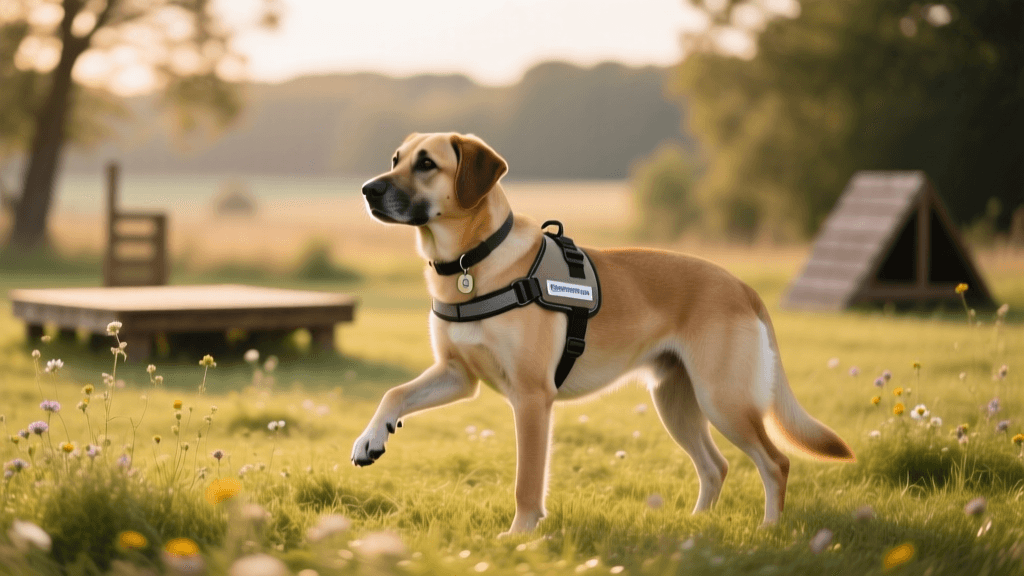
Working and service dogs have long been celebrated for their ability to guide the visually impaired, retrieve mobility aids, and provide psychiatric support. However, one of the most remarkable and life-saving roles a canine can undertake is that of a Diabetic Alert Dog (DAD). These highly trained working dogs are capable of detecting the subtle chemical changes in their handler's body that precede dangerous hypoglycemic (low blood sugar) or hyperglycemic (high blood sugar) events. As we move through 2026, advancements in synthetic scent calibration and volatile organic compound (VOC) preservation have revolutionized how trainers and handlers approach scent imprinting.
Training a DAD is not a casual endeavor; it requires rigorous adherence to operant conditioning, precise scent isolation, and an unwavering commitment to positive reinforcement. According to the American Kennel Club (AKC), service dog training demands hundreds of hours of specialized task-work and public access proofing. This guide will walk you through the modern 2026 protocols for training a diabetic alert dog using hypoglycemia scent kits, ensuring your working dog is reliable, confident, and ready to save lives.
The Science of Hypoglycemia Scent Detection
Before diving into the physical training steps, it is crucial to understand what the dog is actually smelling. When a human's blood sugar drops rapidly, the body undergoes metabolic stress. This stress causes the release of specific VOCs, most notably isoprene, through the breath and sweat. While humans cannot detect this chemical shift, a dog's olfactory system—boasting up to 300 million scent receptors—can isolate isoprene at parts-per-trillion concentrations.
In 2026, veterinary researchers and service dog organizations have refined the way we capture and store these VOCs. Rather than relying solely on unpredictable real-time sweat samples, trainers now utilize cryo-preserved donor samples and laboratory-calibrated synthetic isoprene swabs. This ensures that the dog is learning a consistent, uncontaminated scent profile, drastically reducing the rate of false alerts in the field.
Essential Equipment for 2026 Scent Training
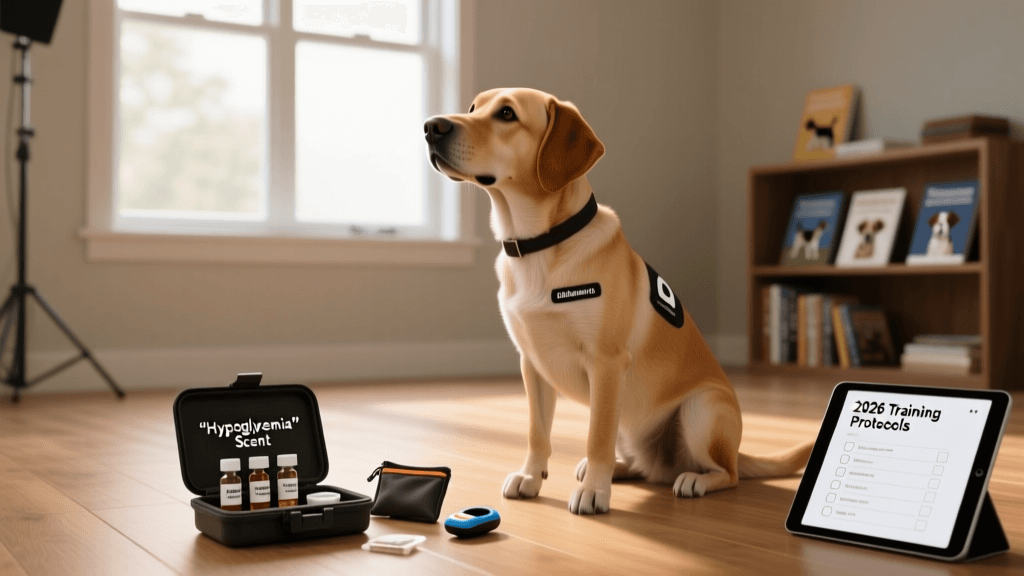
Proper equipment is the backbone of any successful working dog program. Scent contamination is the number one reason DADs fail their certification exams. To prevent this, trainers must use specialized tools that isolate the target odor from the handler's scent. Below is a comparison of the standard equipment used in modern DAD training protocols.
| Equipment Type | Pros | Cons | 2026 Avg Cost |
|---|---|---|---|
| Cryo-Vial Donor Samples | 100% authentic human VOC profile; highly accurate. | Requires regular replenishment from the handler/donor. | $120 / kit |
| Synthetic Isoprene Swabs | Long shelf life; easy to transport; consistent odor. | Lacks secondary metabolic markers unique to the handler. | $45 / kit |
| Multi-Port Scent Wheel | Prevents handler scent contamination; allows blind testing. | Bulky for initial imprinting; requires setup time. | $85 |
| Stainless Steel Scent Tins | Durable; easy to clean with enzymatic neutralizers. | Can retain ghost odors if not properly sterilized. | $15 / set |
Step-by-Step Hypoglycemia Scent Shaping Protocol
Training a medical alert dog relies heavily on shaping and capturing behaviors. The following protocol utilizes clicker training and high-value rewards (such as freeze-dried liver or real meat puree) to build a robust alert behavior.
Phase 1: Scent Imprinting (The 'Hot' vs. 'Cold' Game)
The goal of Phase 1 is to teach the dog that the specific scent of hypoglycemia predicts a high-value reward.
- Step 1: Place a synthetic isoprene swab or a cryo-vial sample inside a stainless steel scent tin with holes in the lid.
- Step 2: Present the 'Hot' tin to the dog. The moment the dog sniffs the tin, click your clicker and deliver a jackpot reward (3-5 treats).
- Step 3: Introduce a 'Cold' tin (an empty, sterilized tin). Present both tins. Only click and reward when the dog engages with the 'Hot' tin.
- Step 4: Gradually move the tins further apart and place them on the floor, eventually transitioning to a multi-port scent wheel to eliminate visual and handler cues.
Phase 2: Adding the Alert Behavior
Once the dog reliably seeks out the 'Hot' scent, you must attach a specific, observable alert behavior. Common DAD alerts include a persistent nose boop to the handler's leg, a paw scratch, or a trained retrieve of a specific 'alert bringel' (a small dumbbell attached to the dog's collar).
To shape a nose boop:
- Wait for the dog to sniff the 'Hot' tin.
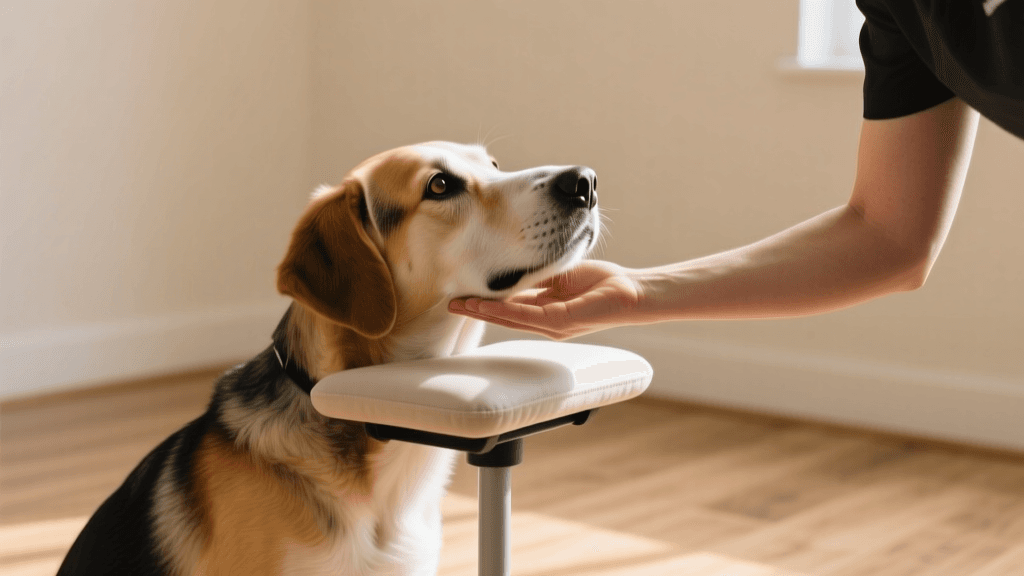
- Hold your hand or a target stick near the tin. When the dog turns from the tin and bumps your hand, click and reward.
- Gradually require the dog to bump your hand then return to the tin, creating a repetitive 'boop-sniff-boop' loop.
- Fade the tin and require the dog to boop your leg when the scent is presented in the room.
Phase 3: Fading the Scent Wheel and Real-World Application
In the real world, your handler will not be carrying a scent wheel. You must transition the dog from detecting the scent in a sterile tin to detecting it on the human body. Begin by having the handler hold the 'Hot' sample in their closed fist. Reward the dog for alerting to the fist. Next, place the sample in the handler's pocket. Finally, work with a diabetic donor who is actively experiencing a safe, monitored low-blood-sugar event, allowing the dog to detect the natural VOCs emanating from the donor's breath and skin.
Phase 4: Proofing and Distraction Training
A working dog must be able to alert in a crowded grocery store, a noisy office, or a moving vehicle. Introduce environmental distractions systematically. Start with mild distractions (a radio playing, a toy on the floor) and progress to high-level distractions (dropping food, other dogs walking by, loud noises). If the dog breaks their alert to investigate a distraction, calmly reset them and lower the criteria until they succeed.
Legal and Certification Standards (2026 Update)
It is vital to understand the legal landscape surrounding service dogs. Under the Americans with Disabilities Act (ADA), service dogs are defined as dogs that are individually trained to do work or perform tasks for people with disabilities. Detecting a medical event like hypoglycemia and alerting the handler qualifies as a trained task, granting the dog public access rights.
However, the ADA does not require certification or mandate that dogs wear vests. Despite this, reputable training programs align their curriculum with the Assistance Dogs International (ADI) standards. ADI accreditation ensures that the dog has been trained not only in task-work but also in rigorous public access manners, hygiene, and stress-resilience. In 2026, ADI has placed an even heavier emphasis on the welfare of the working dog, mandating strict 'retirement and decompression' protocols to prevent burnout in medical alert dogs who carry a high cognitive load.
Common Training Pitfalls and How to Avoid Them
Even experienced trainers can encounter roadblocks when conditioning a medical alert dog. Here are the most common pitfalls and their solutions:
- Scent Contamination: If you handle the 'Hot' sample and then touch the 'Cold' sample or the scent wheel, you have contaminated the test. Solution: Always use nitrile gloves and tweezers when handling scent articles. Change gloves between every single repetition.
- Alert Fatigue: If a dog is asked to alert too many times without a sufficient reward history, they will stop offering the behavior. Solution: Keep training sessions short (5-10 minutes). Maintain a variable ratio schedule of reinforcement, but ensure the 'jackpot' rewards remain highly motivating.
- False Alerts: Dogs may alert to other strong odors, such as acetone (nail polish remover) or certain fruits, which share chemical similarities with isoprene. Solution: Introduce 'distractor scents' during Phase 4. Place acetone or fruit extracts in 'Cold' tins and heavily reward the dog for ignoring them and finding the true hypoglycemia sample.
- Clever Hans Effect: Dogs are masters at reading human body language. The dog may be alerting to the handler's subtle anxiety or micro-expressions rather than the scent. Solution: Conduct 'blind' tests where the handler does not know which port on the scent wheel contains the 'Hot' sample. If the dog fails blind tests but passes open tests, you have a Clever Hans issue, not a scent issue.
Conclusion
Training a Diabetic Alert Dog in 2026 is a beautiful synthesis of canine biology, behavioral science, and modern medical technology. By utilizing cryo-preserved samples, synthetic VOC swabs, and rigorous blind-testing protocols, trainers can produce working dogs that are not only highly accurate but also confident and happy in their roles. Remember that a service dog is a partner, not a medical device. Prioritize their mental health, provide ample off-duty playtime, and celebrate the incredible life-saving bond that develops between a DAD and their handler. With patience, precision, and positive reinforcement, you can successfully shape a reliable medical alert dog capable of changing a life forever.
hannah-wickes
All our authors care for dogs every day — read more of their work on the authors page.