Dog Training for a New Baby: 2026 Boundary & Scent Guide
Prepare your dog for a new baby in 2026 with expert boundary training, scent desensitization, and routine adjustments for a stress-free nursery transition.
Navigating the Ultimate Life Transition: Bringing Baby Home
Bringing a new baby into the home is one of the most profound life transitions a family can experience, and for your dog, it represents a massive shift in their daily reality. As we move through 2026, veterinary behaviorists and certified professional dog trainers increasingly emphasize that preparing your dog for a new baby requires months of proactive conditioning, not just a last-minute introduction. Dogs thrive on predictability, and the sudden arrival of a newborn brings unfamiliar sounds, strange scents, restricted access to favorite rooms, and a sudden decrease in owner attention.
According to the ASPCA, proper preparation should begin as soon as you find out you are expecting. By implementing structured boundary training, systematic desensitization, and modern enrichment strategies, you can ensure your dog views the new baby as a positive addition rather than a source of stress. This comprehensive guide will walk you through the exact training protocols needed to create a harmonious household for your dog and your new arrival.
Phase 1: Scent and Sound Desensitization
Dogs experience the world primarily through their noses and ears. Long before the baby arrives, you must introduce the sensory inputs associated with a newborn so they become mundane background noise rather than alarming triggers.
Acoustic Habituation
Start playing recordings of baby sounds—crying, cooing, and the mechanical whir of a baby swing—at a very low volume while your dog is engaged in a high-value activity like eating from a lick mat or playing with a puzzle toy. Over several weeks, gradually increase the volume. If your dog shows signs of stress (panting, pacing, or whining), lower the volume immediately. The goal is to build a positive classical association: baby sounds predict wonderful things.
Olfactory Conditioning
Begin using baby lotion, powder, and diaper creams on your own hands and arms months before the due date. When your baby is born, have a family member bring home a worn blanket or onesie from the hospital before you bring the baby home. Allow your dog to sniff the item while rewarding them with high-value treats like freeze-dried liver or boiled chicken. This scent-swapping technique is highly recommended by the American Kennel Club (AKC) to establish familiarity before the physical introduction.
Phase 2: Establishing Nursery Boundaries
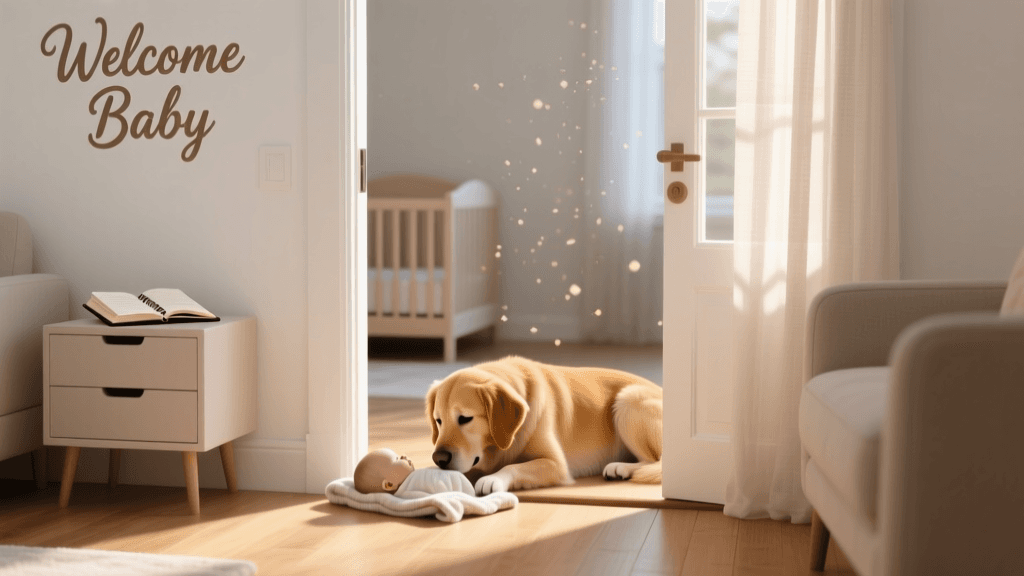
One of the most critical aspects of life transition training is teaching your dog where they are and are not allowed to go. The nursery must become a zone of calm, and your dog needs to understand threshold rules long before the crib is assembled.
Mastering the "Place" Command
The "Place" command is an invaluable tool for keeping your dog settled while you are nursing, changing diapers, or rocking the baby. Choose a raised cot or a specific mat located in the room where you will spend the most time with the baby.
- Step 1: Lure and Mark. Use a treat to lure your dog onto the mat. The moment all four paws are on the mat, mark the behavior with a clicker or a verbal "Yes!" and reward.
- Step 2: Add Duration. Delay the reward by one second, then three, then five. Your dog must remain on the mat to earn the treat.
- Step 3: Add Distance. Take one step away from the mat, then return and reward. Gradually increase the distance until you can walk across the room or step out of sight for a few seconds.
- Step 4: Add Distractions. Once the behavior is solid, practice the "Place" command while playing baby sounds or holding a doll wrapped in a baby blanket.
Threshold Training for the Nursery Door
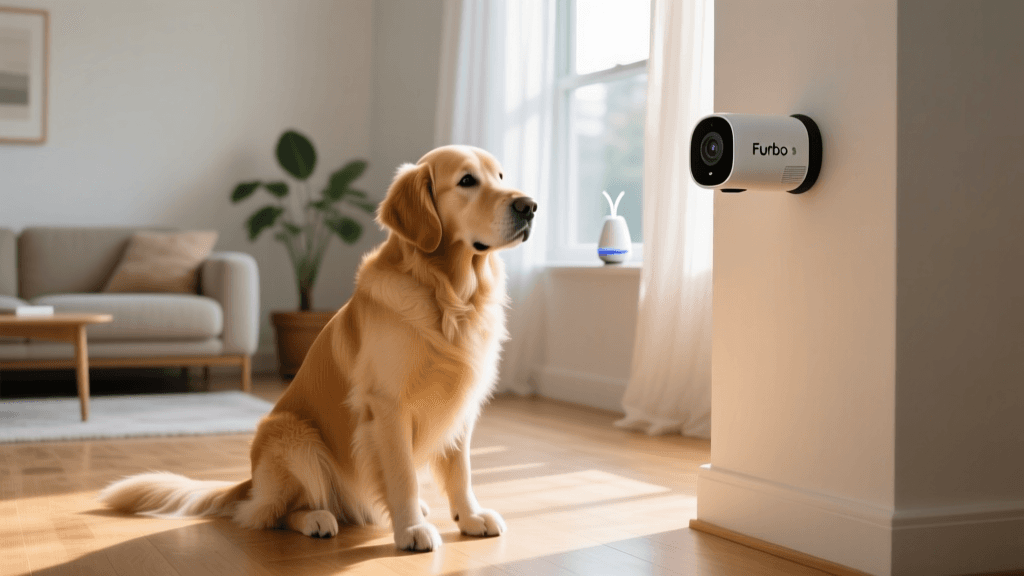
You must teach your dog that an open door is not an invitation to enter. Stand at the nursery doorway with your dog on a leash. Take a step toward the door. If your dog pulls forward, stop immediately and become a tree. Wait for your dog to look back at you or take a step back, then mark and reward. Over time, your dog will learn that the only way to move forward is to maintain a loose leash and wait for your specific release cue. To reinforce this remotely, many owners in 2026 utilize app-controlled smart treat dispensers, such as the Furbo 360 or Petcube Bites 3, to toss rewards to their dog for staying on their "Place" bed outside the nursery threshold.
Phase 3: The 9-Month Pregnancy Training Timeline
Consistency is the bedrock of successful behavioral conditioning. Use this structured timeline to pace your training efforts throughout your pregnancy.
| Trimester / Month | Training Focus | Actionable Milestones |
|---|---|---|
| First Trimester (Months 1-3) | Routine Adjustment & Baseline Obedience | Solidify "Sit", "Down", and "Leave It". Shift walking schedules to mimic postpartum reality (e.g., shorter, more frequent walks). |
| Second Trimester (Months 4-6) | Sensory Desensitization & Equipment Intro | Play baby sounds daily. Introduce baby lotion scents. Set up the crib and nursery furniture; begin threshold training at the door. |
| Third Trimester (Months 7-8) | Advanced Boundary Work & Enrichment | Practice "Place" with high distractions. Introduce independent enrichment toys (snuffle mats, frozen Kongs) to teach self-soothing. |
| Month 9 & Hospital Stay | Scent Swapping & Caregiver Transition | Have your dog spend time with the pet sitter or family member who will care for them. Bring home a scented blanket from the hospital. |
Phase 4: Adjusting Exercise and Mental Enrichment
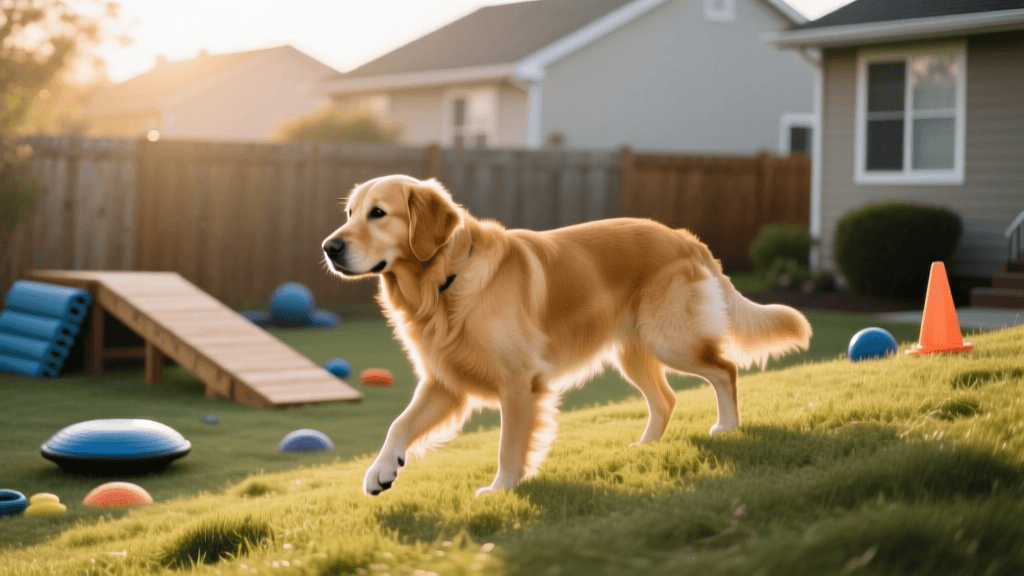
When a baby arrives, your time and energy will be severely limited. If your dog is used to two hours of vigorous exercise a day, they will likely experience frustration and behavioral fallout when that drops to twenty minutes. You must transition their routine to emphasize mental enrichment over physical exhaustion.
The Humane Society of the United States notes that mental stimulation can be just as tiring for a dog as a long physical run. Transition your dog to a 2026-standard enrichment diet:
- Snuffle Mats and Foraging: Scatter your dog's daily kibble allocation in a dense snuffle mat. This engages their natural scavenging instincts and can occupy them for 20 to 30 minutes.
- Frozen Enrichment Toys: Freeze a mixture of plain greek yogurt, pumpkin puree, and low-sodium chicken broth inside a durable rubber toy. This provides a long-lasting, soothing chewing activity that is perfect for when you need to nurse or put the baby down for a nap.
- Scent Work Games: Hide treats around the living room and encourage your dog to "find it." This builds confidence and burns mental energy without requiring you to leave the house.
Phase 5: Managing the First Introduction
The day you finally bring your baby home is emotionally charged, but it must be managed with clinical precision to ensure safety and positive associations. Before you walk through the front door, have your partner or a family member take your dog for a long, tiring walk to lower their arousal levels.
When you enter the home, greet your dog calmly without the baby in your arms. Allow them to sniff you and burn off their initial excitement. Once your dog is completely calm and has obeyed a few basic cues like "Sit" or "Down," you can introduce the baby.
Keep your dog on a secure, six-foot leather or biothane leash—avoid retractable leashes, as they offer poor control in tight spaces. Sit on the couch with the baby, and allow your dog to approach slowly. Reward your dog heavily with high-value treats for calm behavior, sniffing the baby's feet, and looking at you. Never force an interaction, and never leave the dog and baby unattended, even for a single second. If your dog seems overly excited or stressed, calmly lead them away to their "Place" bed and give them a frozen enrichment toy to decompress.
Conclusion: Patience and Professional Support
Life transitions are inherently stressful for both humans and canines. By starting your boundary training, desensitization, and routine adjustments early in your pregnancy, you are setting the stage for a lifetime of safe, loving interactions between your dog and your child. Remember that regression can happen, especially as your baby becomes mobile and starts crawling. If your dog exhibits resource guarding, intense staring, or anxiety that you cannot manage, do not hesitate to consult a certified veterinary behaviorist or a Fear Free certified trainer. With patience, consistency, and the right training framework, your dog will seamlessly adapt to their new role as a gentle, protective older sibling.
priya-sutaria
All our authors care for dogs every day — read more of their work on the authors page.