Moving With a Puppy in 2026: A Stress-Free Transition Guide
Relocating with a puppy in 2026? Discover expert tips for moving, resetting potty training, and creating a calm new environment for your growing dog.
Navigating Life Transitions: Moving With a Puppy
Relocating to a new home is one of the most significant life transitions you can experience, and when you add a growing puppy to the mix, the complexity multiplies. As we navigate the housing shifts and suburban migrations of 2026, more families than ever are bringing young dogs into unfamiliar environments. While adult dogs can often adapt to new spaces with relative ease, puppies are in critical developmental stages. Their routines, socialization, and potty training are easily disrupted by the chaos of packing boxes, moving trucks, and new scents.
However, a move does not have to result in behavioral regression or prolonged stress. By treating this transition as a structured project and leaning on modern pet-care strategies, you can help your puppy thrive in their new home. This comprehensive guide covers everything from pre-move preparation to resetting potty training and mapping out your new neighborhood.
Pre-Move Preparation: Protecting the Routine
Puppies thrive on predictability. In the weeks leading up to your move, your primary goal is to maintain their daily schedule as strictly as possible. Feed them at the exact same times, take them on their usual walks, and keep their play sessions consistent. The visual chaos of cardboard boxes and unfamiliar movers can trigger anxiety, especially if your puppy is entering one of their natural developmental fear periods (typically occurring between 8-11 weeks and 6-14 months of age).
Packing Strategically
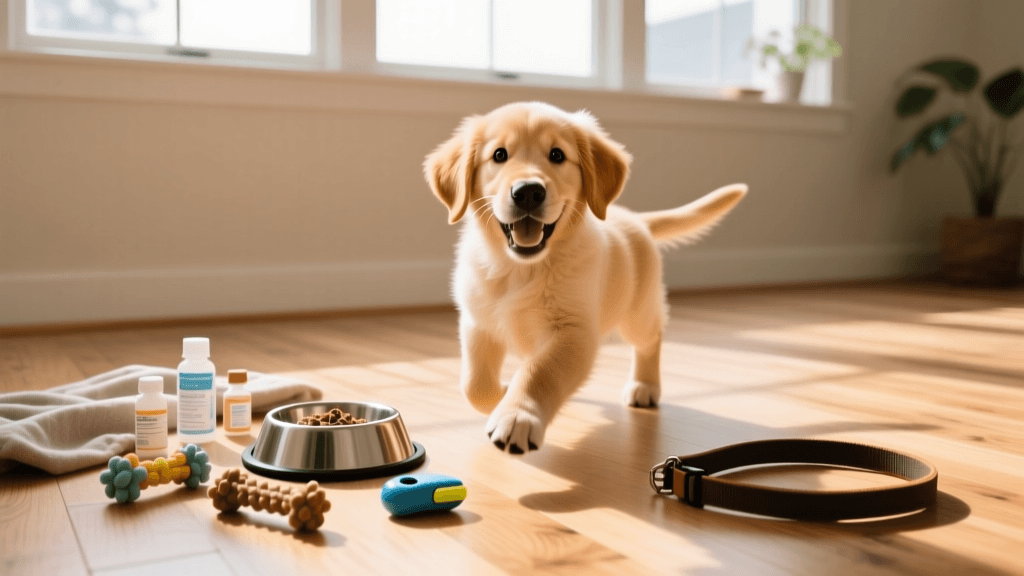
Do not pack your puppy's essential items until the very last moment. Keep their crate, favorite chew toys, bedding, and food bowls accessible. According to the ASPCA's guide on moving with pets, maintaining familiar scents in the environment is crucial for reducing anxiety. Avoid washing their favorite blanket or bed right before the move; the familiar scent will serve as an anchoring comfort in the new house.
Desensitizing to Moving Supplies
Introduce packing materials gradually. Leave a few empty boxes out a week before you start packing heavily. Allow your puppy to sniff them, and reward them with high-value treats like Zuke's Mini Naturals for calm behavior around the boxes. This prevents the sudden appearance of moving supplies from becoming a source of fear.
The Ultimate Puppy Moving Timeline
To keep your life transition organized, follow this structured timeline designed specifically for puppy owners.
| Timeframe | Action Items for Puppy Owners |
|---|---|
| 4 Weeks Out | Research local veterinarians and emergency clinics in your new zip code. Locate the nearest 24-hour pet supply store. Begin updating your address with your pet insurance provider. |
| 2 Weeks Out | Order a new GPS tracker tag if your current one is tied to a regional network. Introduce the travel crate if your puppy is not already accustomed to it. Book a pet sitter or boarding facility for moving day. |
| 1 Week Out | Pack all non-essential household items. Keep the puppy's 'safe zone' (crate, toys, bed) completely untouched. Do a final health check and ensure flea/tick prevention is up to date for the new climate. |
| Moving Day | Puppy stays with a sitter or in a boarded facility. Do not let them roam the house while doors are open and movers are carrying heavy furniture. |
| First 48 Hours | Set up the 'Safe Room' before bringing the puppy home. Introduce them to the new house on a leash. Establish the new primary potty spot immediately. |
| Week 1 | Gradually expand their access to the rest of the house. Begin short, positive socialization walks in the new neighborhood. |
Moving Day: Keeping Your Puppy Safe
The most dangerous day for a pet during a life transition is moving day. Doors are left propped open, strangers are walking in and out, and the noise level is incredibly high. The risk of a frightened puppy bolting out the front door is exceptionally high.
The safest option is to have your puppy stay with a trusted friend, a professional pet sitter, or a local boarding facility for the day. If that is not possible, designate a single room—preferably a bathroom or a quiet bedroom—as their temporary sanctuary. Place a clear sign on the door that reads: 'PUPPY INSIDE: DO NOT OPEN.' Equip the room with their crate, water, a snuffle mat for mental enrichment, and a white noise machine to drown out the sound of the moving truck.
Arriving Home: The 'Safe Room' Strategy
When you finally bring your puppy to the new house, resist the urge to let them roam freely. A massive, unfamiliar space can be overwhelming and lead to anxiety-induced accidents or destructive chewing. Instead, utilize the 'Safe Room' strategy.
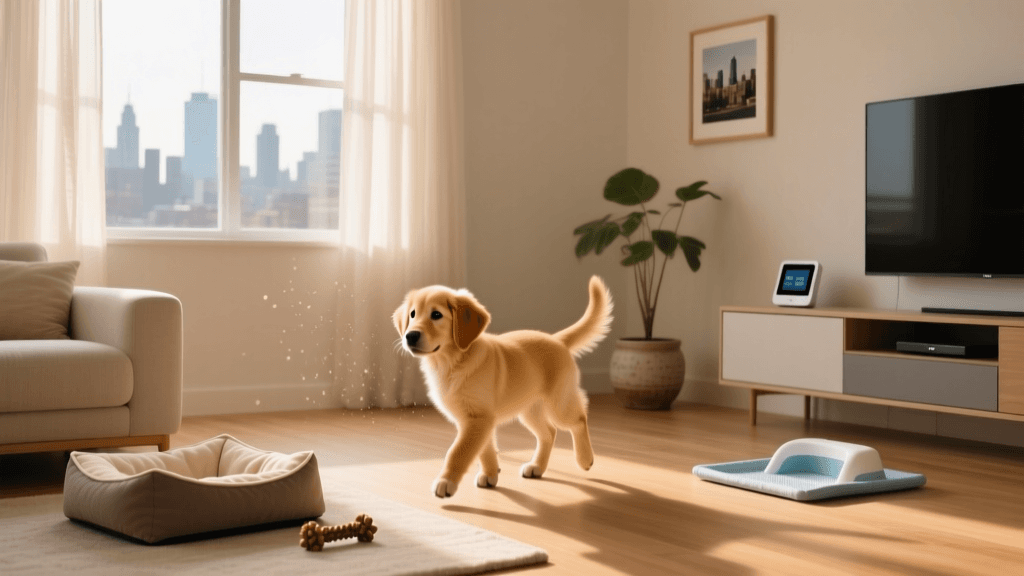
Choose a quiet room, such as a spare bedroom or a large kitchen, and set it up before the puppy arrives. Place their crate, familiar bedding, water bowl, and a 2026 model smart pet camera (like the Furbo 360°) inside. For the first few days, this room will serve as their home base. They will eat, sleep, and play in this space, allowing them to decompress and realize that this new environment is safe. Once they are relaxed and confident in the Safe Room, you can gradually introduce them to the rest of the house, one room at a time, always under supervision.
Resetting Potty Training in a New Environment
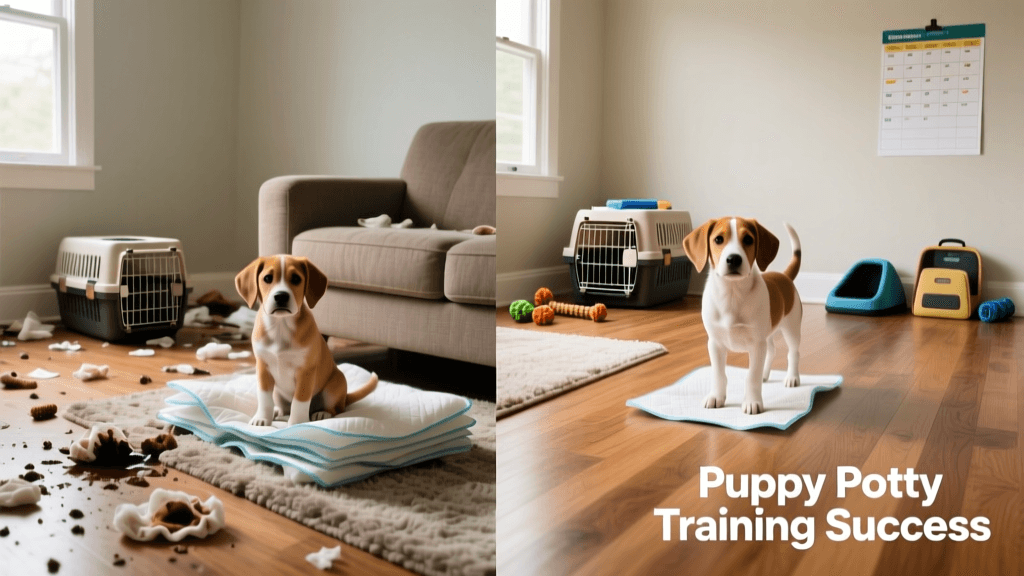
One of the most common issues owners face during a life transition is potty training regression. A puppy that was perfectly house-trained in your old home may suddenly have accidents in the new one. This is not misbehavior; it is a lack of environmental context. Your puppy learned that the grass in the old backyard meant 'bathroom,' but the new living room rug or the new backyard grass is an entirely different stimulus.
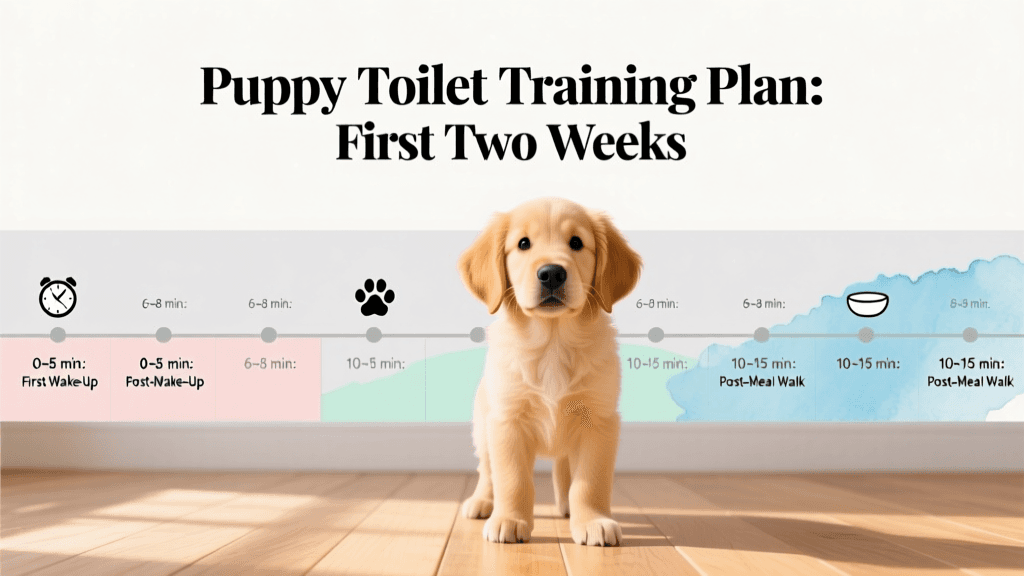
According to the American Kennel Club (AKC), consistency and positive reinforcement are the keys to overcoming environmental potty confusion. Treat your puppy as if they are brand new to potty training for the first two weeks.
Steps for a Successful Potty Reset
- Supervision is Mandatory: Keep your puppy on a leash attached to your belt or in your direct line of sight whenever they are not in their crate.
- Frequent Outings: Take them to the designated new potty spot every 1 to 2 hours, as well as immediately after waking up, eating, or playing.
- High-Value Rewards: Use a special treat that they only get for going potty outside. Freeze-dried liver or boiled chicken works exceptionally well.
- Enzymatic Cleaners: If an accident happens indoors, clean it immediately with a high-quality enzymatic cleaner like Nature's Miracle to completely destroy the scent markers. Standard household cleaners will not remove the uric acid crystals that attract puppies back to the same spot.
Mapping the New Territory and Socialization
A new neighborhood offers a blank canvas for socialization, which is a critical developmental milestone for puppies. However, it also presents new hazards. Before letting your puppy explore the new yard, conduct a thorough 'puppy-proofing' sweep. Check for gaps in the fencing, toxic plants (such as sago palm, oleander, or azaleas), and hidden debris like nails or discarded food.
When exploring the neighborhood, keep early walks short and positive. In 2026, many suburban neighborhoods have high traffic and diverse wildlife. Keep your puppy on a sturdy 6-foot leash (avoid retractable leashes during this transition phase) and allow them to observe new sights, sounds, and people at their own pace. If they seem overwhelmed, create distance from the stimulus and reward them for looking back at you.
Updating Identification and Vet Records
Administrative tasks are a vital part of any life transition. Before you even unpack your kitchen boxes, ensure your puppy's identification is updated. Log into your microchip registry portal and update your new address and phone number. If your puppy wears a collar tag, order a new engraved tag with your current information immediately. In the interim, write your new phone number on a piece of masking tape and wrap it securely around their collar.
Additionally, request a physical and digital copy of your puppy's vaccination records from your previous vet to hand over to your new veterinary clinic. This ensures there are no gaps in their preventive care schedule, especially regarding heartworm and flea/tick medications, which may need to be adjusted based on the climate and local parasite risks of your new region.
Managing Separation Anxiety in a New Space
It is common for puppies to develop temporary separation anxiety after a move. The bond between you and your puppy is their primary source of security, and when the physical environment changes, they may become hyper-attached, following you from room to room and panicking when you leave.
To combat this, practice short, low-stakes departures. Give your puppy a long-lasting chew, such as a Kong stuffed with frozen peanut butter and plain yogurt, and step out the front door for just five minutes. Return calmly without making a fuss. Gradually increase the duration of your absences over several weeks. Utilizing smart home integrations, like two-way audio cameras, can also help you monitor their stress levels and toss treats remotely to reinforce calm behavior while you are at work.
Conclusion: Patience is the Key to Transition
Life transitions are inherently stressful, but they also offer a beautiful opportunity to bond with your puppy and build resilience. By managing their environment, resetting expectations for potty training, and prioritizing their emotional well-being, you will help your puppy adjust to their new home smoothly. Remember that behavioral hiccups are normal during the first month. Stay patient, stick to your routines, and celebrate the small victories as your puppy settles into their wonderful new life.
tom-renshaw
All our authors care for dogs every day — read more of their work on the authors page.