First-Year Puppy Budget: Real Costs for Food, Vet Care, and Supplies
Plan your first-year puppy budget with our detailed cost breakdown. Discover real expenses for food, vet care, training, and essential supplies.

The Financial Reality of Puppy Parenthood
Bringing a new puppy into your home is an unforgettable milestone filled with wagging tails, clumsy paws, and endless joy. However, the first year of a dog's life is also a period of significant financial investment. Between rapid growth phases, teething, early socialization, and a rigorous veterinary schedule, the costs can quickly add up if you are not prepared. According to the ASPCA, responsible pet ownership requires a solid understanding of both the immediate and long-term financial commitments involved in raising a healthy dog.
Creating a comprehensive first-year puppy budget is essential to ensure you can provide the best possible care without experiencing financial stress. This guide breaks down the real, actionable costs of raising a puppy from eight weeks to one year of age, covering initial setup, veterinary care, nutrition, training, and the hidden expenses that often catch new owners off guard.
Initial Setup: One-Time Supply Costs
Before your puppy even crosses the threshold of your home, you need to have the right environment prepared. Puppies require specific gear to keep them safe, comfortable, and contained. While it is tempting to buy the cheapest options available, investing in durable, high-quality supplies will save you money in the long run.
- Crate and Bedding: A wire crate like the MidWest Homes for Pets iCrate (approx. $50 to $80) is ideal because it grows with your puppy using a divider panel. Pair this with a washable, chew-resistant bed like the K&H Pet Products Original Pet Cot ($40 to $60).
- Collar, Harness, and Leash: Puppies need a lightweight flat collar for ID tags and a front-clip harness (such as the Ruffwear Front Range, $40) for safe leash training without damaging their delicate tracheas.
- Food and Water Bowls: Skip the plastic, which can harbor bacteria and cause puppy acne. Opt for heavy-bottomed stainless steel bowls or ceramic options ($15 to $25 for a set).
- Grooming Tools: Depending on the breed, you will need a slicker brush, a stainless-steel comb, and dog-safe nail clippers or a Dremel tool ($20 to $40).
- Enzymatic Cleaner: Potty training accidents are inevitable. A high-quality enzymatic cleaner like Nature's Miracle ($15) is non-negotiable for completely eliminating urine odors and preventing repeat offenses.
Estimated Initial Setup Cost: $200 to $350
Veterinary Care: The First-Year Schedule
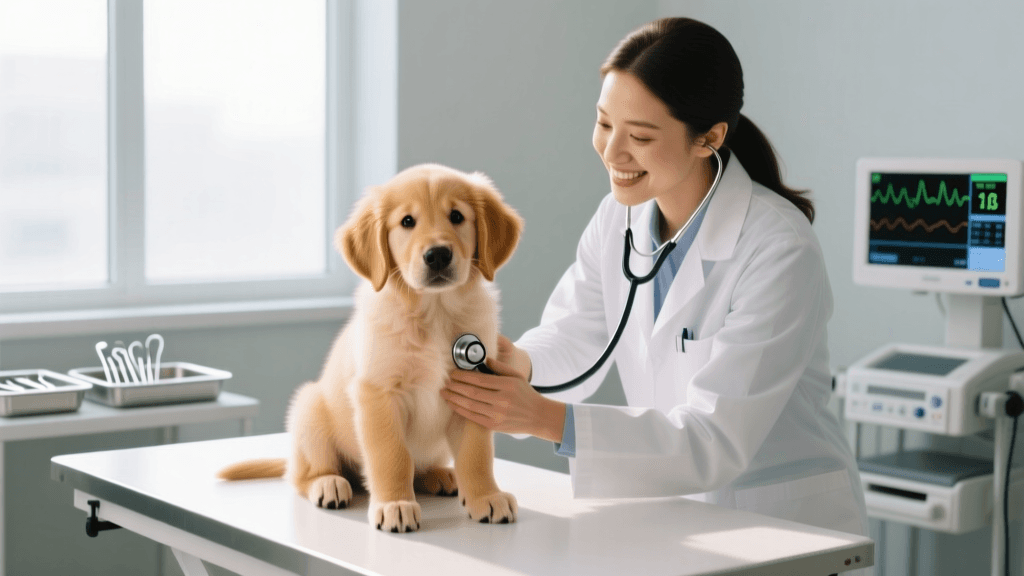
Veterinary care represents the largest and most critical variable in your first-year puppy budget. Puppies require a series of vaccinations, deworming treatments, and preventative medications to build their immune systems and protect them from life-threatening diseases like Parvovirus and Distemper.
The American Veterinary Medical Association (AVMA) emphasizes that following a strict preventative care schedule is the most effective way to ensure your puppy's long-term health and avoid catastrophic medical bills later in life.
Core Vaccines and Wellness Exams
Expect to visit the vet every three to four weeks until your puppy is about 16 weeks old. A typical first-year veterinary schedule includes:
- Initial Wellness Exam & Fecal Test: $75 to $120
- DHPP Vaccine Series (4 rounds at 6, 9, 12, and 16 weeks): $25 to $40 per round
- Rabies Vaccine (at 12-16 weeks): $20 to $30
- Bordetella (Kennel Cough) Vaccine: $25 to $35 (Required for puppy classes and grooming)
- Spay/Neuter Surgery: $250 to $600 (Varies heavily by clinic, region, and the dog's weight at the time of surgery)
- Microchipping: $40 to $50 (Often done during the spay/neuter procedure)
Monthly Preventatives
Starting at eight weeks (or once they reach the minimum weight requirement), your puppy must be on year-round preventatives for fleas, ticks, and heartworm. Popular, highly effective options include NexGard or Bravecto for fleas and ticks ($25 to $35 per month) and Heartgard Plus or Interceptor Plus for heartworm and intestinal parasites ($10 to $15 per month).
Estimated First-Year Vet Cost: $800 to $1,500
Nutrition and Feeding Costs
Puppies require specialized nutrition to support their rapid bone, muscle, and cognitive development. When selecting a diet, the U.S. Food and Drug Administration (FDA) advises pet owners to look for a statement from the Association of American Feed Control Officials (AAFCO) on the packaging, confirming the food is formulated specifically for 'growth' or 'all life stages'.
Small vs. Large Breed Nutrition
The size of your dog drastically impacts your food budget. Large and giant breeds (like Golden Retrievers or Great Danes) must eat 'Large Breed Puppy' formulas to ensure their calcium and phosphorus levels are carefully regulated, preventing rapid growth that leads to joint dysplasia.
- Small Breeds (under 20 lbs adult): Will eat roughly 1 to 1.5 cups a day. A 15-pound bag of premium food (like Royal Canin Small Puppy or Purina Pro Plan Puppy) costs about $45 and lasts 6 to 8 weeks. Annual Cost: $300 to $400.
- Large Breeds (over 50 lbs adult): Will eat 3 to 5 cups a day, eventually transitioning to massive 30-pound bags that cost $70 to $90 but only last 3 to 4 weeks. Annual Cost: $700 to $1,000+.
Training, Socialization, and Teething
The first year is the most crucial window for behavioral development. Investing in professional training prevents costly behavioral issues—and potential property damage—down the road.
- Puppy Kindergarten Classes: Group classes typically run for six weeks and cost between $150 and $250. This is essential for early socialization and basic obedience.
- Private Training: If your puppy exhibits severe resource guarding or leash reactivity, private sessions cost $100 to $150 per hour.
- Teething Toys and Enrichment: Between 3 and 6 months, puppies lose their baby teeth and chew relentlessly. Stock up on durable rubber toys like the KONG Classic ($15), Nylabone Power Chew rings ($10), and puzzle feeders like the Outward Hound Snuffle Mat ($20). Avoid cheap plush toys that can be torn apart and swallowed, leading to emergency bowel obstruction surgeries.
Estimated Training & Enrichment Cost: $250 to $500
First-Year Puppy Cost Breakdown Table
To help you visualize the financial commitment, here is a structured comparison of estimated first-year costs based on different budgeting approaches and dog sizes.
| Expense Category | Budget / Small Breed | Premium / Large Breed |
|---|---|---|
| Initial Setup & Supplies | $150 | $350 |
| Veterinary Care & Preventatives | $750 | $1,400 |
| Spay/Neuter & Microchip | $250 | $650 |
| Nutrition (First Year) | $300 | $1,000 |
| Training & Socialization | $150 | $400 |
| Pet Insurance (Annual Premium) | $400 | $750 |
| Total Estimated First-Year Cost | $2,000 | $4,550 |
Pro Tip: The 'Budget' column assumes you adopt from a rescue that includes initial vaccines and spay/neuter in the adoption fee, and that you utilize low-cost community vaccine clinics. The 'Premium' column reflects purchasing from a breeder, utilizing a private veterinary hospital, and feeding a premium large-breed diet.
Hidden Costs and Emergency Planning
No first-year puppy budget is complete without accounting for the unexpected. Puppies are notoriously curious and lack a sense of self-preservation. Swallowing a sock, chewing through an electrical cord, or contracting a gastrointestinal bug can result in emergency veterinary bills ranging from $1,000 to $5,000.
This is where Pet Insurance becomes a vital part of your financial plan. Enrolling your puppy in a comprehensive accident and illness policy (through providers like Trupanion, Healthy Paws, or Lemonade) while they are young ensures that no pre-existing conditions will void your coverage later in life. Expect to pay $35 to $70 a month in premiums, depending on your deductible and reimbursement levels.
Other Hidden Expenses to Anticipate:
- Pet Sitting / Dog Walking: If you work long hours, a puppy cannot hold their bladder for eight hours. Budget for a midday dog walker ($20 to $25 per walk) or puppy daycare ($30 to $50 per day).
- Property Damage: Replacing chewed baseboards, ruined shoes, or destroyed area rugs.
- Grooming: If you have a Doodle, Poodle, or Shih Tzu, professional grooming every 6 to 8 weeks will cost $70 to $120 per session.
Final Thoughts on Puppy Financial Planning
Raising a puppy is a labor of love, but it is undeniably a major financial undertaking. By mapping out this first-year puppy budget, you can set up a dedicated 'pet savings account' and contribute to it monthly before the puppy even arrives. Prioritize high-quality nutrition, do not skip core veterinary preventatives, and invest heavily in early training. The money you spend in the first 12 months lays the foundation for a healthy, well-behaved, and deeply bonded companion for the next decade and beyond.
beth-carrasco
All our authors care for dogs every day — read more of their work on the authors page.