Building a Sensory Decompression Zone for Reactive Dogs: 2026 Guide
Learn how to build a sensory decompression zone for your reactive dog in 2026. Discover top calming gear, routines, and science-backed setup tips.
Understanding the Reactive Dog's Nervous System
Living with a reactive or anxious dog requires immense patience, empathy, and a strategic approach to their daily environment. In 2026, veterinary behaviorists emphasize that reactivity is not merely a 'behavioral problem' but a physiological response to an overwhelmed nervous system. When a dog encounters a trigger—whether it is a passing delivery truck, a neighboring dog barking, or an unexpected guest—their body releases a surge of cortisol and adrenaline. According to the American Kennel Club's veterinary resources on dog anxiety, it can take anywhere from 24 to 72 hours for a dog's cortisol levels to return to baseline after a significant stress event. This prolonged state of arousal means that a reactive dog is often living in a chronic state of 'fight or flight,' making them hyper-vigilant and prone to explosive reactions.
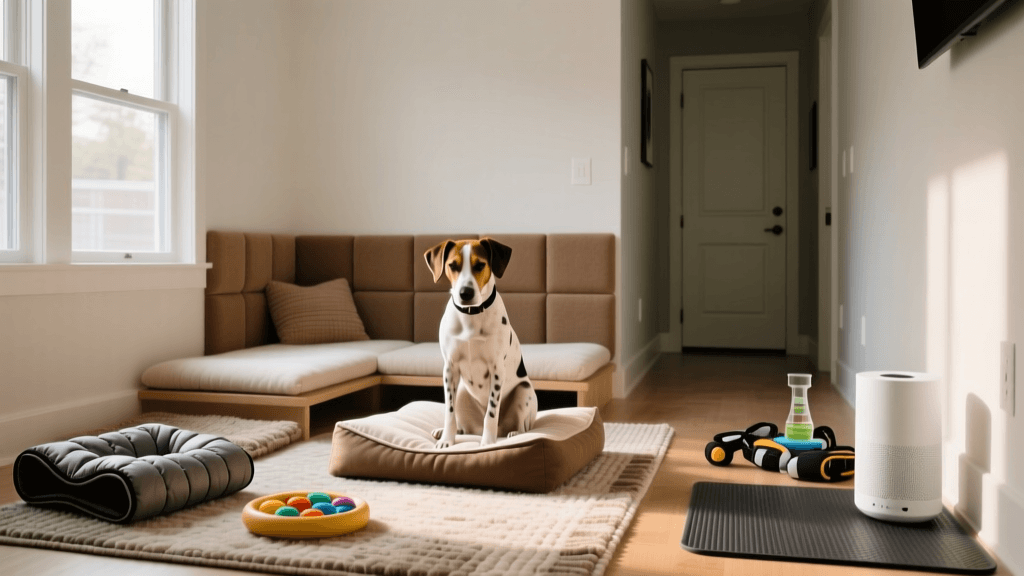
To break this cycle, modern canine behaviorists advocate for the creation of a dedicated 'sensory decompression zone.' This is not simply a crate or a dog bed in the corner of a busy living room; it is a carefully curated, low-stimulus sanctuary designed to actively down-regulate your dog's nervous system. By controlling the acoustic, olfactory, and tactile inputs in this space, you provide your dog with a predictable environment where they can truly decompress.
The Science Behind Sensory Decompression
The concept of environmental enrichment and decompression has evolved significantly. The Fear Free Happy Homes initiative highlights that reducing fear, anxiety, and stress (FAS) in pets requires addressing their sensory experiences. Dogs process the world primarily through olfaction and hearing. A reactive dog's brain is constantly scanning for auditory and visual threats. By intentionally dampening these inputs and replacing them with soothing, predictable sensory data, we can stimulate the parasympathetic nervous system—the body's 'rest and digest' mode.
In a decompression zone, we leverage three main sensory pathways:
- Acoustic Masking: Blocking out erratic, high-frequency outdoor noises that trigger alert barking.
- Olfactory Therapy: Utilizing species-specific pheromones to signal safety and security.
- Tactile Grounding: Providing deep-pressure comfort and temperature regulation.
Essential Gear for Your 2026 Decompression Zone
Building this sanctuary requires the right tools. Here are the top-tier, science-backed products we recommend for 2026 to create an effective decompression space for your reactive dog.
1. Acoustic Management: Yogasleep Dohm Connect
Standard white noise apps on a smartphone are often insufficient because phone speakers cannot produce the full spectrum of sound required to mask low-frequency rumbles (like thunder or heavy trucks) or high-pitched triggers (like distant dog barks). The Yogasleep Dohm Connect uses an actual internal fan to create natural, non-looping sound masking. The physical movement of air generates a rich, multi-tonal acoustic blanket that effectively dampens sudden noise spikes from the street. Place the Dohm near the window or the primary source of outdoor noise, rather than right next to your dog's bed, to create a perimeter of sound.
2. Olfactory Calming: Adaptil Calm Home Diffuser (2026 Model)
Pheromone therapy remains a cornerstone of anxiety management. The Adaptil Calm Home Diffuser releases a synthetic copy of the dog-appeasing pheromone (DAP), which is naturally produced by nursing mothers to comfort their puppies. This scent is undetectable to humans but signals profound safety to dogs. For a decompression zone, plug the diffuser into an outlet in the designated room, ensuring it is not blocked by furniture or placed under a shelf. Continuous exposure in a specific room helps your dog build a strong positive association between that space and feelings of security.
3. Tactile Comfort: Best Friends by Sheri The Original Calming Shag
Reactive dogs often seek enclosed, den-like spaces to feel secure. The Best Friends by Sheri Calming Shag bed features a raised rim that provides a sense of physical boundaries and security, mimicking the feeling of resting against a mother's fur. The deep pile allows dogs to burrow, which is a natural self-soothing behavior for anxious canines. Furthermore, the 2026 iterations of this bed feature improved orthopedic support and machine-washable, durable fabrics that withstand the nesting behaviors common in stressed dogs.
Step-by-Step Acclimation Protocol
You cannot simply place your dog in the decompression zone and expect them to relax. For a reactive dog, a new space or forced confinement can trigger claustrophobia or panic. The introduction must be gradual and entirely dog-led.
Phase 1: Scent and Sound Association (Days 1-3)
Set up the zone with the Dohm machine and Adaptil diffuser running, but do not force your dog inside. Toss high-value treats (like freeze-dried liver or boiled chicken) into the space while you are in the room. Let them enter, grab the treat, and leave. We are building a neurological link: this room equals good things and calm feelings.
Phase 2: Voluntary Resting (Days 4-7)
Begin feeding your dog their regular meals inside the zone. If they are comfortable, introduce a long-lasting chew, such as a yak cheese chew or a frozen Kong stuffed with bone broth. Chewing and licking are naturally endorphin-releasing activities that promote relaxation.
Phase 3: Trigger-Event Relocation (Days 8+)
Once your dog voluntarily chooses to sleep in the zone, begin guiding them there before a known trigger occurs. If you know the mail carrier arrives at 11:00 AM, lead your dog to the zone at 10:50 AM with a high-value chew. The goal is proactive management, not reactive punishment.
Daily Decompression Routine for Reactive Dogs
Consistency is the antidote to anxiety. Below is a structured daily routine designed to keep your reactive dog's cortisol levels manageable throughout the day.
| Time of Day | Activity | Decompression Goal |
|---|---|---|
| 7:00 AM | Sniffari Walk (15-20 mins) | Mental fatigue through olfactory enrichment; burns anxious energy without high-arousal play. |
| 8:00 AM | Breakfast in the Zone | Positive reinforcement of the safe space; encourages voluntary resting post-meal. |
| 12:00 PM | Mid-Day Lick Mat Session | Endorphin release via licking; masks mid-day neighborhood noise triggers. |
| 5:00 PM | Decompression Training | Low-stress obedience (e.g., 'mat' command) using shaping and clicker training. |
| 9:00 PM | Passive Settling | Dohm machine on, lights dimmed, passive physical touch (T-Touch) if tolerated. |
Troubleshooting Common Setup Challenges
Even with the best gear and intentions, you may encounter hurdles. Here is how to troubleshoot the most common issues reactive dog owners face when implementing a decompression zone.
My Dog Paces and Cannot Settle
If your dog is pacing, their arousal level is likely too high for passive decompression. Pacing is a displacement behavior indicating unresolved physical or mental energy. Before utilizing the decompression zone, ensure your dog has engaged in 'decompression walking' (sniffing on a long line in a quiet, open field) or mental enrichment (puzzle toys). A tired brain settles much faster than a physically exhausted but mentally stimulated one.
My Dog Barks at the White Noise Machine
This usually happens if the machine is turned on at its highest setting abruptly, startling the dog. Always start the Yogasleep Dohm on the lowest volume while the dog is out of the room, and gradually increase it over several days. If the sound masking is too harsh, switch the internal fan setting from 'White' to 'Pink' or 'Brown' noise, which emphasizes lower, deeper frequencies that are often more soothing to canine ears.
The Space is Being Guarded
Resource guarding can extend to safe spaces. If your dog growls when you approach the decompression zone, do not punish the behavior, as this will validate their fear that the space is unsafe when humans are near. Instead, practice the 'treat and retreat' method. Toss a high-value treat away from the bed so the dog must leave the space to get it, then casually walk by and drop a treat on the bed while they are eating the first one. Over time, your approach predicts good things rather than an invasion of their sanctuary.
Final Thoughts on Long-Term Management
Managing a reactive dog is a marathon, not a sprint. The sensory decompression zone is a vital tool in your 2026 behavior modification toolkit, but it works best when paired with professional guidance. If your dog's reactivity includes aggression, severe panic attacks, or self-mutilation, consult a board-certified veterinary behaviorist. They can assess whether your dog requires pharmacological support, such as SSRIs or fast-acting situational anxiety medications, to lower their threshold enough to actually benefit from environmental modifications like the decompression zone. By providing a predictable, sensory-friendly haven, you are giving your anxious dog the greatest gift possible: a place where they can finally exhale.
robin-maitland
All our authors care for dogs every day — read more of their work on the authors page.