DIY Dog Enrichment Toys and Puzzle Feeders on a Budget
Discover budget-friendly DIY dog enrichment toys and homemade puzzle feeders. Keep your pup mentally stimulated with these easy, safe, and fun projects.
The Science of Canine Enrichment
As dog owners, we often focus heavily on physical exercise, ensuring our furry friends get their daily walks and playtime at the dog park. However, mental stimulation is just as critical to a dog's overall well-being. In the wild, canines spend up to 80% of their waking hours foraging, hunting, and problem-solving to secure their next meal. When we serve our domestic dogs their kibble in a stainless steel bowl, they finish eating in seconds, robbing them of their natural instinct to work for their food.
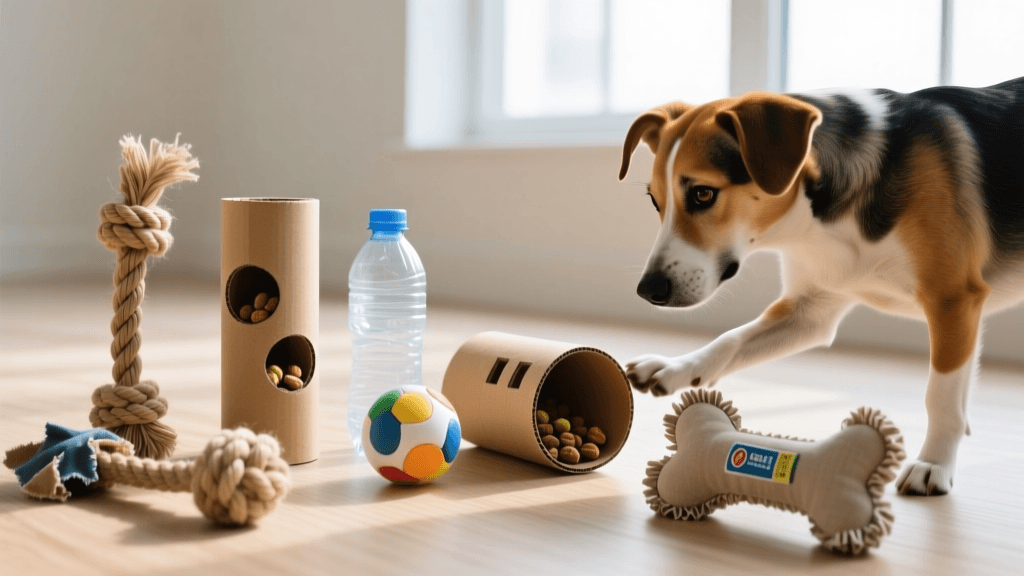
According to Fear Free Pets, lack of mental stimulation can lead to destructive behaviors, excessive barking, and anxiety. Providing cognitive challenges through puzzle feeders and enrichment toys mimics natural foraging behaviors, tires out their brains, and promotes a calmer, happier household. Fortunately, you do not need to spend a fortune on commercial puzzles. With a few household items and some creativity, you can craft highly effective DIY dog enrichment toys right at home.
Safety First: Rules for DIY Dog Toys
Before diving into these homemade solutions, it is vital to establish a few ground rules to ensure your dog's safety:
- Always Supervise: Never leave your dog alone with a new DIY toy until you are certain they will not chew and swallow non-edible components.
- Avoid Toxic Adhesives: If a project requires glue, ensure it is fully cured and non-toxic, or opt for mechanical fasteners like screws and knots instead.
- Size Appropriateness: Ensure that any treat-dispensing holes are large enough to prevent your dog's tongue or teeth from getting stuck, but small enough to provide a challenge.
- Check for Wear and Tear: Inspect homemade toys regularly. Discard any item that is fraying, splintering, or breaking apart.
5 Easy DIY Dog Puzzle Feeders and Toys
Here are five practical, budget-friendly projects that cater to different play styles and skill levels. These instructions include specific measurements and estimated costs to help you plan your crafting session.
1. The Classic Fleece Snuffle Mat
A snuffle mat is a fantastic foraging tool that engages your dog's powerful sense of smell. It is perfect for fast eaters and anxious dogs who need a calming activity.
- Materials: 1 rubber sink mat with holes (approx. $4), 2 yards of polar fleece fabric in various colors (approx. $6).
- Measurements: Cut the fleece into strips that are 1 inch wide and 10 inches long. You will need roughly 150 to 200 strips depending on the mat size.
- Instructions: Take one fleece strip and push it through a hole in the rubber mat from the bottom up. Pull the ends even and tie a simple overhand knot on the top side. Repeat this process until every hole is filled and the mat looks like a thick, shaggy rug. Hide dry kibble or small training treats deep within the fleece strips and let your dog sniff them out.
- Estimated Cost: $10
2. PVC Pipe Treat Dispenser
This durable puzzle feeder is ideal for heavy chewers and high-energy dogs who enjoy rolling objects around the house to dispense rewards.
- Materials: 12-inch length of 2-inch diameter PVC pipe ($3), two PVC end caps (one threaded, one slip-fit) ($3), 1-inch spade drill bit.
- Instructions: Using a power drill and the 1-inch spade bit, drill four to five random holes along the length of the PVC pipe. Crucial Step: Use sandpaper to thoroughly smooth the inside and outside edges of every drilled hole to prevent plastic burrs from cutting your dog's mouth or tongue. Secure the slip-fit end cap permanently using PVC cement (allow 24 hours to cure and off-gas). Place kibble inside the pipe and cap the threaded end loosely so you can open it for refills. As your dog paws and nudges the pipe, kibble will fall out of the drilled holes.
- Estimated Cost: $6
3. The Muffin Tin Shell Game
This is a brilliant beginner-level puzzle that requires almost zero prep time and utilizes items you likely already have in your kitchen.
- Materials: Standard 12-cup metal or silicone muffin tin, 12 tennis balls (or silicone baking liners).
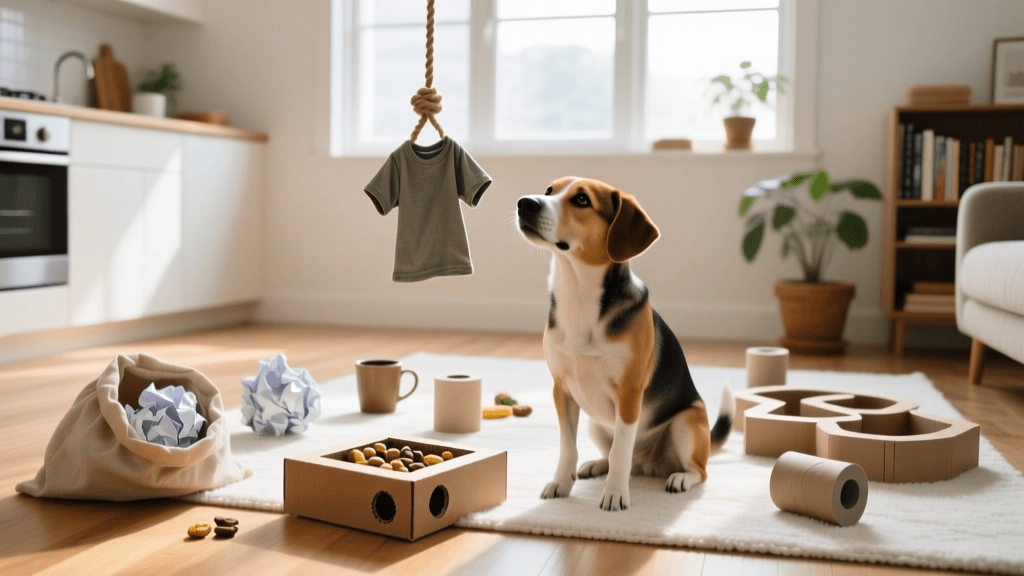
- Instructions: Place a few pieces of high-value kibble or small treats into several of the muffin cups. Cover all 12 cups with tennis balls. Your dog must use their nose to locate the treats and their paws or snout to knock the tennis balls off the cups to access the reward. To increase the difficulty as your dog learns the game, only put treats in 3 or 4 cups, forcing them to rely entirely on scent discrimination rather than just knocking every ball off.
- Estimated Cost: $0 (assuming you own a muffin tin and old tennis balls)
4. Upcycled T-Shirt Braided Tug Toy
While not a food puzzle, interactive play is a massive component of canine enrichment. Commercial rope toys can be expensive and easily destroyed. This DIY alternative is washable, eco-friendly, and virtually free.
- Materials: 3 to 4 old, clean cotton t-shirts (avoid shirts with plastic sequins or heavy screen prints).
- Instructions: Cut the t-shirts into continuous 3-inch wide strips. Gather three thick bundles of strips, knot them together tightly at one end, and braid them using a standard three-strand braid. Pull the braid as tight as physically possible while working. Knot the bottom end securely. For added durability and sanitization, boil the finished toy in water for 10 minutes and let it air dry. The boiling process shrinks the cotton fibers, locking the braid into a dense, rope-like structure.
- Estimated Cost: $0
5. Frozen Broth and Kibble Foraging Bowl
Perfect for hot summer days or dogs who need a long-lasting distraction while you work from home, this frozen enrichment activity combines hydration, flavor, and problem-solving.
- Materials: Low-sodium, onion-free chicken or beef broth ($2), your dog's daily kibble, a silicone bowl or ice cube tray.
- Instructions: Place a layer of kibble and a few high-value treats (like carrot chunks or blueberries) at the bottom of the silicone bowl. Pour enough low-sodium broth to cover the food halfway and freeze for two hours. Once semi-solid, add more kibble and fill the bowl to the top with the remaining broth. Freeze overnight. The layered freezing process suspends the food at different depths, requiring your dog to lick and chew through the ice block over 20 to 40 minutes to extract every bite.
- Estimated Cost: $2 (using a portion of a carton of broth)
Cost Comparison: Store-Bought vs. DIY Enrichment Toys
While commercial products from reputable brands are excellent and rigorously tested for safety, building your own toys can save you a significant amount of money over the lifespan of your dog. The Best Friends Animal Society frequently advocates for creative, low-cost enrichment to help shelter dogs and pet owners alike. Below is a comparison of average market costs versus our DIY alternatives.
| Enrichment Type | Commercial Product Example | Average Store Cost | DIY Alternative | Estimated DIY Cost |
|---|---|---|---|---|
| Foraging Mat | Wool Snuffle Mat | $25.00 - $40.00 | Fleece & Sink Mat | $10.00 |
| Rolling Dispenser | Hard Plastic Puzzle Ball | $15.00 - $25.00 | PVC Pipe Dispenser | $6.00 |
| Hide-and-Seek Puzzle | Outward Hound Brick Puzzle | $12.00 - $18.00 | Muffin Tin Shell Game | $0.00 |
| Long-Lasting Chew | Stuffed Rubber Kong Toy | $18.00 - $28.00 | Frozen Broth Silicone Bowl | $2.00 per use |
As the data illustrates, rotating through DIY projects can save the average dog owner over $100 a year in enrichment supplies—money that can be redirected toward veterinary care, high-quality nutrition, or professional training.
Rotating Toys to Maintain Novelty
Dogs, much like humans, experience habituation. If you leave the PVC pipe dispenser out every single day, it will eventually lose its novelty and become just another object on the floor. The ASPCA recommends rotating your dog's toys weekly to keep their interest piqued and maintain the mental challenge. Keep your DIY creations in a dedicated bin, and only offer two or three at a time. When your dog begins to ignore them, swap them out for a different set of puzzles.
Conclusion
Enriching your dog's life does not require an expansive backyard or a massive budget. By tapping into their natural instincts to sniff, forage, and work for their rewards, you can profoundly improve their behavioral health and emotional well-being. These DIY dog enrichment toys and puzzle feeders offer a fun, engaging weekend project for you, and a deeply satisfying, brain-tiring experience for your best friend. Grab your fleece, head to the hardware store for some PVC, and start building a more stimulating environment for your pup today.
aaron-whyte
All our authors care for dogs every day — read more of their work on the authors page.