Top Puppy Breeds for Remote Workers in 2026: Quiet Office Picks
Discover the best quiet puppy breeds for remote workers in 2026. Learn home office potty training, teething tips, and socialization for work-from-home owners.
The Work-From-Home Puppy Paradigm in 2026
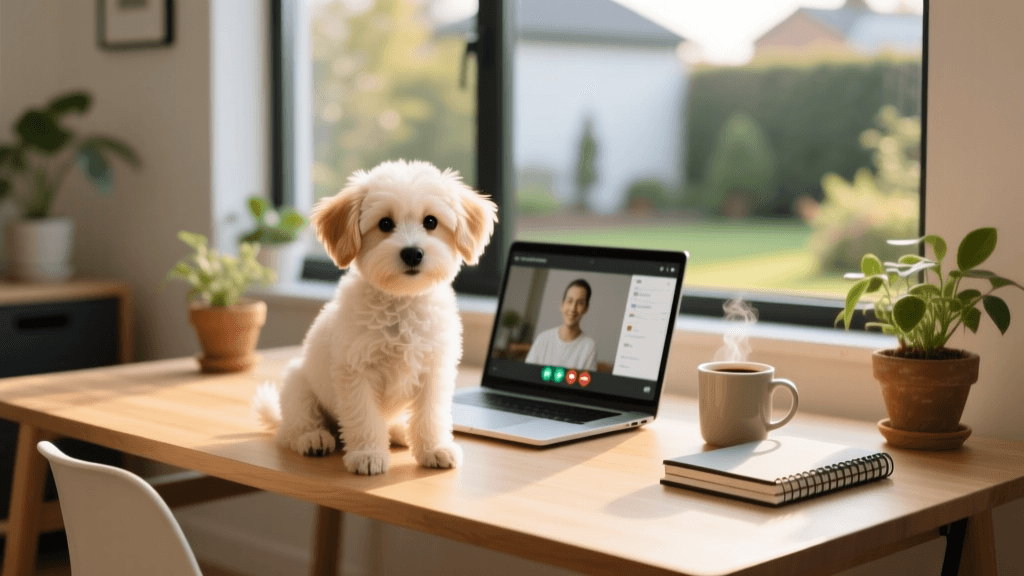
As remote and hybrid work models firmly solidify in 2026, the dream of typing away at a home office with a furry companion sleeping at your feet has never been more attainable. However, bringing a puppy into a work-from-home (WFH) environment requires strategic planning. Not every breed is suited for the quiet demands of a home office, and the first year of a puppy's life is packed with demanding developmental milestones. Potty training, teething, and early socialization must all be balanced against your Zoom meetings, deep work blocks, and conference calls.
Choosing the right breed is only the first step. To ensure your new puppy thrives in a home office setting, you must select a dog with a naturally lower bark drive, an adaptable temperament, and a moderate energy level. In this comprehensive guide, we explore the best puppy breeds for remote workers in 2026 and provide a detailed roadmap for managing their first-year care milestones without sacrificing your professional productivity.
Top 4 Puppy Breeds for the Home Office
1. Cavalier King Charles Spaniel
The Cavalier King Charles Spaniel remains a premier choice for remote workers. Known for their deeply affectionate and gentle nature, Cavaliers are essentially professional lap dogs. They possess a remarkably low prey drive and rarely bark without a significant reason, making them ideal for households where background noise on microphone is a concern. During their first year, Cavaliers are highly food-motivated, which makes potty training and basic obedience relatively smooth. Their moderate energy means they are perfectly content to nap on a dog bed under your desk while you tackle your daily tasks.
2. Bichon Frise
If you want a cheerful, adaptable companion that won't shed all over your ergonomic office chair, the Bichon Frise is a stellar option. Bichons are highly intelligent and eager to please, which accelerates the early socialization and crate training processes. While they can be playful during their puppy months, they easily adapt to the rhythm of your workday. Their hypoallergenic coat requires regular grooming, but the trade-off is a remarkably clean home office environment. In 2026, many remote workers appreciate the Bichon's ability to entertain themselves with puzzle toys during long meetings.
3. Whippet
Often described as 'couch potatoes' with a burst of athletic energy, Whippet puppies are incredibly quiet indoors. They are sensitive, gentle, and rarely vocalize, which is a massive blessing for remote professionals. A Whippet puppy will require a solid 30 to 45 minutes of vigorous outdoor play or a walk during your lunch break, but once that energy is expended, they will happily curl up on a blanket and sleep for the remainder of the afternoon. Their short coats also mean minimal cleanup in your workspace.
4. Miniature Poodle
Do not let the show-dog reputation fool you; the Miniature Poodle is one of the smartest and most trainable breeds available. For remote workers who enjoy incorporating training sessions into their Pomodoro breaks, the Miniature Poodle is a dream. They learn the 'settle' and 'quiet' commands faster than almost any other breed. Because they are so intelligent, they require mental stimulation to prevent boredom-induced chewing. Providing them with interactive smart toys during your work hours will keep their brilliant minds occupied while you focus on your screen.
Comparison Chart: Home Office Puppy Traits
| Breed | Energy Level | Bark Level | Trainability | Best WFH Trait |
|---|---|---|---|---|
| Cavalier King Charles | Low-Moderate | Very Low | High | Content to nap under desk all day |
| Bichon Frise | Moderate | Low | Very High | Hypoallergenic and highly adaptable |
| Whippet | Moderate (Bursts) | Extremely Low | Moderate | Virtually silent indoors |
| Miniature Poodle | Moderate | Low | Exceptional | Learns 'quiet' and 'settle' commands rapidly |
First-Year Milestones for the WFH Puppy
Bringing a puppy into your home office means you must integrate their developmental needs into your daily calendar. Here is how to manage the critical first-year milestones while maintaining your professional responsibilities.
Potty Training Around Your Desk Schedule
The most challenging aspect of raising a puppy while working from home is the frequent potty breaks required during the 8 to 16-week phase. A young puppy can typically hold their bladder for one hour per month of age. To manage this, remote workers should adopt the 'Calendar Block Potty Method'.
- 8 to 12 Weeks: Block out 10 minutes on your digital calendar every 90 minutes. Use a consistent verbal cue like 'go potty' and reward immediately with a high-value treat upon success.
- 3 to 6 Months: Transition to breaks every 2 to 3 hours. Align these breaks with your natural screen-fatigue rest periods.
- Feeding Schedule: To predict potty needs accurately, feed your puppy at strict intervals (e.g., 7:00 AM, 12:00 PM, and 5:00 PM). Remove the food bowl after 15 minutes to establish a reliable digestive timeline.
According to the Humane Society, consistency and positive reinforcement are the absolute keys to successful house training. Never punish a puppy for indoor accidents; simply clean the area with an enzymatic cleaner and adjust your supervision schedule.
Teething: Keeping Them Quiet on Zoom Calls
Between 12 and 24 weeks, your puppy will begin teething. The urge to chew is intense, and if left unmanaged, a puppy will chew on desk cables, chair legs, or make loud, disruptive noises with hard plastic toys while you are on calls. To maintain a professional audio environment, you must curate a 'silent chewing' toolkit.
- Frozen Kibble Stuffing: Soak your puppy's daily kibble allocation in low-sodium bone broth, stuff it into a natural rubber chew toy, and freeze it overnight. This provides hours of quiet, soothing relief for inflamed gums.
- Chilled Carrots: Large, peeled carrots kept in the fridge offer a satisfying crunch without the sharp clicking sounds of nylon bones hitting the hardwood floor.
- Cable Management: In 2026, smart home offices are heavily wired. Invest in heavy-duty, braided cable protectors and use bitter apple spray on any exposed cords to deter curious puppy teeth.
Early Socialization and Preventing 'Velcro Dog' Syndrome
One of the most significant risks for WFH puppy owners is inadvertently raising a dog with severe separation anxiety. Because you are home 24/7, the puppy learns that your presence is the baseline state of the world. When you eventually need to leave for a dental appointment, a coffee shop work session, or a corporate retreat, the puppy may panic.
The critical socialization window occurs between 8 and 16 weeks. The American Veterinary Medical Association (AVMA) emphasizes that puppies need exposure to diverse environments, sounds, and people during this timeframe to develop into confident adult dogs. Furthermore, the American Kennel Club (AKC) notes that early independence training is just as crucial as environmental socialization.
Actionable WFH Socialization Steps:
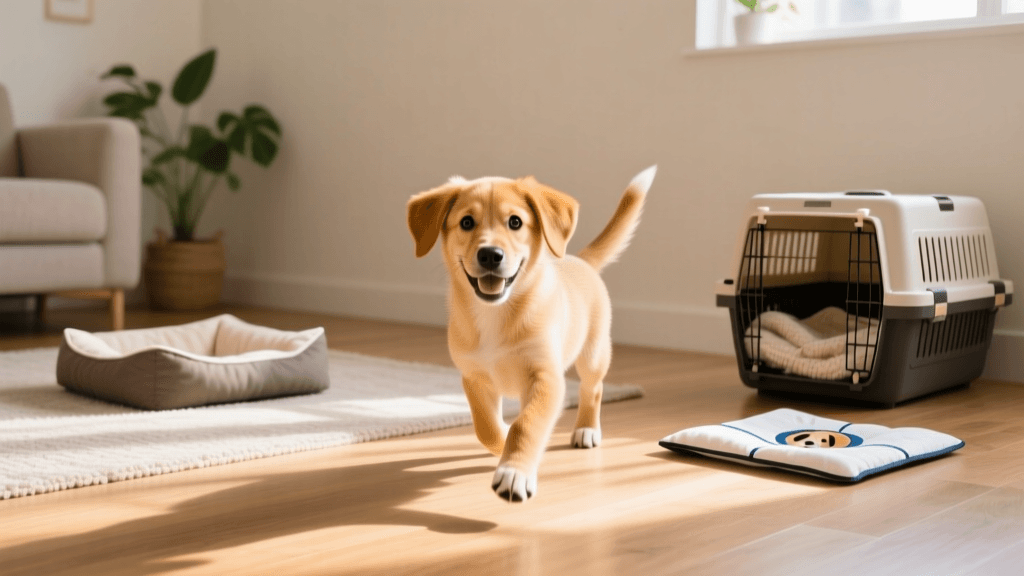
- The 'Alone Time' Protocol: Starting on day one, place your puppy in a safe playpen or crate in a different room for 15 to 30 minutes while you work. Do this daily so they learn that being away from you is safe and normal.
- Lunch Break Excursions: Use your lunch hour to take your puppy to dog-friendly outdoor cafes, local parks, or hardware stores. Expose them to the sounds of traffic, strangers, and other dogs.
- White Noise Desensitization: Play recordings of doorbells, knocking, and city traffic at low volumes while feeding your puppy to prevent them from barking at every notification sound your smart home system makes.
Essential 2026 Gear for the WFH Dog Parent
To successfully raise a puppy while meeting your KPIs, leverage the latest pet technology designed for the home office:
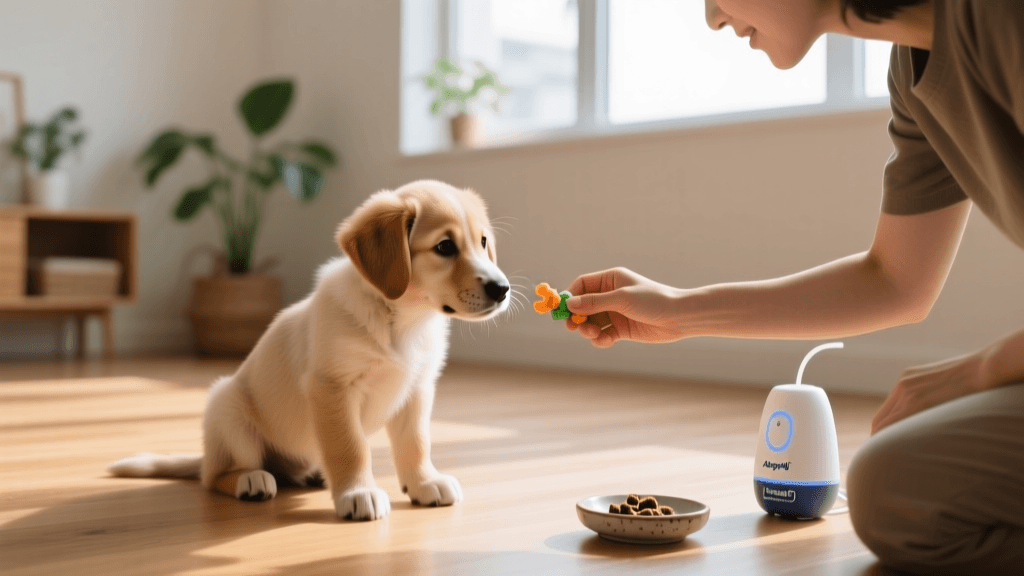
- Smart Treat-Dispensing Cameras: Modern pet cameras allow you to toss treats and speak to your puppy via your smartphone during a 5-minute break between meetings, reinforcing calm behavior in their designated bed.
- Snuggle Toys with Heartbeats: For the first few weeks, a plush toy with a simulated heartbeat can soothe a puppy napping in their pen while you are on a long conference call, reducing whining and distress.
- Washable Desk Mats: Accidents will happen. Swap out traditional fabric rugs under your desk for waterproof, machine-washable desk mats that protect your flooring and are easy to sanitize.
Conclusion
Raising a puppy while working from home in 2026 is a deeply rewarding experience that requires structure, patience, and the right breed match. By selecting a quiet, adaptable breed like the Cavalier King Charles Spaniel, Bichon Frise, Whippet, or Miniature Poodle, you set the stage for a harmonious home office. Remember to strictly manage their potty schedules, provide silent teething alternatives, and proactively train for independence to prevent separation anxiety. With the right preparation, your new puppy will grow into the perfect, supportive companion for your remote work lifestyle.
hannah-wickes
All our authors care for dogs every day — read more of their work on the authors page.