Top 7 Quiet Dog Breeds for Small Apartments in 2026
Discover the top 7 quiet dog breeds for small apartments in 2026. Learn about space needs, noise levels, and expert tips for peaceful city living.
The Shift to Urban Canine Living in 2026
As high-density housing continues to dominate urban landscapes in 2026, the dream of a sprawling backyard is increasingly being replaced by the reality of apartment living. However, sharing your life with a dog in a multi-family building does not mean you have to sacrifice peace and quiet. Finding the right canine companion is crucial for maintaining harmony with your neighbors and ensuring your pet thrives in a smaller footprint. Whether you are renting a studio or own a cozy one-bedroom, selecting a breed with low vocalization tendencies and moderate indoor energy is the key to a successful urban lifestyle.
Why 'Quiet' Matters in Multi-Family Housing
Sharing walls, floors, and ceilings means sharing noise. In 2026, apartment noise ordinances and strict lease agreements regarding pet disturbances are more rigorously enforced than ever. A dog that barks at every footstep in the hallway or howls when left alone can quickly lead to eviction notices or strained neighborly relations. Quiet dog breeds are not necessarily completely mute; rather, they lack the instinct to engage in nuisance barking or alarm vocalization. They are generally more relaxed, less reactive to environmental triggers, and perfectly content to lounge by your side while you work from home.
Top 7 Quiet Dog Breeds for Apartments
1. Basenji
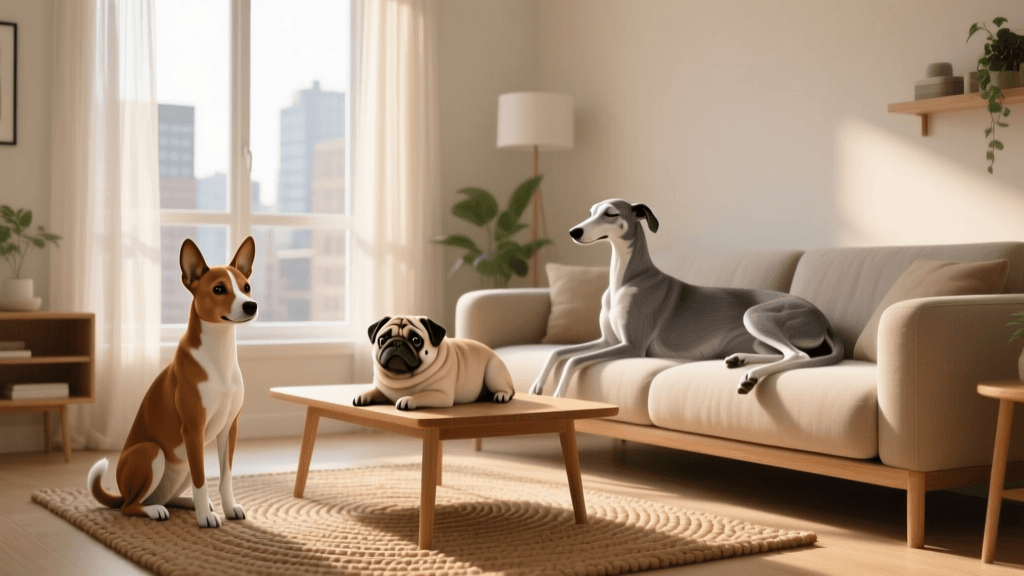
Known as the 'barkless dog,' the Basenji is a unique breed that originated in Central Africa. Instead of a traditional bark, they produce a yodel-like sound called a 'baroo,' which rarely penetrates apartment walls. They are fastidious groomers, much like cats, and possess an independent streak. While they need a solid daily walk to burn off their physical energy, they are generally calm indoors. Their short coat means minimal shedding, a major bonus for compact living spaces.
2. Greyhound
It might seem counterintuitive to recommend a racing breed for a small apartment, but Greyhounds are famously known as '45-mph couch potatoes.' Outdoors, they love a good sprint in a secure, fenced area or on a long leash. Indoors, however, they are remarkably lazy and prefer to curl up on a plush orthopedic bed. They rarely bark without a significant reason, making them excellent neighbors. Their thin coats do require warm sweaters during the chilly winter months of 2026.
3. Cavalier King Charles Spaniel
Bred primarily for companionship, the Cavalier King Charles Spaniel is a gentle, affectionate, and remarkably quiet breed. They are highly attuned to their owner's emotions and are just as happy snuggling on the sofa as they are taking a leisurely stroll through the neighborhood. They do require regular brushing to prevent matting, but their moderate energy levels and low vocalization make them a top-tier choice for apartment dwellers seeking a loving, low-noise companion.
4. Shih Tzu
Unlike many small breeds that suffer from small dog syndrome and tend to be yappy, the Shih Tzu was bred exclusively to be a royal companion. They are sturdy, friendly, and surprisingly quiet. They do not possess a strong guarding instinct, meaning they are less likely to bark at every footstep in the apartment hallway. Their exercise needs are easily met with indoor play and short daily walks, though their luxurious coat requires a dedicated grooming routine or a professional trim every few weeks.
5. Pug
The Pug is a charming, comedic, and deeply devoted breed that adapts beautifully to apartment life. They are generally quiet dogs, though their brachycephalic anatomy means they can be prone to snoring and snorting. Pugs thrive on human interaction and can develop separation anxiety if left alone for long hours, which can lead to vocalization. To combat this in 2026, many owners utilize interactive smart cameras and puzzle feeders to keep their Pugs entertained during the workday.
6. Chinese Crested
Available in both hairless and powderpuff varieties, the Chinese Crested is an alert, playful, and surprisingly quiet toy breed. They are deeply bonded to their families and can be somewhat reserved with strangers, but they rarely engage in nuisance barking. Their small size makes them perfectly suited for compact apartments, and their moderate energy levels are easily satisfied with indoor games of fetch and short neighborhood walks.
7. Basset Hound
With their soulful eyes and laid-back demeanor, Basset Hounds are wonderful apartment companions for those who can manage their unique traits. They are incredibly low-energy indoors, often requiring encouragement just to get off the couch. While they can bay loudly when they catch an interesting scent, they are generally quiet and docile inside the home. Their short legs mean they do not require massive amounts of space, though their stubborn nature requires patient, positive reinforcement training.
2026 Apartment Dog Comparison Chart
| Breed | Avg Weight | Bark Level | Indoor Energy | Grooming Needs |
|---|---|---|---|---|
| Basenji | 22-24 lbs | Very Low (Yodels) | Moderate | Low |
| Greyhound | 60-70 lbs | Low | Very Low | Low |
| Cavalier | 13-18 lbs | Low | Low | Moderate |
| Shih Tzu | 9-16 lbs | Low | Low | High |
| Pug | 14-18 lbs | Low | Low | Low |
| Chinese Crested | 8-12 lbs | Low | Moderate | Variable |
| Basset Hound | 40-65 lbs | Moderate (Bays) | Very Low | Low |
Essential Gear for Quiet Apartment Dogs
Equipping your apartment with the right tools can drastically reduce anxiety and prevent noise complaints. In 2026, pet technology has advanced to help owners monitor and soothe their dogs remotely.
- Furbo 360 Dog Camera: This rotating smart camera features AI-driven bark detection and alerts your smartphone the moment your dog vocalizes. The two-way audio and treat-tossing mechanism allow you to redirect your dog's attention instantly before a barking session escalates.
- Licki Mat Soother: Spreading wet food or plain yogurt on a textured silicone mat and freezing it provides long-lasting mental enrichment. Licking releases endorphins in dogs, naturally calming their nervous system when triggered by loud neighborhood noises.
- Impact Dog Crates with Sound-Dampening Panels: For dogs that are crate-trained but reactive to hallway sounds, adding acoustic foam panels to the exterior of a sturdy metal crate can muffle external triggers and create a den-like sanctuary.
Managing Separation Anxiety in High-Density Buildings
Separation anxiety is a primary trigger for noise complaints in apartment buildings. When left alone, anxious dogs may pace, whine, or bark continuously. According to the ASPCA, creating a predictable departure routine is essential for mitigating this stress. In 2026, veterinary behaviorists highly recommend utilizing adaptive calming pheromone diffusers, such as the Adaptil Calm Home Diffuser, paired with long-lasting enrichment toys. Stuffing a Kong Classic with frozen peanut butter and bone broth provides a mentally exhausting task that distracts your dog during the critical first 30 minutes of your departure—the period when anxiety spikes are most common.
Desensitizing Your Dog to Hallway and Elevator Noises
Apartment living exposes your dog to a constant symphony of unpredictable sounds: rolling luggage, slamming doors, and elevator chimes. To prevent reactive barking, you must proactively desensitize your dog to these triggers. Start by recording common apartment hallway noises on your smartphone. Play these sounds at a very low volume while feeding your dog high-value treats like boiled chicken or freeze-dried liver. Gradually increase the volume over several weeks. This counter-conditioning technique changes your dog's emotional response from alert and defensive to relaxed and expectant of a reward. The American Kennel Club emphasizes that consistent, positive reinforcement is the cornerstone of successful urban dog training.
Conclusion
Living in an apartment with a dog in 2026 is entirely feasible and deeply rewarding when you select a breed suited for the environment. By prioritizing low-vocalization breeds like the Basenji, Greyhound, or Cavalier King Charles Spaniel, and investing in modern enrichment tools and desensitization training, you can cultivate a peaceful home. Remember that every dog is an individual, and dedicated training will always be your best asset in maintaining a harmonious relationship with both your pet and your neighbors.
marcus-aldridge
All our authors care for dogs every day — read more of their work on the authors page.