First-Time Owner Guide: Daily Routine for Your Rescue Dog
Discover how to establish a comforting daily routine, set up a safe space, and manage first-month costs for your new rescue dog with our expert guide.

Welcome Home: Navigating the Transition
Adopting a rescue dog is one of the most rewarding decisions you can make, but the first few weeks can be overwhelming for both you and your new canine companion. Unlike puppies raised in a controlled environment, adult rescue dogs often come with unknown histories, past traumas, or simply a lack of consistent boundaries. For first-time owners, establishing a predictable daily routine is not just about convenience; it is a critical psychological anchor that helps your dog feel safe.
According to animal behaviorists, dogs thrive on predictability. When a dog knows exactly what to expect and when, their baseline anxiety drops significantly. This is especially true for shelter dogs transitioning into a home environment.
The 3-3-3 Rule of Decompression
Before diving into a strict schedule, first-time owners must understand the 3-3-3 Rule of rescue dog decompression. This widely accepted framework outlines the emotional milestones your dog will likely experience:
- 3 Days: Your dog may feel overwhelmed, scared, and unsure of their surroundings. They might not eat or drink normally and will likely sleep a lot as a coping mechanism.
- 3 Weeks: Your dog starts to settle in, figure out your routine, and show their true personality. Behavioral issues may begin to surface as they feel comfortable enough to test boundaries.
- 3 Months: Your dog finally feels at home. Trust is established, and a mutual bond is fully formed.
Rescue organizations like Best Friends Animal Society emphasize that pushing a dog into high-stress social situations before the 3-week mark can severely set back their decompression process. Patience is your most valuable tool.
Designing a Safe Haven
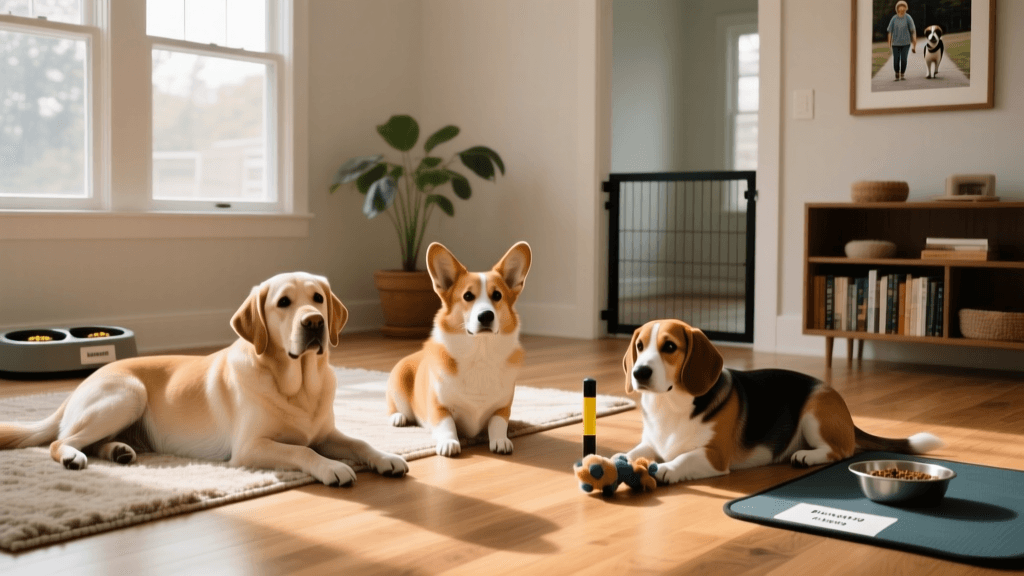
Before your dog arrives, set up a designated safe zone. This should be a quiet, low-traffic area of your home, such as a spare bedroom or a corner of the living room.
Essential Safe Space Measurements and Gear
- The Crate: A crate serves as a den, not a punishment zone. For medium-sized breeds (40-70 lbs, like Pit Bull mixes or Border Collies), a 36-inch L x 23-inch W x 25-inch H wire crate (such as the MidWest Homes for Pets iCrate) is ideal. It should be large enough for them to stand, turn around, and lie down, but not so large that they can potty in one corner and sleep in the other.
- Bedding: Avoid plush beds initially, as anxious dogs may chew and ingest stuffing. Opt for a chew-resistant option like the KONG Tough Bed or a simple, washable fleece blanket.
- Calming Aids: Plug in an Adaptil DAP (Dog Appeasing Pheromone) diffuser near the safe zone. Studies show these synthetic pheromones mimic those produced by nursing mothers, naturally reducing canine stress.
- Boundaries: Use a pressure-mounted baby gate (like the Regalo Easy Step) to keep the dog confined to the safe zone when you cannot directly supervise them.
The First-Time Owner's Daily Routine Blueprint
Consistency is the antidote to anxiety. Here is a practical, actionable daily schedule tailored for a newly adopted adult rescue dog. Adjust the exact times to fit your work schedule, but maintain the intervals.
Morning: Decompression and Relief
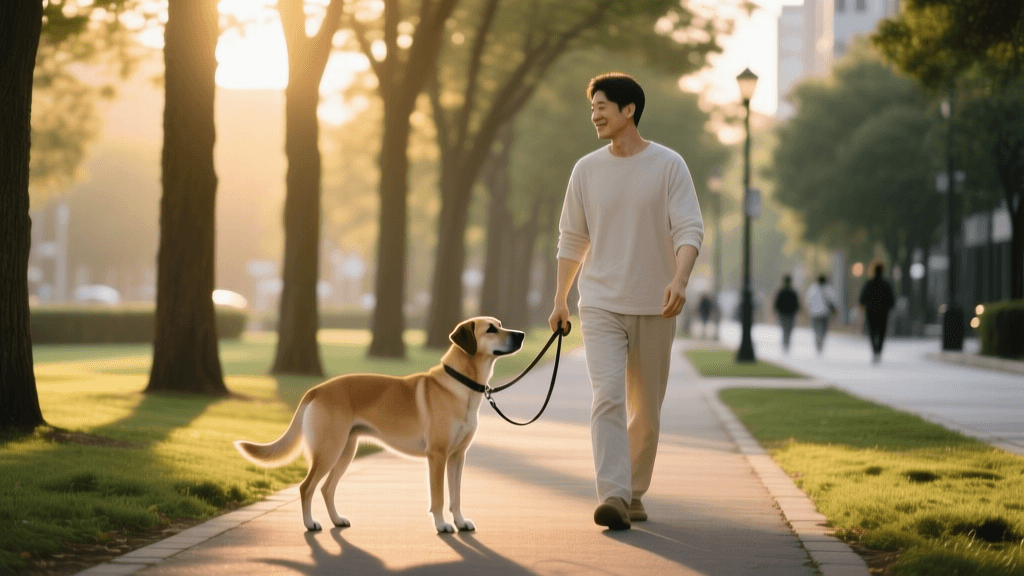
- 6:30 AM - Potty and Sniffari: Take your dog out on a long leash (15 feet). Do not rush the potty break. Allow them to engage in a Sniffari, letting them sniff the environment thoroughly. Sniffing lowers a dog's heart rate and provides immense mental enrichment.
- 7:00 AM - Breakfast and Foraging: Feed a high-quality, balanced diet (e.g., Purina Pro Plan or Hill's Science Diet). Instead of a bowl, use a KONG Classic stuffed with kibble and a smear of dog-safe peanut butter, or a snuffle mat. This turns a 2-minute meal into a 15-minute mental workout.
- 8:00 AM - Departure Protocol: If you are leaving for work, keep departures incredibly low-key. Do not say emotional goodbyes. Leave them with a long-lasting chew, like a bully stick or a Yak Cheese chew, in their safe zone.
Afternoon: Mid-Day Reset
- 12:30 PM - Potty and Connection: If you work from home or have a dog walker, this is the time for a brief, structured walk and a potty break. Keep interactions calm to reinforce that mid-day is for resting, not high-energy play.
Evening: Bonding and Training
- 5:30 PM - Decompression Walk: A second Sniffari walk to burn off the physical energy accumulated during the day.
- 6:30 PM - Dinner and Training: Use a portion of their dinner kibble for basic training sessions (5-10 minutes max). Focus on foundational cues like touch, sit, and look at me. This builds confidence and strengthens your bond.
- 9:00 PM - Wind Down: Dim the lights, offer a calming chew, and settle into the safe zone.
- 10:30 PM - Final Potty: A brief, boring potty break right before bedtime.
First-Month Budget and Essential Gear
First-time owners are often surprised by the initial costs of dog ownership. While you can find deals, investing in high-quality, durable gear upfront saves money and prevents safety hazards. Below is a realistic first-month budget breakdown for a medium-sized rescue dog.
| Item Category | Recommended Brand / Product | Estimated Cost | Purpose |
|---|---|---|---|
| Safety Harness | Kurgo Tru Fit Smart Harness | $35 - $45 | Prevents escaping; safe for car travel |
| Leash | Mendota Pets British Style Slip Lead | $15 - $25 | Secure handling without choking |
| Enzymatic Cleaner | Nature's Miracle Advanced Stain & Odor Eliminator | $15 - $20 | Crucial for accidental indoor potty breaks |
| Mental Enrichment | Outward Hound Nina Ottosson Dog Brick Puzzle | $15 - $20 | Reduces boredom and destructive chewing |
| High-Value Treats | Zuke's Mini Naturals / Freeze-Dried Liver | $10 - $15 | Essential for positive reinforcement training |
| Calming Pheromones | Adaptil Calm Home Diffuser Kit | $25 - $30 | Eases transition anxiety in the safe zone |
Note: This table excludes one-time costs like spay/neuter, microchipping, and initial veterinary exams, which typically range from $150 to $400 depending on your local rescue and veterinary clinic.
Managing Separation Anxiety Early On
One of the most common mistakes first-time owners make is leaving a newly adopted dog alone for eight hours on the very first day. According to the ASPCA, isolation distress and separation anxiety are prevalent in rescue dogs who have experienced abandonment or prolonged shelter stays.
Dogs with separation anxiety exhibit stress behaviors within minutes of being left alone. It is not a sign of disobedience, but rather a state of panic that requires gradual, compassionate desensitization.
To prevent this, practice micro-departures. Put on your shoes, pick up your keys, step outside for exactly 10 seconds, and return calmly. Gradually increase this to 1 minute, 5 minutes, and 30 minutes over the course of several weeks. Utilize technology like a Furbo dog camera or a simple Wyze indoor cam to monitor your dog's stress levels when you are away. If your dog is pacing, panting heavily, or howling, you have increased the time away too quickly.
When to Introduce the Outside World
While you may be eager to introduce your new rescue to your friends, family, and the local dog park, resist the urge. The Humane Society advises limiting your dog's world to just your home, your yard, and quiet neighborhood streets for the first few weeks.
Dog parks are highly unpredictable environments. A newly adopted dog, still figuring out their boundaries and communication style, can easily become overwhelmed, leading to a fear-based reactive incident. Instead, arrange parallel walks with friends who have calm, vaccinated, and well-socialized dogs. Walking in the same direction, with a safe distance of 10-15 feet between the dogs, allows them to acclimate to each other's presence without the pressure of direct, face-to-face interaction.
Final Thoughts for the First-Time Owner
Living with a rescue dog is a marathon, not a sprint. There will be days when your dog regresses, chews a favorite pair of shoes, or has an accident on the rug. In those moments, take a deep breath and remember the 3-3-3 rule. By providing a structured daily routine, a secure environment, and patient, positive reinforcement, you are not just training a dog; you are rebuilding their trust in humanity. Welcome to the incredibly fulfilling journey of life with your rescue dog.
jonas-cole
All our authors care for dogs every day — read more of their work on the authors page.