2026 Guide to Training Quiet Dog Breeds for Apartments
Discover 2026 training protocols to maintain the calm nature of quiet apartment dog breeds, manage hallway reactivity, and master indoor enrichment.
The Evolution of Urban Dog Ownership in 2026
Urban living continues to evolve in 2026, with more professionals and families opting for high-density apartment spaces. While selecting a naturally quiet dog breed—such as a Greyhound, Basenji, or Cavalier King Charles Spaniel—is a fantastic first step toward peaceful coexistence, genetics alone will not guarantee a well-adjusted apartment dweller. Even the most stoic breeds require targeted behavioral conditioning to navigate shared walls, echoing hallways, and close-proximity elevator rides. In modern apartment complexes, noise complaints remain a leading cause of pet-related lease violations. Therefore, proactive obedience training and environmental desensitization are non-negotiable for city-dwelling dog owners.
This comprehensive guide outlines the most effective, science-backed training protocols for quiet apartment dog breeds in 2026, ensuring your canine companion remains as tranquil in a high-rise as they would be on a sprawling farm.
Understanding the "Quiet" Baseline
It is a common misconception that "quiet" breeds do not need vocalization training. While breeds like the Shiba Inu or the Borzoi are not prone to the relentless nuisance barking seen in some terrier or hound breeds, they are still highly reactive to environmental anomalies. In an apartment, the acoustic landscape is unpredictable. You cannot control the heavy footsteps of an upstairs neighbor, the sudden ding of an elevator down the hall, or the muffled arguments through a shared drywall partition.
According to the American Society for the Prevention of Cruelty to Animals (ASPCA), dogs often bark due to territorial behavior, alarm, or boredom. For an apartment dog, the "territory" extends beyond the four walls of your unit to include the hallway, the lobby, and the courtyard. Training must focus on redefining these boundaries and teaching the dog that ambient apartment noises are irrelevant background static rather than threats requiring a vocal response.
Top Quiet Breeds and Their Unique Training Profiles
Not all quiet breeds are quiet for the same reasons. Some are physically built for short bursts of speed followed by long naps, while others are simply aloof. Understanding your specific breed's psychological profile is critical for designing an effective 2026 training curriculum.
| Breed | Energy Level | Primary Apartment Challenge | Best Training Focus |
|---|---|---|---|
| Greyhound | Low/Medium | Prey drive triggered by window sights | Window desensitization and "leave it" |
| Basenji | High | Destructive boredom and yodeling | Advanced scent work and puzzle feeders |
| Cavalier King Charles Spaniel | Low | Separation anxiety in small spaces | Independence training and crate conditioning |
| Shiba Inu | Medium | Alert barking at hallway noises | Threshold games and impulse control |
| Borzoi | Low | Space sensitivity and startle reflexes | Confidence building and mat training |
Core Training Protocol 1: Hallway and Stairwell Desensitization
The hallway is the primary trigger zone for apartment dogs. When a dog hears footsteps approaching their front door, their natural instinct is to alert the "pack." To combat this, we utilize a technique called the Threshold Game.
Step-by-Step Threshold Training
- Identify the Trigger Distance: Sit with your dog near the front door. Have a friend walk down the hallway outside. Note the exact moment your dog's ears perk up or they let out a low "boof."
- Mark and Reward: The second your dog notices the noise but before they bark, use a marker word like "Yes!" and toss a high-value treat (such as freeze-dried liver) away from the door onto their designated mat.
- Reframe the Association: Over several weeks, the dog learns that the sound of approaching footsteps does not mean an intruder is coming; it means treats will magically appear on their bed. This effectively rewires their emotional response to shared corridor acoustics.
This method aligns with modern counter-conditioning principles endorsed by veterinary behaviorists, shifting the dog from a state of alarm to a state of anticipation for positive reinforcement.
Core Training Protocol 2: The Shared Wall "Place" Command
In an apartment, your dog's primary resting area should not be pressed against a shared wall, but if it is, the "Place" command is your greatest asset. The "Place" command instructs your dog to go to a specific raised cot or mat and remain there until released. This is particularly useful when neighbors are hosting gatherings, or when maintenance workers are in the building.
Mastering the "Place" Command
Begin by luring your dog onto a raised cot (which provides a tactile boundary that is easier for dogs to understand than a flat mat). Use the cue "Place" and reward heavily for all four paws being on the cot. Gradually increase the duration and distance. Once the behavior is fluent, introduce ambient noise. Play recordings of muffled conversations, vacuum cleaners, or doorbells at a low volume while your dog is on their "Place." If they hold their position, reward them with a long-lasting chew, such as a yak cheese stick. According to the American Kennel Club (AKC), teaching a dog an incompatible behavior—like resting quietly on a mat—is one of the most reliable ways to extinguish nuisance barking, as a dog cannot comfortably rest and frantically bark at the wall simultaneously.
Core Training Protocol 3: Elevator and Lobby Etiquette
Elevators are metal tubes of stress for many dogs. The confined space, sudden movements, and proximity to strangers and other dogs can cause even the quietest breeds to exhibit stress signals, which may escalate into defensive growling or barking.
The "Elevator Anchor" Technique
Train your dog to have a specific "anchor" spot in the elevator, typically the back corner. When the elevator doors open, cue your dog to "Back" or "Corner" and immediately reward them for settling in that spot. This prevents them from rushing out the doors and gives them a predictable, safe zone. Practice this during off-peak hours (e.g., mid-morning on a Tuesday) before attempting it during the chaotic evening rush hour. If your dog is highly sensitive to the mechanical noises of the elevator shaft, use a white noise app on your phone or a calming pheromone spray on their harness 15 minutes before your ride to lower their baseline anxiety.
Indoor Enrichment: Preventing Boredom in Small Spaces
A tired dog is a quiet dog. However, in a 700-square-foot apartment, physical exercise is limited. You cannot throw a ball down a hallway. Therefore, 2026's top apartment dog trainers emphasize cognitive enrichment over purely physical exhaustion. Mental fatigue tires a dog out just as effectively as a three-mile run, and it does so without requiring square footage.
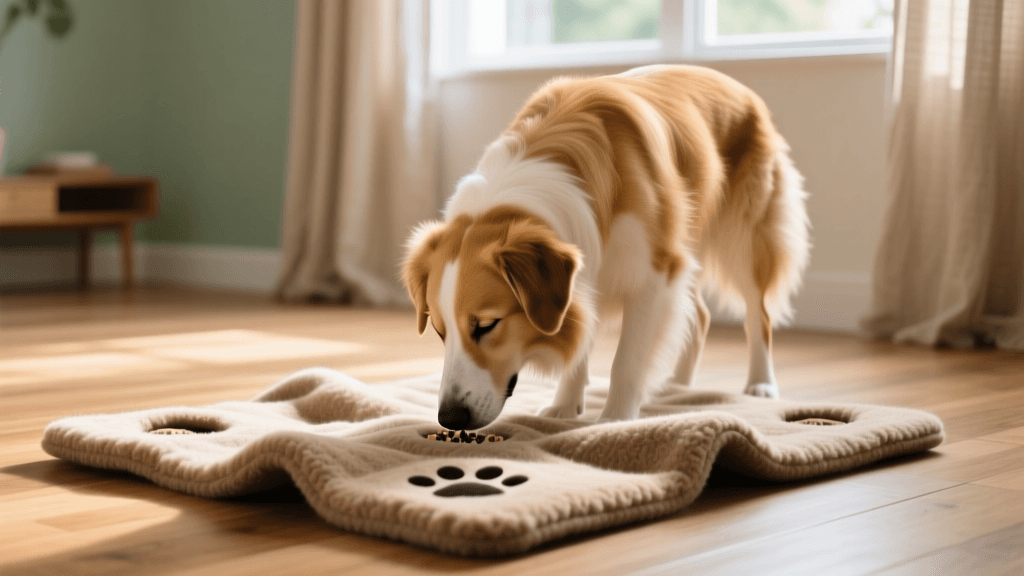
- Scent Work Mats: Snuffle mats mimic the natural foraging behavior of canines. Hiding your dog's daily kibble ration within the dense fleece strips forces them to use their nose, burning immense mental energy.
- Lick Mats with Freezing: Spread dog-safe peanut butter or plain Greek yogurt onto a textured silicone lick mat and freeze it. Licking releases endorphins in a dog's brain, naturally soothing them. This is the perfect tool to deploy right before you leave for work to prevent separation-related whining.
- Flirt Poles (Hallway Edition): For high-energy quiet breeds like the Basenji, a soft-tipped flirt pole used in a cleared hallway or underground parking garage provides the necessary sprint-and-stop physical outlet without the joint impact of hard floors.
The Humane Society of the United States frequently highlights the importance of creating a structured, enriching environment to prevent the behavioral decay that often leads to noise complaints in multi-family housing. When a dog's brain is engaged in a puzzle or a foraging task, they simply do not have the cognitive bandwidth to monitor the hallway for threats.
Managing Separation Anxiety in Quiet Breeds
Some breeds, notably the Cavalier King Charles Spaniel and the Japanese Chin, are intensely bonded to their owners. In an apartment, separation anxiety does not always manifest as destructive chewing; it often manifests as rhythmic, mournful howling or repetitive barking the moment the owner closes the front door. This is incredibly disruptive to next-door neighbors.
To combat this, practice Departure Desensitization. Perform all the actions associated with leaving (putting on shoes, grabbing keys, locking the deadbolt) but then sit back down on the couch and ignore the dog. Do this 10 times a day. Eventually, the dog's brain stops associating the sound of the deadbolt with the panic of abandonment. When you do leave, do not make a fuss. A simple, calm departure and a low-key return prevent the emotional spikes that trigger anxiety-induced vocalization.
Conclusion: Consistency is the Key to Urban Harmony
Living in an apartment with a dog in 2026 is a highly rewarding experience, provided you respect the shared nature of the environment. Choosing a quiet breed is merely purchasing the raw materials; the training is the architecture. By implementing threshold desensitization, mastering the "Place" command, enforcing elevator etiquette, and prioritizing cognitive enrichment, you ensure that your dog remains a serene, well-mannered neighbor. Remember that behavioral conditioning is not a one-time event but a continuous lifestyle. Stay patient, keep your treat pouch stocked, and enjoy the peaceful companionship of your urban canine.
marcus-aldridge
All our authors care for dogs every day — read more of their work on the authors page.