Paw5 Wooly Snuffle Mat Holistic Impulse Training 2026
Discover how to use the Paw5 Wooly Snuffle Mat for holistic impulse control and anxiety reduction in dogs with our 2026 force-free training guide.
The Shift Toward Holistic Canine Training in 2026
As we navigate the dog training landscape in 2026, the industry has seen a massive paradigm shift away from aversive, dominance-based techniques toward holistic, nervous-system-regulating approaches. Modern veterinary behaviorists now understand that true impulse control is not achieved through fear or physical correction, but through cognitive enrichment and parasympathetic nervous system activation. At the forefront of this natural training revolution is scent work, specifically utilizing foraging tools like the Paw5 Wooly Snuffle Mat.
Holistic training views the dog as a whole being—mind, body, and emotional state. When a dog struggles with impulse control, lunging at the door, or hyperactivity, traditional methods might suggest leash pops or stern verbal corrections. However, these methods often suppress behavior while spiking cortisol levels. In contrast, holistic impulse control training leverages a dog's natural foraging instincts to build self-regulation, focus, and calmness from the inside out.
The Neurology of Scent Work and Impulse Control
To understand why the Paw5 Wooly Snuffle Mat is such a powerful training tool, we must look at canine neurology. A dog's olfactory bulb is proportionally 40 times larger than a human's, and the act of sniffing requires intense cognitive processing. When a dog engages in deep, focused sniffing, their heart rate actually decreases. This is because scent work activates the parasympathetic nervous system—the body's 'rest and digest' network.
According to the ASPCA's General Dog Care guidelines, mental enrichment and scent-based activities are critical for reducing anxiety and preventing destructive behaviors in dogs. By forcing a dog to use their nose to locate high-value rewards hidden within the dense fleece strands of a snuffle mat, we are naturally tiring their brain. A mentally fatigued dog is significantly more capable of exhibiting impulse control than a dog that has only been physically exercised.
Why the Paw5 Wooly Snuffle Mat?
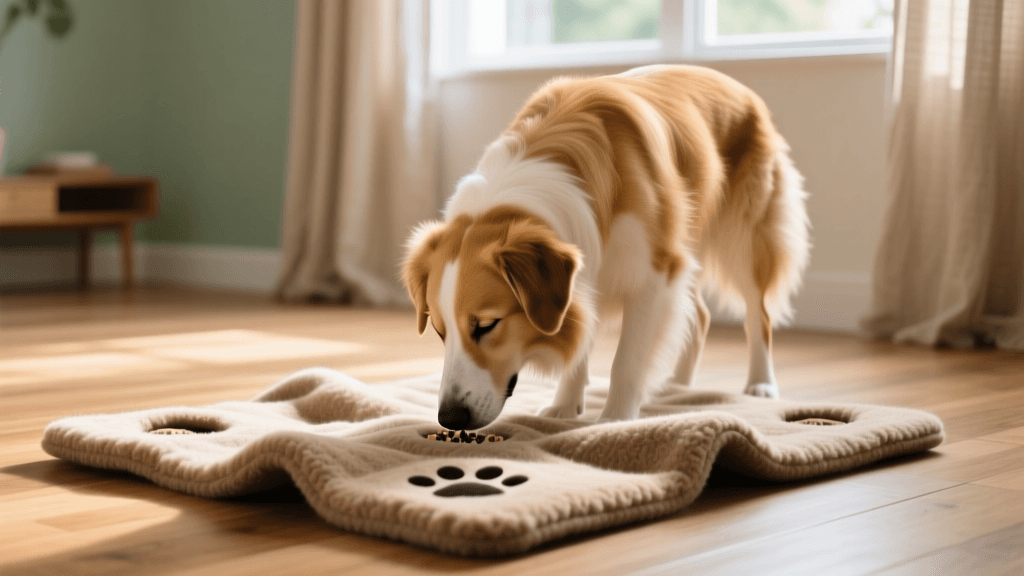
While there are many foraging toys on the market in 2026, the Paw5 Wooly Snuffle Mat remains the gold standard for holistic trainers. Handmade in Guatemala from upcycled, sustainably sourced cotton and fleece, it mimics the tactile sensation of foraging in tall grass. Unlike rigid plastic puzzle toys that can frustrate anxious dogs or cause dental wear, the Wooly Mat is soft, washable, and adaptable to any skill level.
Its dense, strand-heavy design allows for varying depths of treat placement, making it an ideal tool for shaping the 'Wait' and 'Leave It' commands without the need for physical restraint. The mat's portability also means you can use it as a 'settle' cue in high-distraction environments, such as outdoor cafes or veterinary waiting rooms.
2026 Holistic Treat Selection for Foraging
A holistic approach extends beyond the training method to the fuel we use. In 2026, single-ingredient, sustainably sourced treats are highly recommended for scent work, as they provide strong olfactory signals without introducing inflammatory fillers that can disrupt a dog's gut-brain axis.
- Freeze-Dried Green Tripe: Pungent and highly motivating, excellent for high-distraction environments.
- Insect-Based Protein Bites: Hypoallergenic and eco-friendly, a massive trend in 2026 for dogs with poultry or beef sensitivities.
- Wild-Caught Salmon Crumbles: Rich in Omega-3 fatty acids, which actively support cognitive function and reduce neuro-inflammation.
- Dehydrated Sweet Potato Chews: Ideal for dogs on strict elimination diets, offering a sweet scent profile.
Step-by-Step Holistic Impulse Control Protocol
Teaching impulse control with the Paw5 Wooly Snuffle Mat requires patience, observation, and a commitment to force-free handling. Follow this phased approach to build lasting self-regulation.
Phase 1: Introduction and Confidence Building (Days 1-3)
Place the mat on a non-slip surface. Initially, scatter a handful of smelly treats directly on top of the mat where they are easily visible. Allow your dog to eat them freely. The goal here is not impulse control, but building a positive emotional association with the mat. Let them sniff, paw, and root around. If your dog seems hesitant, gently rustle the fleece strands to release the scent.
Phase 2: Shaping the 'Wait' Command (Days 4-10)
Once your dog loves the mat, it is time to introduce the impulse control element. Ask your dog to sit or stand a few feet away from the mat. Hold the mat in your hands or place it on the floor while standing between the dog and the mat (using your body as a gentle barrier, not a physical wall).
Wait for a moment of stillness. The second your dog stops leaning forward and shifts their weight back, mark the behavior with a calm 'Yes' or a clicker, and place the mat on the floor, releasing them with a 'Find it!' cue. If they rush forward before the release, simply lift the mat back up without saying a word. This teaches the dog that calmness and patience are the keys to unlocking the foraging game, completely removing the need for leash corrections.
Phase 3: Deep Hiding and Duration (Weeks 3-4)
Bury the treats deep within the core of the Wooly strands. This requires the dog to engage in sustained, methodical sniffing. As they forage, practice calling them away from the mat using a high-value recall cue, rewarding them heavily for disengaging from the mat, and then releasing them back to the mat as a secondary reward. This builds incredible impulse control and responsiveness, even when the dog is highly stimulated.
Comparing Traditional vs. Holistic Impulse Training
Understanding the physiological differences between aversive training and holistic enrichment is crucial for modern dog owners. The following table illustrates why veterinary behaviorists advocate for scent-based regulation.
| Training Method | Cortisol Response | Long-Term Retention | Human-Dog Bond Impact |
|---|---|---|---|
| Leash Corrections (Aversive) | Spikes significantly | Low (Suppression only) | Erodes trust and increases fear |
| Snuffle Mat Foraging (Holistic) | Lowers (Parasympathetic activation) | High (Builds self-regulation) | Builds mutual trust and cooperation |
'Dogs learn best when they are in a state of emotional safety. Tools that encourage natural foraging behaviors bypass the fear centers of the brain and engage the problem-solving cortex, leading to deeper, more reliable training outcomes.' — Principles of Force-Free Canine Education.
Troubleshooting Common Snuffle Mat Challenges
Problem: The dog flips the mat over to get to the treats.
Holistic Solution: This indicates the treats are too easy to access, or the dog is feeling frustrated. Do not scold the dog. Instead, push the treats deeper into the base of the fleece strands, or place the mat inside a shallow cardboard box to restrict flipping while maintaining the scent challenge.
Problem: The dog loses interest quickly.
Holistic Solution: Evaluate your treat value. In 2026, with so many environmental distractions, kibble is rarely motivating enough for deep scent work. Upgrade to freeze-dried liver or aromatic tripe. Additionally, keep sessions short—three to five minutes of intense sniffing is equivalent to a 30-minute walk in terms of mental fatigue.
Integrating Canine Massage for Complete Regulation
To maximize the holistic benefits of snuffle mat training, consider pairing the activity with Tellington TTouch or gentle canine massage. The Humane Society's Dog Behavior and Training resources frequently highlight the importance of touch and environmental management in reducing canine stress. After a focused foraging session, while the dog is in a relaxed, parasympathetic state, gently massage their ears and shoulders. This reinforces the calm state and helps solidify the neurological pathways associated with impulse control and relaxation.
Conclusion
Training a dog with impulse control issues does not require intimidation or physical force. By embracing natural, holistic approaches in 2026, we can work with our dogs' innate biology rather than against it. The Paw5 Wooly Snuffle Mat is more than just a slow feeder; it is a profound behavioral tool that lowers anxiety, builds focus, and teaches the art of patience through the simple, beautiful act of sniffing. By committing to this force-free, enrichment-based protocol, you will not only achieve a better-behaved dog but also cultivate a deeper, more trusting bond with your canine companion.
hannah-wickes
All our authors care for dogs every day — read more of their work on the authors page.