Best Quiet Apartment Dog Breeds 2026: Behavior Guide
Discover the best quiet dog breeds for apartments in 2026. Learn the canine psychology behind low vocalization and how to choose the perfect city companion.
The Psychology of Urban Canines: Beyond the Bark
As urban density continues to rise in 2026, apartment living has become the default for millions of dog owners. However, sharing walls, ceilings, and floors with neighbors means that a dog's acoustic footprint is just as important as its physical size. When we talk about 'quiet dog breeds for apartments,' we are not just looking for dogs that lack the physical ability to bark. We are looking for breeds with specific psychological baselines, low territorial reactivity, and an inherent ability to habituate to the unpredictable stimuli of multi-family housing.
Understanding your dog requires looking past the surface-level trait of 'barking' and examining the underlying breed instincts and emotional drivers. Why does one dog sleep through a dropping elevator while another alerts the entire floor to a neighbor's footsteps? The answer lies in canine psychology, genetic selection, and environmental conditioning.
The Psychology of Canine Vocalization in Confined Spaces
Vocalization in dogs is a complex communication tool driven by instinct, emotion, and environmental triggers. According to the ASPCA's behavioral guidelines, dogs bark for a variety of reasons: territorial defense, alarm, attention-seeking, greeting, and separation distress. In an apartment setting, the most problematic of these are territorial and alarm barking.
Apartments are highly stimulating environments. Hallways act as acoustic funnels, amplifying the sounds of strangers, delivery drivers, and other animals. For a dog bred to guard property or alert a village to intruders, an apartment hallway is a psychological nightmare. Every passing footstep is perceived as a potential breach of territory. Therefore, the best apartment dogs are those bred for companionship or visual hunting, rather than auditory alerting or livestock guarding.
The Myth of Size vs. Noise
A common misconception among first-time urban pet owners is that small dogs are automatically better suited for apartments. While small dogs require less physical space, many toy and terrier breeds were historically selected for pest control or alarm barking. A Jack Russell Terrier may fit perfectly on a studio apartment sofa, but its high prey drive and intense territorial instincts can result in chronic, high-pitched barking that penetrates shared walls. Conversely, large sighthounds like Greyhounds are often remarkably quiet, as their instincts are tied to visual chasing rather than vocal guarding.
Top Quiet Dog Breeds for Apartments in 2026
When evaluating breeds for apartment living, veterinary behaviorists look at a combination of energy levels, vocalization tendencies, and separation anxiety thresholds. Below is a structured comparison of the top psychologically adaptable, quiet breeds for urban environments in 2026.
| Breed | Instinctual Drive | Vocalization Type | Apartment Suitability |
|---|---|---|---|
| Greyhound | Visual Prey / Sprint | Rare, low-pitched | Excellent |
| Basenji | Tracking / Hunting | Yodels, no traditional bark | Good (requires mental work) |
| Cavalier King Charles Spaniel | Companionship | Soft, infrequent | Excellent |
| Bolognese | Companion / Mild Alert | Low-volume murmurs | Excellent |
| Shiba Inu | Basal / Independent | Screams (only when stressed) | Moderate |
1. The Greyhound: The 45-MPH Couch Potato
Despite their racing background, retired Greyhounds are famously lethargic indoors. Psychologically, they are sprinters, not endurance athletes. Once they have had a short, intense bout of exercise, their nervous system down-regulates into a deep resting state. They lack the territorial guarding instinct, making them highly indifferent to hallway noises. The American Kennel Club frequently highlights sighthounds as ideal apartment dwellers due to their low indoor energy and minimal barking.
2. The Basenji: The Barkless Hunter
The Basenji is famous for its inability to produce a traditional bark due to the unique shape of its larynx. Instead, they 'yodel' or 'baroo.' However, their hunting instincts mean they require significant mental enrichment. A bored Basenji in an apartment will not bark, but it may resort to destructive chewing or howling. They are best suited for owners who work from home or can provide mid-day cognitive enrichment.
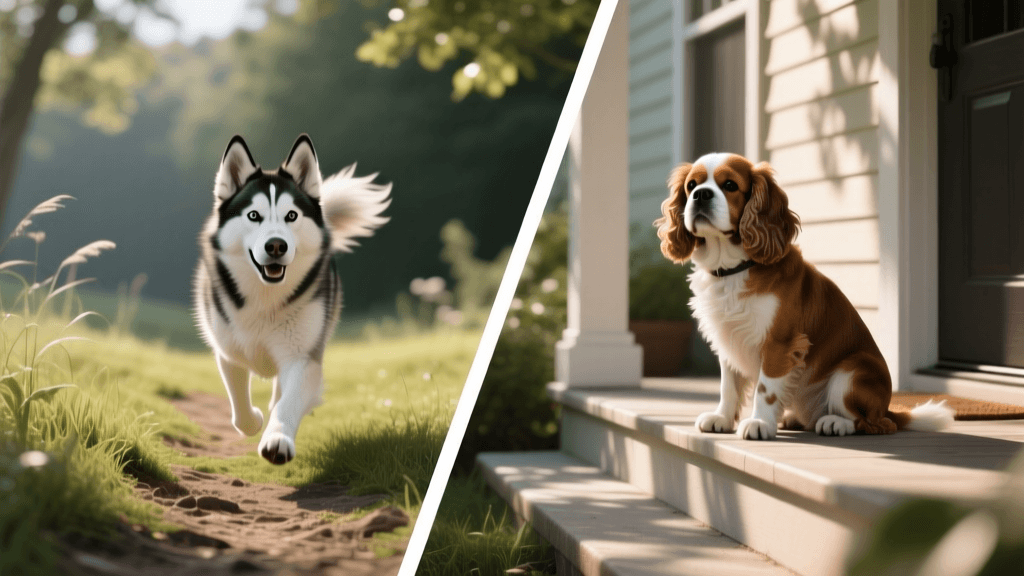
3. Cavalier King Charles Spaniel: The Empathic Companion
Bred exclusively for companionship, Cavaliers thrive on human proximity. Their psychological baseline is rooted in social bonding rather than environmental monitoring. They are highly attuned to their owner's emotions and generally exhibit low reactivity to external stimuli. The primary behavioral risk for Cavaliers in apartments is separation anxiety, so early independence training is crucial.
Understanding 'Quiet' vs. 'Learned Helplessness'
One of the most critical concepts in modern canine psychology is distinguishing between a genuinely calm dog and a dog exhibiting learned helplessness. When a dog is placed in a high-stress environment (like a noisy, chaotic apartment) and realizes that its vocalizations and coping mechanisms yield no results, it may shut down completely.
A shut-down dog appears 'perfect' to neighbors because it makes zero noise. However, internally, the dog's cortisol levels are chronically elevated. As a responsible owner, you must read your dog's silent body language. Signs of silent stress include:
- Whale Eye: Showing the whites of the eyes while keeping the head turned away.
- Lip Licking and Yawning: Frequent, out-of-context yawning or licking the lips when exposed to apartment noises.
- Tense Posture: Sleeping with one eye open, or freezing when the elevator dings.
- Panting: Rapid, shallow panting in a cool room when ambient noise increases.
If your 'quiet' dog displays these signs, they are not adapting to apartment life; they are suffering in silence. In 2026, the use of biometric smart collars that track Heart Rate Variability (HRV) and stress indicators can help owners objectively monitor their dog's internal state when left alone in an apartment.
Habituation Training for Apartment Noises
No dog is born knowing how to ignore the sound of a neighbor's door slamming. Habituation is a psychological process where a dog learns to ignore a repeated, irrelevant stimulus. To successfully habituate an apartment dog, you must employ Desensitization and Counter-Conditioning (DSCC).
- Identify Triggers: Note the specific sounds that cause ear-flicking, whining, or barking (e.g., sirens, garbage trucks, footsteps).
- Control the Volume: Use a smart speaker to play recordings of these sounds at a volume so low that your dog notices but does not react negatively.
- Pair with High-Value Rewards: While the sound plays, feed your dog high-value treats (like boiled chicken or freeze-dried liver). The goal is to change the dog's emotional response from 'Alert! Intruder!' to 'That sound predicts chicken.'
- Gradually Increase Intensity: Over weeks, slowly raise the volume, always ensuring the dog remains under their reactivity threshold.
This proactive psychological training is vastly superior to using punitive anti-bark collars, which only suppress the symptom (the bark) while exacerbating the underlying anxiety.
2026 Environmental Enrichment for Small Spaces
In an apartment, mental stimulation must replace physical space. A dog that spends its day solving puzzles is a tired, quiet dog. Modern enrichment strategies go far beyond the traditional kong toy.
- Foraging Mats and Snuffle Pads: Mimic the natural scavenging instinct, forcing the dog to use its olfactory system, which is highly tiring for the brain.
- Adaptil Optimum Diffusers: Utilizing advanced 2026 pheromone profiles, these plug-in diffusers release synthetic dog-appeasing pheromones that signal safety and calm, helping to lower baseline anxiety in confined spaces.
- Smart Interactive Cameras: Devices that allow owners to toss treats and engage in two-way audio can help break up the monotony of a long day alone, preventing the boredom that often leads to nuisance barking.
Conclusion
Finding the right quiet dog breed for an apartment is about matching a dog's genetic instincts to your living environment. By understanding the psychology behind canine vocalization, avoiding the trap of learned helplessness, and investing in modern habituation training and enrichment, you can foster a deeply relaxed, truly quiet companion. Whether you choose the stoic Greyhound or the affectionate Cavalier, success in 2026 apartment living relies on empathy, proactive training, and a deep understanding of the canine mind.
aaron-whyte
All our authors care for dogs every day — read more of their work on the authors page.