Understanding Border Collie Herding Instincts in Urban Homes
Discover why Border Collies herd children and cars, and learn actionable training strategies to manage their instincts in urban environments.
The Genetic Blueprint: Why Border Collies Herd
The Border Collie is universally celebrated as the Einstein of the canine world. Originally developed in the rugged border region between Scotland and England, these dogs were bred for one singular purpose: to herd sheep across vast, unforgiving landscapes. Today, the American Kennel Club recognizes them not only for their unmatched intelligence but also for their boundless energy and intense work drive. However, when placed in a modern urban or suburban home without a flock of sheep to manage, a Border Collie's deeply ingrained genetic blueprint does not simply disappear. Instead, it redirects.
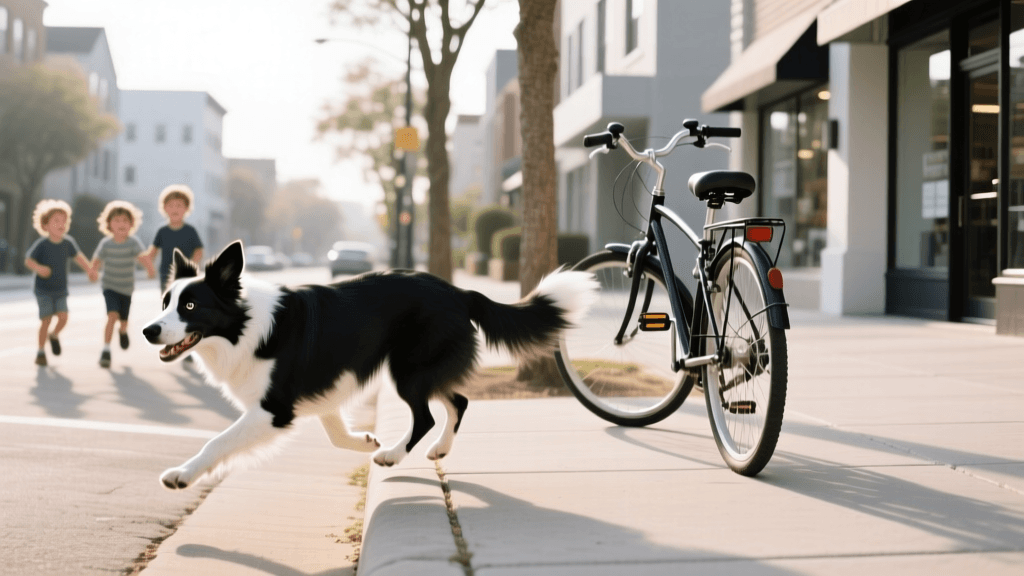
Understanding this breed-specific instinct is the first and most crucial step in preventing behavioral issues and fostering a harmonious relationship with your dog. Border Collies possess a unique herding style characterized by 'the eye'—an intense, hypnotic stare used to control the movement of livestock. They are gathering dogs, meaning their instinct is to circle wide, outrun the flock, and drive them back toward the handler. In a domestic setting, this translates to circling children, stalking moving vehicles, and attempting to 'gather' other pets in the household.
The Neurological Need for a Job
Border Collies possess unique neurological wiring. Their dopamine receptors are highly sensitive to movement and task completion. When a Border Collie successfully controls the movement of a flock (or a running child), their brain releases a massive reward of dopamine. This makes the herding behavior highly self-reinforcing. When these dogs are deprived of an appropriate outlet for their breed-specific instincts, they often develop stereotypic or compulsive behaviors. According to behavioral resources provided by the ASPCA, dogs lacking mental and instinctual stimulation may resort to shadow chasing, light fixation, obsessive fly-biting, or excessive vocalization.
Decoding the Behavior: Herding vs. Prey Drive vs. Play
Urban owners often misinterpret herding behaviors as aggression or hyperactive play. It is vital to distinguish between these drives to apply the correct training protocol. Below is a comparison chart to help you decode your Border Collie's actions in real-time.
| Observed Behavior | Common Urban Trigger | Underlying Instinct | Actionable Management |
|---|---|---|---|
| Intense staring, crouching, creeping forward | Skateboarders, runners, cyclists | Herding ('The Eye' and stalking) | Redirect to a known cue like 'Touch' or 'Watch Me' before the stalk begins. |
| Nipping at heels or pant legs | Running children, guests leaving | Herding (Heel-biting to move stock) | Implement strict impulse control; teach an incompatible behavior like 'Go to Mat'. |
| High-speed chasing, grabbing, shaking | Squirrels, cats, small dogs | Prey Drive (not herding) | Leash management, high-value recall training, avoid off-leash in unsecured areas. |
| Play bowing, bouncy movements, loose tail | Other dogs at the park | Social Play | Allow interaction but monitor for arousal escalation into herding. |
Actionable Management and Training Plans
Managing a high-drive herding dog in an urban environment requires a strategic blend of physical exercise, mental enrichment, and instinctual redirection. A simple 3-mile walk will not suffice for a Border Collie; in fact, excessive physical exercise without mental engagement can create an endurance athlete that is impossible to tire out.
1. Strategic Mental Enrichment
Mental work tires a Border Collie faster than physical exertion. Dedicating 45 minutes a day to cognitive tasks can mimic the exhaustion of a full day on the farm.
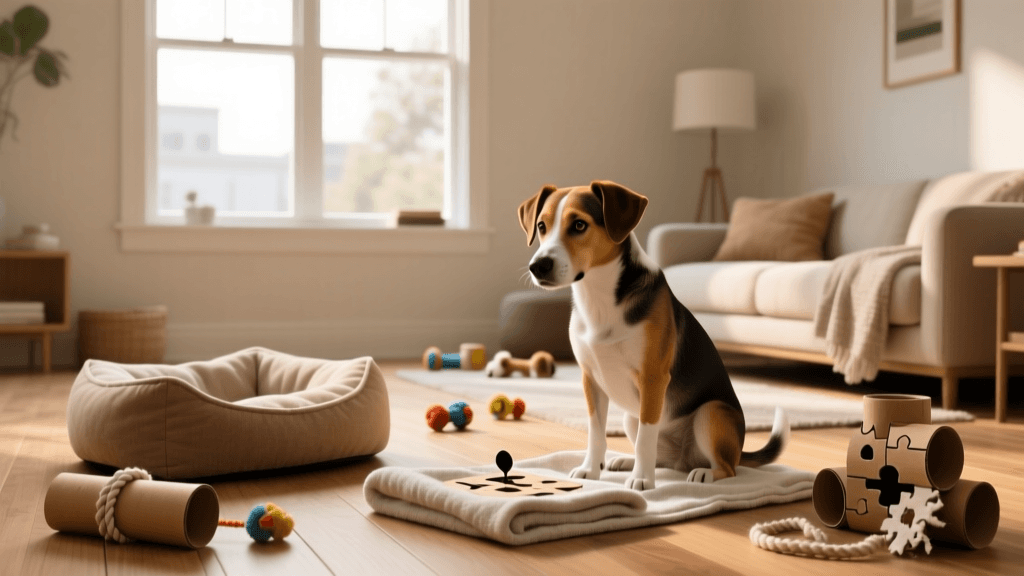
- Interactive Puzzle Toys: The Outward Hound Nina Ottosson Dog Brick Interactive Puzzle (approx. $14.99) requires the dog to lift blocks and slide compartments to find treats. This mimics the problem-solving required to outsmart livestock.
- Snuffle Mats: Investing in a high-quality snuffle mat ($20 to $35) allows you to scatter your dog's daily kibble ration. Foraging engages their olfactory senses and naturally lowers their heart rate, promoting a calmer state of mind.
- Food-Stuffed Toys: Freeze a Kong Classic ($15-$20) filled with plain pumpkin puree, Greek yogurt, and a few Zuke's Mini Naturals treats ($6 per bag). The 30-minute licking session releases endorphins and soothes the nervous system.
2. Treibball: Urban Herding
Treibball is a competitive sport specifically designed for herding dogs living without livestock. It involves the dog using their nose and shoulders to push large exercise balls into a designated goal area, guided entirely by the handler's whistles or hand signals. You can start this in your living room or a local park using inexpensive yoga balls ($15 each). It fulfills the Border Collie's need to 'gather' and 'drive' while reinforcing off-leash obedience and impulse control.
3. Dietary Support for High-Arousal States
High-drive dogs often struggle to down-regulate after a stimulating event. Nutritional support can aid in managing their baseline arousal levels. Supplements containing L-theanine or colostrum can help promote relaxation without sedation. Products like Virbac Anxitane (approx. $35 for a 30-day supply) or Zesty Paws Advanced Calming Bites ($27.99) can be administered 45 minutes before known high-stress triggers, such as a busy Saturday morning at the dog park or a loud family gathering.
Step-by-Step Impulse Control Drill: The 'Look at That' Game
To stop your Border Collie from lunging at cars or nipping at joggers, you must rewire their emotional response to movement. The 'Look at That' (LAT) game, developed by canine behaviorist Leslie McDevitt, is highly effective for herding breeds.
- Find the Threshold Distance: Stand with your leashed dog at a distance from a trigger (e.g., a busy bike path) where they notice the trigger but do not react, stare obsessively, or pull. This might be 50 feet away.
- Mark and Reward: The exact second your dog looks at the moving bicycle, click a training clicker or say 'Yes!', then feed a high-value treat (like boiled chicken or freeze-dried liver) directly at your dog's nose to turn their head away from the trigger.
- Repeat and Re-engage: Wait for the dog to look back at the bike. Mark and reward again. You are teaching the dog that looking at a moving object is simply a cue to look back at you for a reward, rather than a trigger to initiate the herding sequence.
- Decrease Distance Gradually: Over multiple sessions spanning several weeks, slowly decrease the distance to the trigger by 2-3 feet, ensuring your dog remains under their reactivity threshold.
When to Seek Professional Help
If your Border Collie's herding instincts have escalated to drawing blood, causing severe distress to children, or resulting in dangerous darting into traffic, it is imperative to consult a certified professional. Organizations like the American Kennel Club recommend working with a Certified Applied Animal Behaviorist (CAAB) or a veterinary behaviorist who can assess the dog's environment, implement safety protocols like basket muzzle conditioning, and potentially prescribe anti-anxiety medications to lower the dog's arousal baseline enough for training to take hold.
Conclusion
Living with a Border Collie in an urban setting is a profound commitment to understanding canine psychology. Their herding instincts are not 'bad behaviors' that need to be punished; they are the very traits that define the breed's brilliance. By providing structured mental enrichment, alternative instinctual outlets like Treibball, and proactive impulse control training, you can help your Border Collie navigate the modern world safely and happily, transforming a potential urban nightmare into a deeply rewarding partnership.
jonas-cole
All our authors care for dogs every day — read more of their work on the authors page.