Quiet Apartment Dog Breeds 2026: Psychology & Behavior Guide
Discover the best quiet dog breeds for apartments in 2026. Learn the psychology behind canine vocalization and manage bark triggers in small spaces.
The Urban Canine Mindset: Why Breed Psychology Matters in Apartments
As urbanization continues to reshape our living environments in 2026, apartment dwelling has become the primary housing model for millions of dog owners. However, sharing thin walls and communal hallways with a vocal canine companion can quickly lead to noise complaints and stressed neighbors. While many owners search for a simple 'quiet dog' list, true success in apartment living requires a deeper understanding of canine psychology, breed instincts, and the neurological triggers that cause vocalization.
Understanding your dog means looking beyond the surface behavior. A dog does not bark simply to be annoying; they bark to communicate, to alert, to express anxiety, or to fulfill an ingrained genetic imperative. By examining the psychological makeup and historical breeding purposes of specific breeds, we can predict which dogs are naturally predisposed to silence and which will struggle with the acoustic triggers of a high-density apartment building.
The Neurology and Psychology of Barking
To understand why some breeds are naturally quiet, we must first look at the neurology of the bark. Barking is a complex behavior governed by the amygdala and the hypothalamus. When a dog perceives a stimulus—such as a footstep in the hallway or a siren outside—the brain processes the threat level. Breeds developed for guarding or hunting by scent possess a highly reactive amygdala response to auditory stimuli, resulting in rapid, persistent alert barking.
Conversely, breeds developed for sight-hunting or silent companionship have different neural pathways regarding vocalization. According to the ASPCA's guidelines on canine behavior, understanding the root cause of barking is the first step in managing it. In an apartment setting, where auditory stimuli are constant and inescapable, selecting a breed with a naturally high 'bark trigger threshold' is essential for maintaining a peaceful environment.
Top Quiet Breeds for Apartments in 2026: An Instinctual Breakdown
When evaluating quiet dog breeds for apartments, we must analyze their historical jobs. The breeds listed below are not just physically suited for small spaces; their psychological wiring makes them uniquely equipped to handle the proximity of apartment life without excessive vocalization.
The Greyhound: Sighthound Stoicism
Despite their massive size, Greyhounds are famously known as '45-mph couch potatoes.' Psychologically, Greyhounds are sighthounds. They were bred to hunt using their vision and explosive speed, relying on stealth and silence to close in on prey. Unlike scenthounds (such as Beagles or Coonhounds), which were bred to vocalize continuously to alert human hunters miles away, Greyhounds have no genetic imperative to bark while tracking or observing. In an apartment, this translates to a dog that is highly observant but remarkably stoic. They are far more likely to watch a delivery driver through the window in silence than to sound an alarm.
The Basenji: Anatomical and Psychological Anomalies
The Basenji is famously marketed as the 'barkless dog,' but understanding this breed requires looking at both anatomy and psychology. Originating from Central Africa, the Basenji was bred to hunt in dense brush where vocalizing would startle prey or alert rival predators. As noted by the American Kennel Club, the Basenji's unique larynx shape prevents the standard canine bark. Instead, they produce a yodel-like sound called a 'baroo.' Psychologically, Basenjis are highly independent, almost feline in their grooming and aloofness. They do not suffer from the same separation-induced vocalization that plagues more codependent breeds, making them excellent for owners who work outside the home.
The Cavalier King Charles Spaniel: Companion Conditioning
The Cavalier King Charles Spaniel was bred for one specific purpose: companionship. Unlike terriers bred to kill vermin or mastiffs bred to guard estates, the Cavalier's historical job was to sit quietly on the laps of royalty. This centuries-long selective breeding has resulted in a psychological profile with an incredibly low territorial drive. Cavaliers generally do not perceive strangers in the hallway as a threat to their territory. Their baseline anxiety is low, and their desire to please their owner overrides the urge to react to environmental stressors, resulting in a remarkably quiet apartment dog.
The Shiba Inu: Fastidious and Calculated
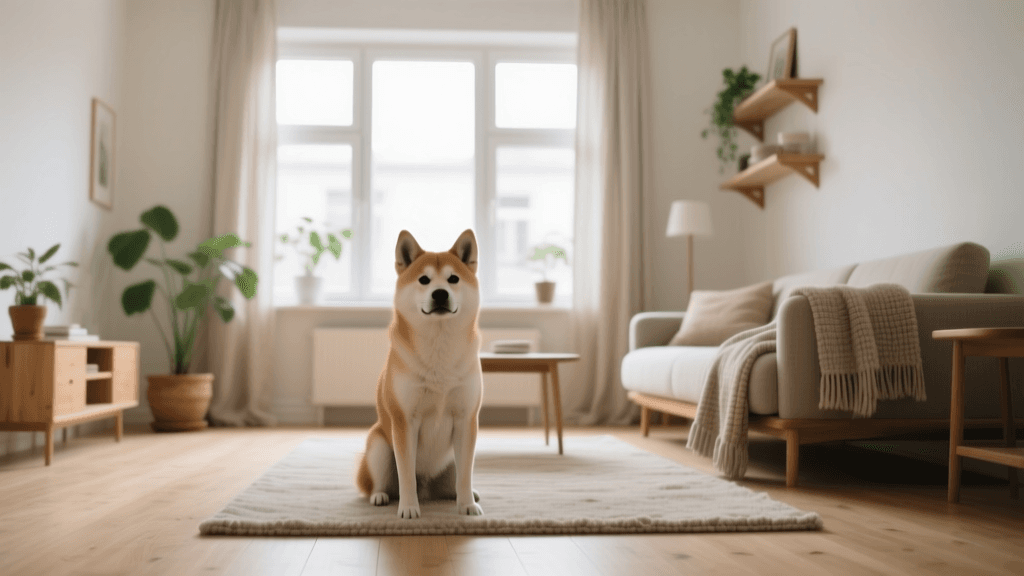
The Shiba Inu is a fascinating study in canine psychology. They are notoriously clean, fastidious, and generally quiet dogs. A Shiba will rarely bark at passing cars or distant noises. However, owners must understand the 'Shiba Scream'—a high-pitched vocalization triggered by extreme displeasure, anxiety, or overstimulation. While they are exceptionally quiet day-to-day, their high prey drive and strong-willed independence mean that apartment owners must carefully manage their visual triggers (like squirrels outside the window) to prevent reactive vocalizations.
Breed Instincts vs. Apartment Triggers: The 2026 Data Matrix
To help apartment dwellers make informed decisions, we have mapped the instinctual drives of popular breeds against common apartment triggers. This matrix highlights why certain breeds thrive in high-density housing while others struggle.
| Breed | Primary Instinctual Drive | Auditory Trigger Threshold | Territorial Barking Risk | Apartment Suitability (2026) |
|---|---|---|---|---|
| Greyhound | Visual Pursuit / Stealth | Very High (Ignores most sounds) | Extremely Low | Excellent |
| Basenji | Silent Brush Hunting | High | Low | Excellent (Requires mental work) |
| Cavalier King Charles | Lap Companionship | Moderate to High | Very Low | Excellent |
| Shiba Inu | Independent Alertness | High | Moderate | Good (Needs visual management) |
| Beagle (For Contrast) | Vocal Scent Tracking | Very Low (Reacts to everything) | High | Poor |
Managing the Apartment Environment in 2026
Even the quietest breeds can develop vocalization issues if their environment is poorly managed. The psychology of a dog is deeply intertwined with its surroundings. In 2026, apartment management for dogs goes beyond basic training; it involves environmental enrichment and acoustic control.
Acoustic Masking and Smart Home Integration
Dogs have highly sensitive hearing, capable of detecting frequencies and volumes far beyond human perception. The sound of neighbors walking upstairs or elevator dings can keep a dog's nervous system in a state of low-grade hyperarousal. Utilizing smart white noise machines or integrating acoustic masking through modern apartment smart-home systems can dramatically lower a dog's stress levels. By drowning out the unpredictable, sharp noises of the hallway with a consistent, soothing auditory backdrop, you reduce the number of times the dog's amygdala is triggered.
Olfactory Enrichment Over Physical Exhaustion
A common misconception is that a tired dog is a quiet dog. While physical exercise is important, psychological exhaustion is far more effective at preventing boredom-induced barking in apartments. Breeds like the Basenji and Shiba Inu require intense mental stimulation. Utilizing snuffle mats, frozen lick mats, and puzzle feeders engages the dog's olfactory and problem-solving centers. According to behavioral experts featured in the Humane Society's resources on problem barking, addressing boredom and anxiety through enrichment is a cornerstone of long-term behavioral modification. A dog spending 20 minutes foraging for kibble in a snuffle mat will experience the same neurological fatigue as a long walk, resulting in a calmer, quieter rest period.
Desensitization to Hallway Triggers
Apartment dogs must be systematically desensitized to the sounds of the building. This involves recording common apartment noises (doors closing, footsteps, muffled voices) and playing them back at a very low volume while feeding the dog high-value treats. Over weeks, the volume is gradually increased. This rewires the dog's psychological association with the noise from 'potential threat' to 'predictor of positive outcomes,' effectively neutralizing the alert-barking instinct before it begins.
Conclusion
Finding the right quiet dog for an apartment in 2026 is not about finding a dog that lacks a voice; it is about finding a dog whose psychological wiring and historical instincts align with the realities of high-density living. By understanding the neurology of the bark, respecting breed-specific drives, and proactively managing the acoustic and mental environment, owners can cultivate a deeply fulfilling, harmonious, and remarkably quiet life with their canine companions.
marcus-aldridge
All our authors care for dogs every day — read more of their work on the authors page.