Top Puzzle Toys to Satisfy Your Dog's Natural Instincts
Discover the best puzzle toys to satisfy your dog's natural instincts. Our buyer's guide matches enrichment toys to breed behaviors and cognitive needs.
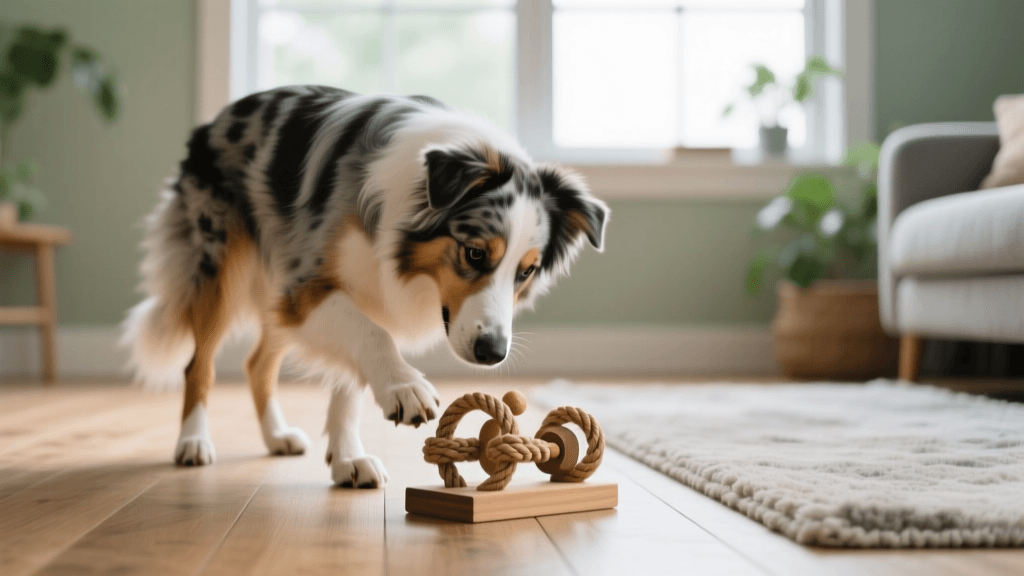
Dogs are not just physical athletes; they are cognitive powerhouses. While a long walk around the neighborhood might tire out their legs, it often does little to exhaust their busy minds. When a dog's brain is left under-stimulated, boredom quickly sets in, leading to destructive behaviors, excessive barking, and anxiety. To truly understand and support your dog's psychological well-being, you must look at the world through the lens of their breed-specific instincts. This is where canine enrichment and interactive puzzle toys come into play.
In this comprehensive buyer's guide, we will explore the psychology behind canine enrichment, decode what your dog's breed actually wants to do, and review the top five puzzle toys on the market. By matching the right product to your dog's unique cognitive profile, you can transform frustration into deep, satisfying mental exhaustion.
The Psychology of Canine Enrichment
In the wild, canines spend up to 80% of their waking hours foraging and hunting for food. In our modern homes, meals are typically handed to them in a stainless-steel bowl, consumed in under three minutes. This sudden abundance of free time, coupled with a lack of problem-solving opportunities, creates a psychological void.
According to the ASPCA, behavioral enrichment is vital for reducing stress and preventing behavioral issues in domestic pets. When a dog works for their food using a puzzle toy, their brain releases dopamine—the 'feel-good' neurotransmitter associated with reward and motivation. This process, known as 'contrafreeloading,' explains why dogs often prefer to work for their food rather than eating it from a bowl, even when the bowl is sitting right next to the puzzle.
Decoding Breed Instincts: What Does Your Dog Really Want?
Not all puzzle toys are created equal, and not all dogs interact with them in the same way. To choose the right product, you must understand the genetic hardwiring of your dog's breed group.
1. Terriers: The Diggers and Destroyers
Terriers were bred to hunt vermin underground. Their natural instincts involve digging, shaking, tearing, and 'killing' their prey (which translates to squeaky toys). They need enrichment that allows them to rip, dig, or manipulate objects with their paws and teeth.
2. Hounds: The Sniffers and Trackers
Scent hounds and sight hounds experience the world primarily through their noses. A hound's olfactory bulb is significantly larger than that of other breeds. For these dogs, mental exhaustion comes from tracking, sniffing, and foraging, rather than complex mechanical puzzles.
3. Herding Breeds: The Problem Solvers
Border Collies, Australian Shepherds, and Corgis are the geniuses of the dog world. Bred to make independent decisions while managing livestock, they require high-level cognitive challenges, moving parts, and sequential problem-solving tasks to feel satisfied.
4. Retrievers: The Carriers and Chewers
Labradors and Golden Retrievers were bred to carry waterfowl gently over long distances. They have a high 'mouth orientation' and love to carry, chew, and fetch. They thrive on toys that involve stuffing, extracting, and durable chewing.
Top 5 Puzzle Toys for Canine Enrichment (Buyer's Guide)
Based on durability, cognitive engagement, and breed suitability, here are the top puzzle toys to add to your dog's enrichment toolkit.
1. Outward Hound Nina Ottosson Dog Brick Interactive Puzzle
- Best For: Herding breeds, beginners, and problem-solvers.
- Measurements: 12 x 9 x 2 inches.
- Cost: $15.99
- The Details: This Level 2 puzzle features three types of treat-hiding compartments: flip lids, sliding bricks, and removable bone covers. It requires your dog to learn sequential steps (e.g., slide the brick, then lift the lid). It is made from BPA-free, phthalate-free plastic, making it safe for dogs who like to lick and nose the pieces.
2. KONG Classic Dog Toy
- Best For: Retrievers, power chewers, and dogs with separation anxiety.
- Sizes: XS to XXL (Always size up to prevent choking hazards).
- Cost: $15.00 - $25.00
- The Details: The KONG Classic is a staple for a reason. Its unpredictable bounce satisfies the prey-drive chase, while its hollow center is perfect for stuffing with a mix of kibble, wet food, and peanut butter. Pro Tip: Stuff the KONG and freeze it for 4 hours. This turns a 5-minute distraction into a 45-minute soothing, licking session that lowers a dog's heart rate.
3. Wooly Snuffle Mat
- Best For: Hounds, senior dogs, and high-strung anxious dogs.
- Measurements: 17 x 17 inches.
- Cost: $29.99
- The Details: Sniffing lowers a dog's pulse rate and engages the olfactory cortex. The Wooly Snuffle Mat mimics tall grass, requiring dogs to use their noses to forage for dry kibble hidden deep within the felt strips. It is machine washable and incredibly effective for fast eaters or dogs who need to wind down before bedtime.
4. Starmark Bob-A-Lot Interactive Dog Toy
- Best For: Food-motivated breeds, fast eaters, and terriers.
- Measurements: 5 x 5 x 8 inches (Large).
- Cost: $19.99
- The Details: This weighted, self-righting toy wobbles unpredictably as your dog paws and noses it. It features an adjustable treat-dispensing hole, allowing you to increase the difficulty as your dog learns. It holds up to 3 cups of kibble, making it an excellent replacement for a standard food bowl.
5. West Paw Toppl
- Best For: Chewers, retrievers, and dogs who master KONGs too quickly.
- Sizes: Small (3-inch opening) and Large (4-inch opening).
- Cost: $21.99
- The Details: Made from West Paw's proprietary Zogoflex material, the Toppl features inner prongs that trap treats more securely than a standard KONG. The true genius of the Toppl is its interlocking design: you can plug a Small Toppl into a Large Toppl to create a complex, multi-layered puzzle that requires serious jaw strength and cognitive effort to dismantle.
Comparison Chart: Matching the Toy to the Dog
| Toy Name | Primary Instinct Targeted | Best Breed Group | Difficulty Level | Price Range |
|---|---|---|---|---|
| Nina Ottosson Dog Brick | Problem Solving | Herding, Working | Level 2 (Intermediate) | $15 - $20 |
| KONG Classic | Chewing, Licking | Retrievers, Terriers | Level 1 (Beginner) | $15 - $25 |
| Wooly Snuffle Mat | Scent Tracking, Foraging | Hounds, Seniors | Level 1 (Beginner) | $25 - $35 |
| Starmark Bob-A-Lot | Pawing, Chasing | Terriers, Sporting | Level 2 (Intermediate) | $15 - $20 |
| West Paw Toppl | Extracting, Chewing | Retrievers, Chewers | Level 3 (Advanced) | $20 - $25 |
Reading Your Dog's Body Language During Play
Understanding your dog means paying close attention to their body language during enrichment activities. The goal of a puzzle toy is to provide 'eustress' (positive, engaging stress), not distress. If a puzzle is too difficult, your dog will exhibit calming signals or signs of frustration.
Watch for lip licking, excessive yawning, turning their head away, or whale eye (showing the whites of their eyes). If your dog paws aggressively at the toy, whines, walks away, or begins chewing the plastic edges out of frustration, the puzzle is too hard. The Humane Society recommends stepping down the difficulty by removing lids, enlarging treat holes, or using higher-value treats like boiled chicken or cheese to rebuild their confidence and motivation.
Behaviorist Tip: Never leave a dog alone with a plastic puzzle toy until you are 100% certain they will not chew and ingest the pieces. Enrichment should always be supervised to ensure safety.
Safety, Cleaning, and Maintenance
Hygiene is a critical, often overlooked aspect of interactive toys. Wet food, peanut butter, and saliva can harbor harmful bacteria like Salmonella and E. coli. The American Kennel Club (AKC) advises washing food-dispensing toys after every single use. Rubber toys like the KONG and Toppl are top-rack dishwasher safe, making maintenance effortless. Plastic board puzzles like the Dog Brick should be hand-washed with warm, soapy water to prevent the plastic from warping or degrading.
Final Thoughts on Canine Enrichment
Investing in puzzle toys is an investment in your dog's mental health and your household's harmony. By understanding the 'why' behind your dog's behavior and providing an outlet for their natural breed instincts, you bridge the communication gap between human and canine. Start with one or two toys, rotate them weekly to maintain novelty, and watch as your dog transforms from a bored, restless pet into a focused, happy, and mentally fulfilled companion.
hannah-wickes
All our authors care for dogs every day — read more of their work on the authors page.