Understanding Canine Calming Signals: A New Owner Guide
Learn to read canine calming signals. This first-time owner guide explains dog body language, stress signs, and how to help your anxious pet.
Introduction to the Canine Mind
Welcoming a new dog into your home is one of the most exciting experiences in life. You have likely spent weeks researching the best grain-free kibble, purchasing an orthopedic memory foam bed, and stocking up on durable chew toys. However, many first-time dog owners quickly realize that providing physical comforts is only half the battle. The true challenge lies in understanding your dog's psychological and emotional landscape. Dogs do not speak English, but they are constantly communicating through a complex, nuanced system of body language. For a new owner, learning to decode these signals is the difference between a harmonious household and a frustrating, stressful environment.
One of the most critical, yet frequently misunderstood, aspects of canine communication is the use of calming signals. If you have ever felt that your dog is being stubborn, ignoring your commands, or acting guilty after a stressful event, you are likely misreading their calming signals. This comprehensive guide will teach you how to identify these subtle behaviors, understand the psychology behind them, and take actionable steps to help your dog feel safe and secure.
What Are Canine Calming Signals?
The term calming signals was popularized by Norwegian dog trainer and behaviorist Turid Rugaas. In the wild, canines rely on a sophisticated social structure to survive. Direct confrontation and constant aggression are dangerous and energy-draining, so dogs evolved a vocabulary of appeasement and de-escalation. Calming signals are subtle physical behaviors that dogs use to self-soothe, reduce their own stress levels, and communicate peaceful intentions to other dogs or humans.
According to The Humane Society's dog body language resource, recognizing these early signs of stress is vital for preventing behavioral issues before they escalate into fear-based aggression or severe anxiety. When a dog exhibits a calming signal, they are essentially saying, I am feeling overwhelmed, I mean no harm, and I need the intensity of this situation to decrease.
The Stubborn Myth: Why First-Time Owners Misread Stress
A common scenario for first-time owners involves calling a dog in the park or during a training session. The dog stops, looks away, sniffs the ground, and refuses to come. The owner often labels this behavior as stubbornness or defiance. In reality, the dog is experiencing stress or confusion and is deploying calming signals to diffuse the perceived pressure from the owner.
When we misinterpret these signals as bad behavior and respond with frustration, raised voices, or punishment, we inadvertently validate the dog's fear. The dog learns that communicating their discomfort results in a negative outcome, which can lead to learned helplessness or defensive biting. As the American Kennel Club (AKC) notes on stress signs, acknowledging and respecting your dog's emotional boundaries is the foundation of trust-based training.
The First-Time Owner's Translation Table
To help you decode your dog's behavior, we have compiled a comprehensive translation table of the most common calming signals you will encounter in your daily life.
| Calming Signal | What It Looks Like | The Psychological Meaning | Your Action Plan |
|---|---|---|---|
| Lip Licking | A quick, repetitive flick of the tongue over the nose or lips (not related to food). | Mild stress, confusion, or an attempt to appease a perceived threat. | Stop the current interaction. Step back and give the dog physical space. |
| Yawning | Exaggerated yawning when the dog is not tired or waking up. | Internal stress, overstimulation, or an attempt to lower their own heart rate. | End the training session or remove the dog from the high-stress environment. |
| Looking Away | Turning the head or entire body away from you or another dog. | Avoidance of conflict; signaling peaceful intentions and discomfort. | Do not force eye contact. Approach from the side rather than head-on. |
| Sniffing the Ground | Suddenly becoming intensely interested in the grass during a stressful moment. | Displacement behavior to avoid confrontation and self-soothe. | Allow them to sniff for a few minutes to decompress before making demands. |
| The Shake Off | Shaking the entire body vigorously, as if wet, when they are completely dry. | Shedding accumulated adrenaline and tension after a stressful encounter. | Let them finish shaking. Speak in a calm, low, and soothing tone. |
| Slow Movement | Moving in slow motion or freezing completely when called. | Fear of the owner's reaction; attempting to appear non-threatening. | Lower your voice, soften your posture, and use high-value treats to encourage them. |
Actionable Steps: Building a Stress-Relief Toolkit
Understanding the signals is only the first step. As a responsible first-time owner, you must curate an environment and a toolkit that actively helps your dog decompress. Here are specific, actionable strategies, complete with product recommendations, timing, and estimated costs.
1. Implement the 3-Second Petting Rule
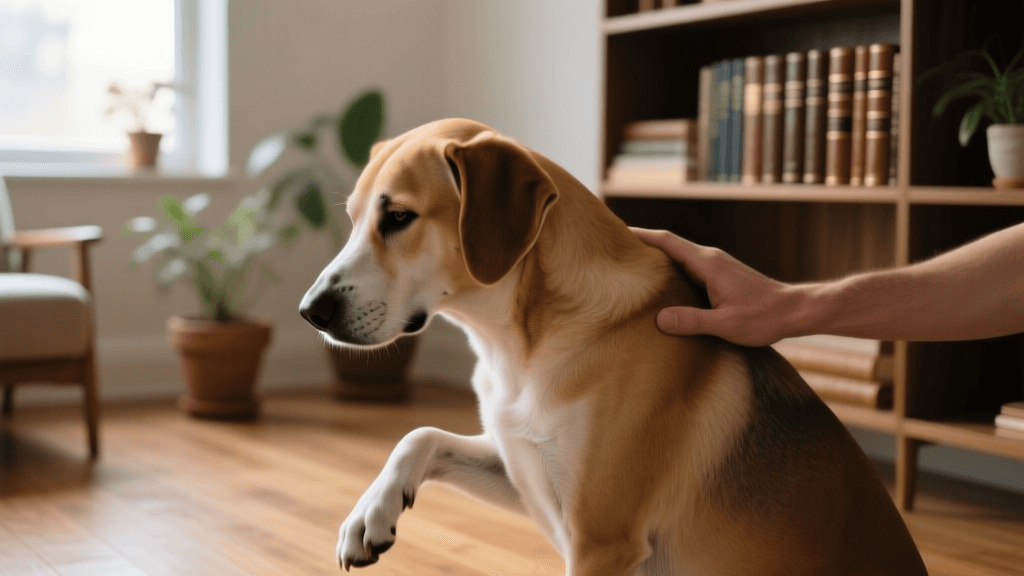
Many new owners assume that all dogs want to be petted at all times. To respect your dog's boundaries, use the 3-Second Rule. Pet your dog gently on the chest or shoulders for exactly three seconds, then stop and remove your hand. Observe their reaction. If they lean in, nudge you, or paw at you, they are consenting to more affection. If they look away, lick their lips, or shift their weight backward, they are asking for space. This simple timing adjustment builds immense trust.
2. Enrichment Tools for Decompression
Licking, chewing, and foraging are natural canine behaviors that release endorphins and lower cortisol levels. Investing in the right enrichment tools can proactively manage your dog's stress.
- KONG Classic (Red Rubber): Costing between $15 and $25, this is a staple for a reason. Stuff it with a mixture of plain pumpkin puree and low-sodium chicken broth, then freeze it for 2 to 4 hours. The prolonged chewing session provides 20 to 30 minutes of uninterrupted decompression.
- LickiMat Soother: Priced around $12 to $15, this textured silicone mat is perfect for anxious dogs. Spread plain, unsweetened Greek yogurt or mashed banana across the surface. The repetitive licking action is scientifically proven to soothe the canine nervous system.
- Snuffle Mat: Ranging from $25 to $35, a snuffle mat mimics foraging in tall grass. Hide 1/4 cup of your dog's daily kibble deep within the fabric strips. This turns a 30-second meal into a 10 to 15-minute mental workout, tiring them out more effectively than a short walk.
3. Environmental Management with Pheromones
For dogs that exhibit chronic calming signals at home (such as constant panting, pacing, or inability to settle), consider environmental aids. The Adaptil Calm Pheromone Diffuser (approx. $25 to $30 for a starter kit) mimics the natural comforting pheromones released by a mother dog nursing her puppies. Plug it into a central outlet in the room where your dog spends the most time. It covers up to 700 square feet and should be left on 24/7. Replace the refill vial every 30 days for consistent results.
Real-World Scenarios: Applying Your Knowledge
Let us look at how you can apply this knowledge in everyday situations that frequently overwhelm first-time owners and their dogs.
Scenario A: The Vet Waiting Room
You are sitting in the veterinary clinic. Your dog is panting heavily despite the air conditioning, their ears are pinned back, and they keep yawning. A well-meaning stranger approaches and reaches over your dog's head to pet them. Your dog freezes and licks their lips.
Your Action: Immediately advocate for your dog. Politely tell the stranger, "He is a bit nervous today and needs space." Stand between the stranger and your dog. Pull out your frozen KONG or a high-value treat like boiled chicken to redirect your dog's focus and reward them for checking in with you. By respecting the ASPCA's guide on canine body language, you prevent the dog from feeling trapped and forced to bite.
Scenario B: The Overcrowded Dog Park
You take your new rescue to a busy dog park. Instead of playing, your dog tucks their tail, moves in slow motion, and repeatedly sniffs a single patch of dirt while other dogs run wildly around them. Another owner says, "Don't worry, he's just ignoring them."
Your Action: Recognize that sniffing and slow movement are appeasement signals. Your dog is overwhelmed and trying to appear invisible to avoid conflict. Calmly leash your dog and leave the park immediately. Take them to a quiet, empty grassy field where they can decompress on a 15-foot long line. Forced socialization does not build confidence; it builds trauma.
Conclusion
Becoming a fluent speaker of dog takes time, patience, and keen observation. As a first-time owner, shifting your perspective from dominance and obedience to empathy and communication will profoundly transform your relationship with your pet. By learning to identify calming signals, utilizing the 3-second petting rule, and providing structured decompression tools like snuffle mats and frozen KONGs, you create a sanctuary of trust. Remember, every yawn, lip lick, and look away is your dog trying to talk to you. Listen closely, respect their boundaries, and you will be rewarded with a confident, deeply bonded companion for life.
tom-renshaw
All our authors care for dogs every day — read more of their work on the authors page.