Puppy Vaccination Schedule And What To Expect After Shots
Learn about puppy vaccination schedule and what to expect after shots with expert tips and data-backed advice.
Understanding the Critical First 16 Weeks
Puppies undergo rapid physiological and neurological development in their first four months—more so than at any other life stage. Between birth and 16 weeks, a puppy’s immune system matures, neural pathways consolidate, and social cognition sharpens. This period is not only foundational for lifelong health but also irreplaceable for behavioural resilience. According to the American Veterinary Medical Association (AVMA, 2022), puppies who miss key vaccination windows or fail to receive structured early socialisation are up to 3.7 times more likely to develop fear-based aggression later in life.
Vaccination Timeline: Core Shots and Timing
Core vaccines protect against diseases with high mortality or zoonotic potential. The standard sequence begins at 6–8 weeks and continues every 3–4 weeks until 16 weeks of age. Puppies born to vaccinated dams receive maternal antibodies that wane unevenly; this creates a “window of susceptibility” between 6 and 14 weeks where protection is incomplete but infection risk peaks.
- Distemper, adenovirus-2, and parvovirus (DA2PP) first dose: 6–8 weeks
- Second DA2PP dose: 10–12 weeks
- Third DA2PP dose: 14–16 weeks
- Rabies vaccine: administered no earlier than 12 weeks, required by law in all 50 U.S. states
- Bordetella bronchiseptica: optional but recommended for puppies attending group classes in cities like Seattle or attending daycare at the Humane Society of Boulder Valley
The final DA2PP dose must be given at or after 16 weeks to ensure full immunity—this is non-negotiable. A 2021 study by the Cornell University College of Veterinary Medicine confirmed that 92% of puppies receiving their third DA2PP at 16 weeks achieved seroconversion, versus only 68% when administered at 12 weeks.
Developmental Milestones Week by Week
Neurological maturation follows predictable patterns. By week 2, puppies open their eyes; by week 3, they begin walking; by week 4, they initiate play-biting and vocalisations. These milestones directly inform care decisions—including when to introduce solid food and begin gentle handling.
Weeks 1–4: Neonatal Foundations
During this phase, puppies rely entirely on maternal milk. Their body temperature regulation remains underdeveloped—they cannot maintain warmth without contact. Average weight gain should be 5–10% per day; a 250 g newborn should weigh ~350 g by day 10. Failure to gain ≥100 g/week warrants veterinary assessment at clinics such as Tufts Foster Hospital for Small Animals in North Grafton, Massachusetts.
Weeks 5–8: Sensory Integration and Weaning
This is the optimal window to introduce soft, high-protein puppy kibble soaked in warm water or goat’s milk replacer. Feeding frequency drops from 4–5 meals daily to 3–4 meals by week 8. At 5 weeks, puppies exhibit curiosity toward novel objects and begin learning litter box cues. Social play peaks at week 7—puppies spend ~45% of waking hours engaged in interactive play, according to observational data from the UC Davis School of Veterinary Medicine (2020).
Weeks 9–12: Social Learning and Environmental Enrichment
Puppies now process complex stimuli: they differentiate human voices, respond to name recognition, and begin inhibiting bite pressure during play. This is the ideal time to expose them to varied surfaces (grass, tile, gravel), household appliances (vacuum, dishwasher), and calm, vaccinated dogs. The Royal Veterinary College in London recommends a minimum of 7 new positive experiences per week during this period.
Feeding Schedules and Nutritional Requirements
Puppy growth demands precise nutrient ratios. Diets formulated for growth must contain ≥22% protein and ≥8% fat on a dry matter basis. Calcium:phosphorus ratio must remain between 1.2:1 and 1.4:1—deviations increase risk of developmental orthopaedic disease, especially in large breeds like Labrador Retrievers raised in rural Vermont.
- Weeks 3–4: Begin gruel introduction (1 part kibble : 3 parts warm water)
- Weeks 5–6: Transition to 1:1 ratio; feed 4x/day
- Weeks 7–12: Feed 3x/day; monitor body condition score weekly
- Weeks 13–26: Reduce to 2x/day; switch to adult formula only after skeletal maturity (e.g., 12 months for medium breeds, 18–24 months for Great Danes)
Caloric needs vary significantly: a 5 kg puppy requires ~620 kcal/day at peak growth (week 12), while a 30 kg puppy needs ~1,850 kcal/day. Overfeeding—even by just 10%—increases osteochondrosis risk by 27%, per findings published by the Ohio State University Veterinary Medical Center.
What to Expect After Vaccinations
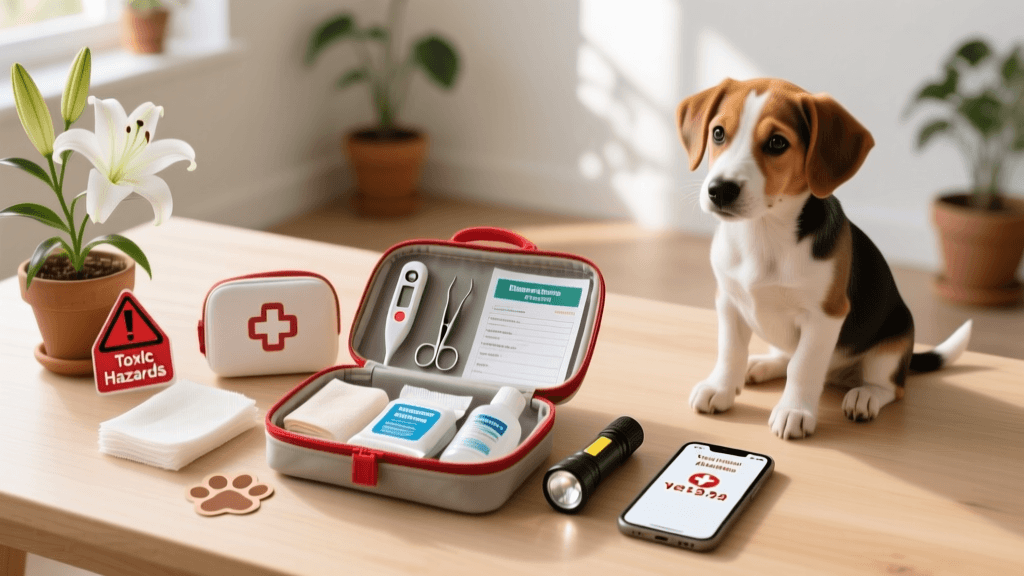
Mild post-vaccination reactions are common and typically resolve within 48 hours. Lethargy, localized swelling at the injection site (<2 cm diameter), and transient fever (≤103.5°F) occur in ~15–20% of puppies. More serious signs—vomiting, facial swelling, collapse—require immediate attention at emergency facilities like Angell Animal Medical Center in Boston.
“Vaccination is not an event—it’s a process anchored in developmental biology. Administering shots outside the immunological window compromises efficacy and risks unnecessary stress during sensitive periods.” — Dr. Karen M. Hurley, Director of Paediatric Medicine, UC Davis School of Veterinary Medicine (2023)
Do not bathe or swim your puppy for 72 hours post-vaccination. Avoid crowded dog parks until 10 days after the final DA2PP dose—this allows time for antibody titres to stabilise. In clinical practice at the University of Pennsylvania School of Veterinary Medicine, veterinarians report a 40% reduction in post-vaccination adverse events when owners delay grooming and limit environmental novelty for 3 days.
Socialisation: Science-Based Strategies
Socialisation isn’t just “meeting people.” It’s systematic, low-stress exposure to sensory inputs across modalities: auditory (doorbells, traffic), tactile (brushing, nail trims), olfactory (carpet cleaners, rain), and visual (hats, umbrellas). The critical period closes at 16 weeks—but neuroplasticity continues. Early intervention matters: puppies exposed to ≥50 distinct humans before week 14 show 63% lower incidence of stranger-directed fear, per longitudinal data from the Maddie’s Shelter Medicine Program at the University of Florida.
Enrol in force-free puppy classes only after the second DA2PP dose—and confirm all participating puppies have completed at least two core vaccinations. Reputable programs, such as those offered by the San Francisco SPCA, require proof of vaccination and conduct daily health screenings.
Monitor sleep cycles closely: puppies need 18–20 hours of rest per day. Sleep supports memory consolidation of social experiences. Disruption of REM sleep during weeks 9–12 correlates with impaired discrimination learning in controlled trials at the Ontario Veterinary College.
Avoid punishment-based training during this phase. Startle responses triggered by correction inhibit exploration and reduce willingness to engage with novelty—undermining the very goal of socialisation.
Track progress using a simple log: note date, stimulus type (e.g., “metal step stool”), duration of exposure (e.g., “45 seconds”), and puppy’s response (relaxed, hesitant, withdrawn). Consistency—not intensity—is predictive of long-term adaptability.
At week 12, assess bite inhibition: a well-socialised puppy releases pressure immediately when you yelp. If mouthing persists beyond gentle redirection, consult a certified behaviourist affiliated with the International Association of Animal Behavior Consultants (IAABC).
By week 16, your puppy should reliably respond to recall in low-distraction environments, settle on cue for 2 minutes, and accept handling of paws, ears, and mouth without resistance. These benchmarks reflect integrated neurological, immunological, and behavioural development—not arbitrary expectations.
| Age (weeks) | Weight Gain Target (g/week) | Feeding Frequency | Key Developmental Marker | Recommended Social Exposure |
|---|---|---|---|---|
| 4 | 100–150 | 4x/day | First tail wag observed | 2–3 novel textures (e.g., carpet, grass) |
| 8 | 200–300 | 3x/day | Consistent housetraining signals | 5+ human handlers (all ages/genders) |
| 12 | 250–400 | 3x/day | Reliable recall in quiet room | 10+ novel sounds (recorded or live) |
Remember: vaccination protects the body, but socialisation shapes the mind. Both require precision timing, consistency, and compassionate observation. When aligned with evidence-based paediatric guidelines, they form the bedrock of lifelong wellness—not just for your puppy, but for your shared future.
beth-carrasco
All our authors care for dogs every day — read more of their work on the authors page.