Your Puppy First Aid Kit and Emergency Safety Guide
Build the ultimate puppy first aid kit and learn emergency response steps. Discover essential supplies, toxic hazards, and life-saving safety tips for pups.
Why Your Puppy Needs a Dedicated First Aid Kit
Bringing a new puppy home is an exhilarating experience filled with wagging tails, sloppy kisses, and boundless energy. However, the first year of a dog's life is also a period of intense curiosity and developmental milestones that can inadvertently lead to dangerous situations. Puppies explore their environment primarily through their mouths, making them highly susceptible to choking hazards, toxic ingestions, and physical injuries. As a responsible pet owner, preparing for the unexpected is just as crucial as scheduling your puppy's vaccination appointments.
While we hope to never face a life-threatening situation with our furry companions, accidents happen in the blink of an eye. Whether your teething pup decides to chew on a toxic houseplant or swallows a small children's toy, your immediate response can mean the difference between a minor scare and a tragic outcome. This comprehensive emergency and safety guide will walk you through building a robust puppy first aid kit, handling common crises, and recognizing when professional veterinary intervention is non-negotiable.
The Foundation of Puppy Safety: Understanding Their Vulnerabilities
Many new dog owners mistakenly believe that human first aid supplies are perfectly adequate for their pets. While there is some overlap, puppies have unique physiological needs and vulnerabilities. For instance, common human pain medications like ibuprofen or acetaminophen are highly toxic to dogs and can cause fatal liver or kidney failure. Furthermore, the dosage for a ten-pound terrier puppy is vastly different from that of an adult human or even a large breed dog.
A dedicated puppy first aid kit ensures that you have species-specific, size-appropriate tools readily available during high-stress moments. When panic sets in, you will not have the time or mental clarity to scavenge through bathroom cabinets looking for the right size bandage or a digital thermometer. Having a centralized, portable kit allows you to act swiftly and confidently. The American Red Cross Pet First Aid program heavily emphasizes the importance of preparedness, noting that immediate, informed first aid can stabilize a pet's condition before they even reach the veterinary clinic.
The Ultimate Puppy First Aid Kit Checklist
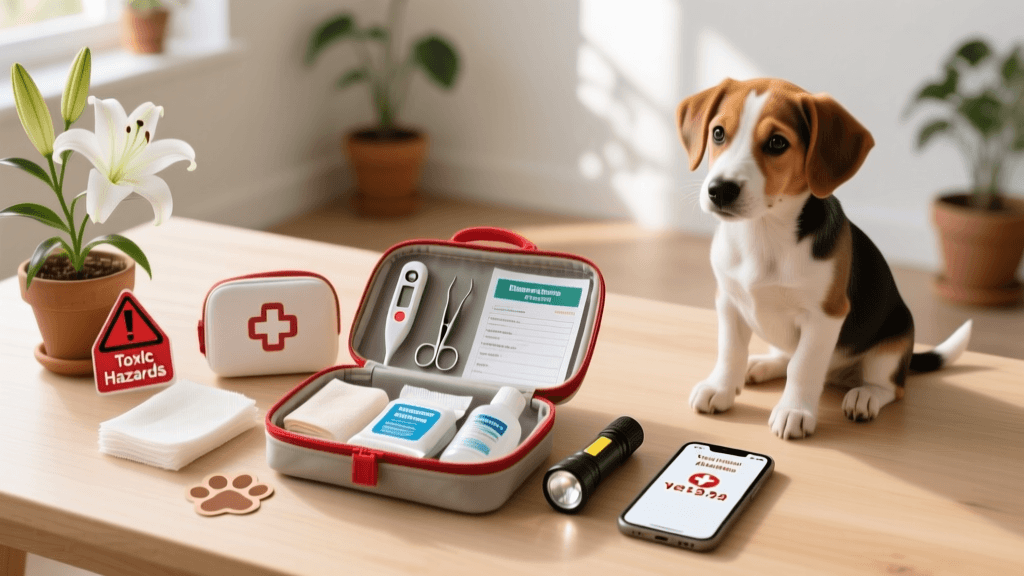
To build an effective emergency kit, you will need a durable, waterproof container that can be easily grabbed and transported to the car. Below is a detailed breakdown of the essential items you must include, their specific purposes, and the approximate cost to help you budget for your puppy's safety.
| Supply Item | Primary Purpose | Estimated Cost |
|---|---|---|
| Digital Pet Thermometer | To accurately check for fever or hypothermia (rectal use is most accurate for pups) | $10 - $15 |
| 3% Hydrogen Peroxide | To induce vomiting strictly under veterinary direction | $3 - $5 |
| Sterile Saline Eye Wash | To safely flush debris, dirt, or chemicals from the eyes | $5 - $8 |
| Self-Adhering Bandage Wrap | To secure dressings without sticking to puppy fur (Vet Wrap) | $4 - $6 / roll |
| Blunt-Tipped Scissors | To safely cut bandages or fur away from wounds without snipping skin | $5 - $10 |
| Styptic Powder | To quickly stop bleeding from torn nails or minor cuts | $6 - $9 |
| Oral Syringes (No Needle) | To administer liquid medications or gently flush wounds | $2 - $4 |
| Soft Cloth or Muzzle | To prevent biting, as injured puppies may snap out of fear and pain | $8 - $15 |
| Emergency Contact Sheet | Laminated card with vet, emergency clinic, and poison control numbers | $1 (printing) |
| Tick Removal Tool | To safely extract ticks without leaving the head embedded in the skin | $5 - $8 |
Keep this kit in a central location known to all household members. Additionally, store a smaller, travel-sized version in your vehicle for on-the-go emergencies. Remember to check the expiration dates on items like hydrogen peroxide and saline solutions every six months, replacing them as necessary.
Step-by-Step Emergency Response Guide
1. Suspected Poisoning or Toxic Ingestion
Puppies are notorious for eating things they should not. Common household toxins include xylitol (found in sugar-free gum), chocolate, grapes, raisins, and various cleaning supplies. If you suspect your puppy has ingested something toxic, time is of the essence. Do not attempt to treat the puppy with home remedies or induce vomiting unless explicitly instructed to do so by a professional. Some caustic substances can cause more damage coming back up the esophagus.
Immediately contact the ASPCA Animal Poison Control or your local emergency veterinarian. Have the packaging of the ingested item nearby so you can read the exact ingredients and estimate the quantity consumed. If directed to induce vomiting using 3% hydrogen peroxide, the standard dosage is typically 1 teaspoon per 5 pounds of body weight, but you must confirm this with a professional based on your puppy's exact weight and the substance ingested.
2. Choking Hazards
A choking puppy will exhibit signs of extreme distress, including frantic pawing at the mouth, gagging, coughing, and pale or blue-tinged gums. If your puppy is choking, first try to gently open their mouth and look for the obstruction. If you can see the object and easily grasp it with your fingers or blunt-tipped tweezers, carefully remove it.
If the object is lodged deep and you cannot safely remove it, you may need to perform a modified Heimlich maneuver. For small puppies, hold them with their back against your stomach and apply gentle, quick upward thrusts just below the rib cage. For larger puppies, lay them on their side and apply firm, quick pressure to the abdomen just behind the rib cage. After any choking incident, even if the object is successfully dislodged, a veterinary exam is required to check for internal swelling or damage to the trachea.
3. Cuts, Scrapes, and Bleeding
Active play can easily result in torn paw pads or lacerations. If your puppy is bleeding, apply direct, firm pressure to the wound using a clean gauze pad or cloth for at least three to five uninterrupted minutes. Elevating the injured limb can also help slow blood flow. Once the bleeding has subsided, gently clean the area with sterile saline solution and apply a non-stick pad, securing it with self-adhering Vet Wrap. Avoid wrapping too tightly, as this can cut off circulation. If the bleeding does not stop after ten minutes of continuous pressure, or if the wound is deep and gaping, transport your puppy to the emergency vet immediately for potential sutures.
Torn or broken nails are also incredibly common in active puppies and can bleed profusely due to the blood supply (the 'quick') running through the center of the nail. If a nail tears, remain calm and restrain your puppy gently. Apply styptic powder directly to the tip of the nail, holding it in place with a cotton swab and firm pressure for a few minutes. If styptic powder is unavailable, cornstarch or flour can serve as a temporary substitute to encourage clotting.
Preventative Safety: Puppy-Proofing Your Home
The most effective way to handle a puppy emergency is to prevent it from happening in the first place. Puppy-proofing your home requires you to get down on your hands and knees and view the environment from your dog's perspective. Secure all electrical cords behind furniture or inside protective cable covers to prevent fatal electrocution or severe oral burns.
Audit your indoor and outdoor plants. Many common houseplants, such as lilies, sago palms, and pothos, are highly toxic to dogs. Refer to the ASPCA's comprehensive toxic plant database to ensure your greenery is safe. Furthermore, install baby gates to restrict access to high-risk areas like staircases, kitchens, and bathrooms where toxic cleaning chemicals are stored. Keep all human medications locked away in high cabinets, as puppies can easily chew through child-proof pill bottles left on nightstands.
During the teething phase, which typically peaks between 4 and 6 months of age, puppies will chew on anything to soothe their aching gums. Provide a variety of texture-appropriate chew toys and rotate them to maintain interest. Avoid rawhide chews that can splinter or cause intestinal blockages, opting instead for digestible alternatives or durable rubber toys that can be frozen for added numbing relief.
Recognizing True Emergencies: When to Rush to the Vet
Knowing the difference between a minor issue that can wait until morning and a critical emergency is a vital skill for any puppy owner. When in doubt, it is always safer to err on the side of caution and seek professional care. The American Veterinary Medical Association (AVMA) advises pet owners to familiarize themselves with local emergency veterinary clinics before an accident occurs, ensuring you know exactly where to go after hours.
Seek Immediate Emergency Veterinary Care If Your Puppy Exhibits:
- Unconsciousness, collapse, or inability to stand.
- Labored breathing, choking, or persistent coughing.
- Seizures or sudden, severe loss of coordination.
- A swollen, hard abdomen coupled with unproductive retching.
- Profuse bleeding that does not stop with direct pressure.
- Signs of extreme pain, such as constant whining, trembling, or aggression when touched.
Conclusion
Navigating the first year of your puppy's life requires patience, vigilance, and a proactive approach to safety. By assembling a comprehensive first aid kit, familiarizing yourself with emergency response protocols, and thoroughly puppy-proofing your living space, you are setting the stage for a long, healthy, and joyous life together. Remember, your veterinarian is your greatest ally in pet care; never hesitate to call their emergency line when your instincts tell you something is wrong. Stay prepared, stay calm, and enjoy every precious milestone of your puppy's development.
jonas-cole
All our authors care for dogs every day — read more of their work on the authors page.