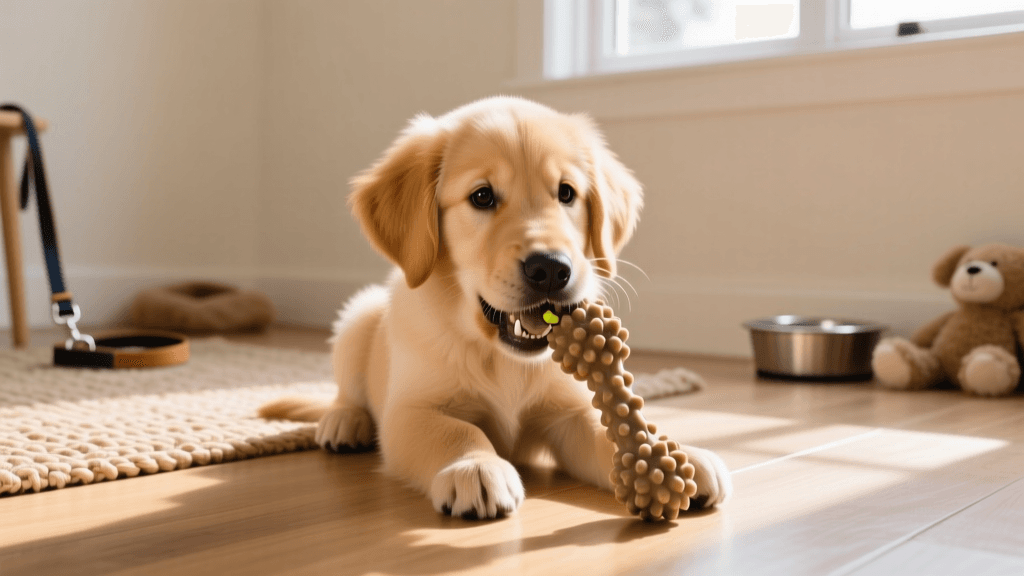
Puppy Teething Stages and Bite Inhibition Training Guide
Navigate your puppy's teething stages with our month-by-month life stage guide. Learn bite inhibition, best chew toys, and soothing tips.

Understanding the Puppy Teething Timeline
Bringing a new puppy home is an exhilarating experience, but it often comes with a sharp, unexpected reality: puppy teeth. Often affectionately dubbed 'needle teeth,' a puppy's deciduous teeth are incredibly sharp and can cause significant discomfort for both the puppy and the owner's belongings. Understanding the biological timeline of puppy teething is the first step in managing this crucial life stage. According to the American Kennel Club (AKC), puppies are born without teeth, but their baby teeth begin to erupt as early as three weeks of age. By the time they are eight weeks old, they will have a full set of 28 deciduous teeth. As they grow, these teeth will fall out to make way for 42 adult teeth. Navigating this transition requires patience, the right tools, and a structured approach to bite inhibition training.
Month-by-Month Teething Chart
| Age Range | Developmental Milestone | Teeth Count | Primary Symptoms |
|---|---|---|---|
| 3 to 6 Weeks | Deciduous teeth erupt | 28 baby teeth | Nursing discomfort, increased mouthing |
| 12 to 16 Weeks | Baby teeth begin falling out | Transitioning | Drooling, whining, bleeding gums |
| 4 to 6 Months | Adult teeth fully erupt | 42 adult teeth | Heavy chewing, gum irritation, biting |
| 7 to 8 Months | Teething concludes | 42 adult teeth | Settling into adult chewing habits |
Life Stage 1: The Needle Teeth Phase (3 to 8 Weeks)
During the earliest weeks of life, puppies develop their 28 baby teeth. Because they are usually still with their breeder or mother during the initial eruption (3 to 6 weeks), much of the early bite inhibition is taught by the mother and littermates. When a puppy bites too hard during play, a sibling will yelp and stop playing, teaching the biter to soften their mouth. By the time you bring your puppy home at 8 weeks, they have a full set of razor-sharp teeth but lack the jaw strength of an adult dog. Your primary goal during this stage is not to stop the mouthing entirely, as it is how they explore the world, but to begin redirecting their chewing to appropriate items.
Life Stage 2: The Transition and Heavy Chewing Phase (12 to 16 Weeks)
This is the stage where puppy owners notice the most dramatic behavioral shifts. Around 12 weeks, the roots of the deciduous teeth begin to resorb, causing them to loosen and fall out. You might find tiny teeth on the floor, or your puppy might swallow them while eating, which is completely harmless. During this window, your puppy's gums will be sore, inflamed, and itchy. They will seek relief by chewing on anything they can find, including baseboards, shoes, and your hands.
Actionable Soothing Tip: Wet a clean cotton washcloth, wring out the excess water, twist it into a rope, and freeze it for two hours. The cold temperature numbs their aching gums, while the texture helps massage the erupting teeth. Always supervise your puppy with a frozen washcloth to prevent them from swallowing torn fabric.
Life Stage 3: Adult Teeth Eruption and Bite Inhibition (4 to 6 Months)
By four months, the adult incisors and canines begin to push through the gum line. This is the most critical window for teaching 'bite inhibition'—the ability of a dog to control the force of their mouthing. The ASPCA emphasizes that dogs who learn bite inhibition as puppies are far less likely to cause serious injury if they ever bite out of fear or pain in adulthood.
The 'Ouch' Method and Time-Outs
When your puppy's teeth make contact with your skin, immediately let out a high-pitched 'Ouch!' or yelp, mimicking a littermate. Immediately withdraw your attention by standing up and crossing your arms for 10 to 15 seconds. If the puppy continues to bite your ankles or clothing, implement a 30-second time-out in a safe, puppy-proofed playpen. After the time-out, return and offer an appropriate chew toy. If they chew the toy, reward them with calm praise. This teaches the puppy that human skin equals the end of play, while chew toys equal positive engagement.
Top Rated Soothing Chew Toys and Costs
Investing in high-quality, stage-appropriate chew toys is essential. Avoid hard materials like antlers, bones, or rigid nylon during the teething phase, as these can fracture fragile puppy teeth. Instead, opt for softer, flexible materials.
- Classic KONG Puppy Toy ($10 - $15): Made from a softer, puppy-specific rubber formula. Stuff it with plain pumpkin puree or plain Greek yogurt and freeze it for a long-lasting, soothing treat.
- Nylabone Puppy Chew Keys ($8 - $12): Designed specifically for puppies, these have flexible bristles that clean teeth and massage gums without the rigidity of adult Nylabones.
- Benebone Puppy Wishbone ($12 - $16): Infused with real bacon flavor, this toy is slightly softer than their adult line and features an ergonomic shape that is easy for small paws to hold.
- Chilly Dog Fleece Tug Toy ($10 - $14): A soft, freezable fleece toy that provides excellent gum relief without the risk of splintering.
How to Puppy-Proof Your Home During Teething
A teething puppy will view your entire home as a giant chew toy. To protect your belongings and keep your puppy safe, you must proactively puppy-proof your environment.
- Manage Cords and Wires: Use PVC pipe covers or flexible cable sleeves to hide electrical cords. Chewing on a live wire can result in fatal electrocution or severe oral burns.
- Use Taste Deterrents: Apply a pet-safe bitter spray, such as Grannick's Bitter Apple Spray ($10 - $14), to baseboards, table legs, and furniture corners. Reapply daily for two weeks until the puppy learns to avoid those surfaces.
- Rotate Toys: Puppies become bored easily. Keep a bin of 10 to 15 toys, but only leave 3 or 4 out at a time. Rotate them every few days to maintain novelty and keep your puppy's interest focused on their toys rather than your shoes.
When to See a Veterinarian
While teething is a natural process, complications can arise. According to veterinary experts at the Texas A&M College of Veterinary Medicine, a common issue in small breed dogs is 'retained deciduous teeth.' This occurs when a baby tooth does not fall out, but the adult tooth erupts right next to it, creating a double row of teeth.
'Retained baby teeth can cause food to become trapped between the teeth, leading to periodontal disease, and can also force the adult teeth to grow in at abnormal angles, causing a painful malocclusion.' - Texas A&M Veterinary Experts
If you notice your puppy has two rows of teeth, excessive bleeding that does not stop after a few minutes, a foul odor coming from their mouth, or if they are refusing to eat due to oral pain, schedule a veterinary examination immediately. Your vet may need to surgically extract the retained baby teeth under anesthesia to ensure proper jaw alignment and long-term dental health.
Conclusion
The teething phase is undeniably challenging, but it is a temporary life stage that lays the groundwork for your dog's adult behavior. By understanding the biological timeline, providing appropriate soothing outlets, and consistently enforcing bite inhibition rules, you will guide your puppy through this developmental milestone successfully. Remember that consistency is your greatest tool; every interaction is an opportunity to teach your puppy how to interact gently with the world around them.
robin-maitland
All our authors care for dogs every day — read more of their work on the authors page.