The First-Time Owner Guide to Puppy Potty Training
Discover a step-by-step puppy potty training schedule for first-time owners. Learn crate training, timing, and accident cleanup tips for success.
Why Potty Training Feels Overwhelming for First-Time Owners
Bringing a new puppy home is an exhilarating experience, but it quickly becomes clear why house training is consistently ranked as the most stressful hurdle for first-time dog owners. Between the puddles on your favorite rug and the seemingly random accidents, it is easy to feel frustrated. However, the secret to successful potty training is not a magical innate instinct; it is a predictable, consistent routine built on canine biology and positive reinforcement.
As a first-time owner, your primary goal is to prevent accidents before they happen while heavily rewarding the desired behavior. This comprehensive guide will walk you through the science of puppy bladders, provide a realistic daily schedule, outline the exact gear you need, and teach you how to handle inevitable mistakes without derailing your progress.
The Science of Puppy Bladders: Understanding the Timing
Before setting a schedule, you must understand your puppy's physical limitations. According to VCA Animal Hospitals, a general rule of thumb for bladder control is that a puppy can hold their urine for one hour per month of age, up to a maximum. Therefore, an eight-week-old (two-month-old) puppy can physically hold it for about two hours under resting conditions. However, this rule goes out the window during active play, eating, or drinking.
When a puppy is active, their metabolism speeds up, and their digestive and urinary systems go into overdrive. An eight-week-old puppy playing fetch or wrestling may need to eliminate every 15 to 20 minutes. Recognizing these biological triggers is the cornerstone of first-time owner success.
Key Potty Triggers to Watch For
- Waking Up: Puppies almost always need to go the second they open their eyes from a nap or nighttime sleep.
- After Meals: Digestion stimulates the bowels. Expect a bowel movement within 15 to 30 minutes after eating.
- After Play Sessions: Vigorous activity puts pressure on the bladder and accelerates digestion.
- After Drinking Water: A large gulp of water will process through a tiny puppy surprisingly fast.
- Transition Moments: Moving from a quiet room to an exciting environment can trigger a sudden urge.
The Ultimate Daily Potty Training Schedule
Consistency is your greatest ally. Puppies thrive on routine, and a strict schedule removes the guesswork for both you and your dog. Below is a sample daily schedule tailored for an 8-to-12-week-old puppy. Adjust the timing slightly based on your personal work-from-home or daily routine, but maintain the intervals.
| Time | Activity | Potty Action Required |
|---|---|---|
| 6:00 AM | Wake up and immediate outdoor trip | Carry outside to designated spot; reward heavily. |
| 6:30 AM | Breakfast and water | N/A (Wait 15-20 minutes before next trip). |
| 6:50 AM | Post-meal potty break | Leash walk to spot; wait for bowel movement. |
| 7:15 AM | Active play and socialization | Interrupt play every 20 mins for quick potty trips. |
| 8:00 AM | Nap time in the crate | Potty right before crating. Sleep for 2 hours. |
| 10:00 AM | Wake up from nap | Immediate carry outside upon waking. |
| 12:00 PM | Lunch (if on 3-meal schedule) | Wait 20 mins, then take outside. |
| 2:00 PM | Afternoon nap / Crate time | Potty before crating. |
| 4:00 PM | Wake up, training session | Potty before and after 10-min training block. |
| 6:00 PM | Dinner and water | Wait 20 mins, then take outside. |
| 8:00 PM | Calm evening play, water removed | Frequent 20-min interval trips outside. |
| 10:00 PM | Final potty break and bedtime | Quiet, boring trip outside. Into crate for night. |
| 2:00 AM | Midnight potty alarm (8-10 weeks) | Carry out, no play, immediate return to crate. |
Essential Gear and Estimated Costs
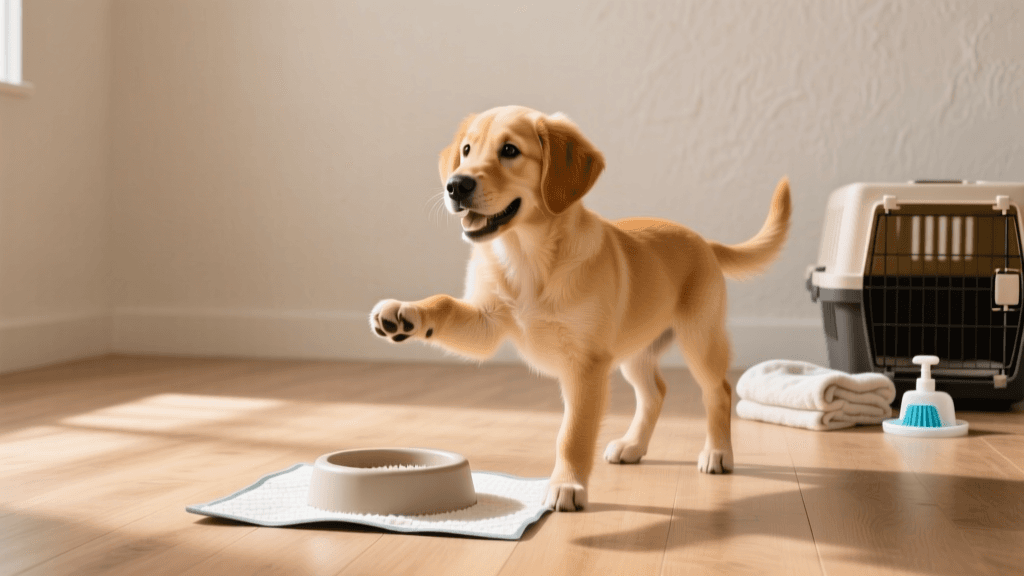
First-time owners often buy the wrong supplies, leading to prolonged training phases. Investing in the right tools upfront saves time, money, and frustration. Here is a curated list of must-have potty training gear, complete with estimated costs and specific product recommendations.
- Enzymatic Cleaner (approx. $15 - $20): Standard household cleaners do not break down uric acid crystals. Dogs have a highly sensitive sense of smell and will return to spots that still smell like urine. An enzymatic cleaner like Nature's Miracle Advanced Stain and Odor Eliminator is non-negotiable. The Humane Society of the United States strongly recommends enzymatic cleaners to prevent repeat offenses.
- Properly Sized Crate (approx. $40 - $80): Dogs naturally avoid soiling their sleeping area. A wire crate like the MidWest iCrate with a movable divider panel allows you to adjust the space so it is just large enough for the puppy to stand, turn around, and lie down. If the crate is too big, they will potty in one corner and sleep in the other.
- High-Value Training Treats (approx. $8 - $12): You need something your puppy loves and can eat quickly. Zuke's Mini Naturals or small pieces of boiled chicken are perfect. Keep a treat pouch by the door so you can reward within two seconds of them finishing their business.
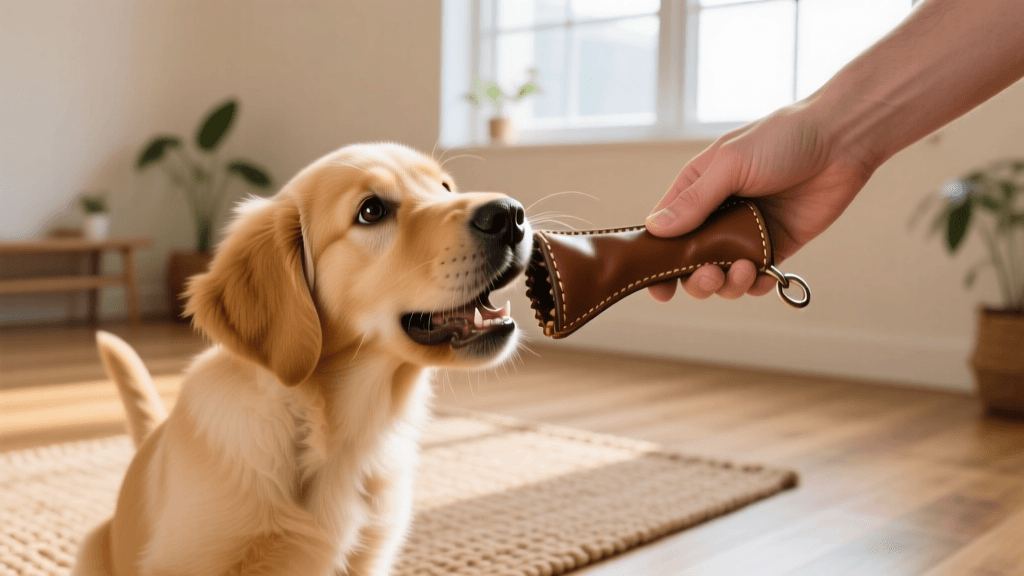
- 6-Foot Standard Leash (approx. $10 - $15): Avoid retractable leashes during potty training. A standard nylon or leather leash gives you control and keeps the puppy focused on the designated potty spot rather than wandering off to play.
- Potty Bells (approx. $12 - $15): A door bell system like Mighty Paw Smart Bell can eventually teach your puppy to signal when they need out, though this is a secondary step after the core schedule is established.
The 'Go Potty' Command and Positive Reinforcement
According to the American Kennel Club (AKC), pairing a verbal cue with the act of eliminating helps build a reliable command. Choose a phrase like 'Go potty' or 'Do your business.' Say it calmly right as the puppy begins to squat or lift a leg. Do not repeat it endlessly while they are sniffing; say it only during the action.
The moment they finish, throw a small potty party. Offer a high-value treat and lavish verbal praise. The reward must happen outside, immediately after they finish, not when you return inside. If you wait until you get back to the kitchen, you are rewarding them for walking through the door, not for eliminating outdoors.
How to Handle Accidents Without Losing Your Cool
Accidents are not a sign of failure; they are a data point. If your puppy has an accident, it means you missed a biological cue, waited too long between breaks, or gave them too much unsupervised freedom.
Golden Rule of Accidents: Never rub a puppy's nose in their mess, yell, or use physical punishment. This does not teach them where to potty; it only teaches them to hide from you when they need to go, leading to sneaky accidents behind furniture.
Step-by-Step Accident Protocol
- Interrupt (If caught in the act): Clap your hands loudly or say a neutral 'Oops!' to startle them into stopping. Do not scream in anger.
- Relocate: Immediately scoop up or leash the puppy and take them to their designated outdoor spot.
- Reward Completion: If they finish outside, reward them heavily.
- Clean Thoroughly: Use your enzymatic cleaner on the indoor accident spot. Follow the bottle's instructions precisely, ensuring the liquid soaks deep into carpet pads or wood grain to neutralize the uric acid.
- Re-evaluate: Ask yourself why the accident happened. Did you skip a scheduled break? Did you let them roam freely after a nap? Adjust your supervision accordingly.
Navigating Nighttime Potty Breaks
Nighttime training is often the most exhausting phase for new owners. To set your puppy up for success, pick up their water bowl two hours before bedtime. If bedtime is 10:00 PM, water goes away at 8:00 PM. Ensure they have ample time to drink throughout the day so they remain hydrated.
For an 8-to-10-week-old puppy, set a quiet alarm for 3 to 4 hours after they fall asleep. When the alarm goes off, keep the lights dim and your voice low. Carry or leash them outside, stand in the potty spot, wait for them to go, and immediately return them to the crate. No play, no cuddling. This teaches them that nighttime wake-ups are strictly for business.
When to Seek Professional Help
Most puppies will show significant reliability by 4 to 6 months of age, though small breeds may take slightly longer due to their tiny bladders. However, if your puppy is frequently having accidents despite a strict schedule, or if they seem to strain, whine, or produce only drops of urine, consult your veterinarian immediately. These could be signs of a urinary tract infection (UTI) or anatomical issue, which no amount of behavioral training can fix.
Potty training requires patience, vigilance, and a sense of humor. By sticking to a predictable schedule, managing your puppy's environment with a crate, and rewarding success enthusiastically, you will build a foundation of trust and cleanliness that will last your dog's entire life.
tom-renshaw
All our authors care for dogs every day — read more of their work on the authors page.