Best Teething Toys 2026: Puppy Psychology & Top Picks
Discover the psychology behind puppy teething and explore the best teething toys of 2026 to soothe your pup's instincts and save your furniture.
Bringing a new puppy home is an exhilarating experience, but it often comes with a painful reality check: those needle-sharp baby teeth. While many new owners view teething simply as a phase of physical development, veterinary behaviorists emphasize that it is deeply intertwined with canine psychology, sensory exploration, and instinctual drives. In 2026, the market for puppy teething toys has evolved significantly, moving beyond simple rubber rings to ergonomically designed, psychologically enriching tools that cater to a puppy's developing brain. Understanding why your puppy chews is the first step toward selecting the best teething toys to soothe their discomfort while protecting your household belongings.
The Canine Psychology Behind the Bite
To choose the right teething toy, we must first understand the neurological and psychological drivers behind the behavior. Puppies do not chew out of malice or a desire to destroy your favorite sneakers; they chew because it is their primary method of interacting with the world. Much like human toddlers use their hands to map their environment, puppies use their mouths. The canine muzzle is densely packed with nerve endings connected to the somatosensory cortex. When a puppy bites down on an object, they are gathering complex tactile data about its texture, density, and temperature.
Furthermore, chewing is a powerful self-soothing mechanism. The physical act of gnawing stimulates the release of endorphins and dopamine in the canine brain. According to the ASPCA's guide on canine chewing behaviors, chewing is a normal, instinctual behavior that serves multiple psychological and physiological functions, including stress relief and mental stimulation. When a puppy is experiencing the intense gingival pain of erupting adult teeth, the dopamine release triggered by chewing acts as a natural analgesic, temporarily numbing the discomfort and providing a sense of psychological security.
The Teething Timeline: What Your Puppy is Feeling
Matching the right toy to your puppy's developmental stage is critical for effective relief. The American Kennel Club's teething timeline outlines the following milestones:
- 3 to 6 Weeks: Deciduous (baby) teeth begin to erupt. Puppies are mostly nursing and exploring soft littermates.
- 12 to 16 Weeks: The roots of the baby teeth begin to resorb, and the incisors start to fall out. This is when the infamous "puppy nipping" peaks as they seek relief for itchy, inflamed gums.
- 4 to 6 Months: The canines and premolars erupt. This is the most painful phase, often accompanied by mild bleeding, drooling, and a frantic need to chew on hard, cold objects.
- 6 to 8 Months: All 42 adult teeth should be fully set. Chewing transitions from a pain-relief necessity to a lifelong behavioral instinct for jaw maintenance and stress management.
Top Teething Toys of 2026: Matched to Canine Instincts
The best teething toys of 2026 are designed with both veterinary dentistry and canine behavioral psychology in mind. Here are the top picks that address specific developmental needs.
1. KONG Puppy Toy (Rubber)
The KONG Puppy remains a gold standard in 2026, specifically because its proprietary teething rubber formula is engineered to yield to the bite of developing jaws without causing micro-fractures in fragile baby teeth. From a psychological standpoint, the KONG taps into a dog's natural foraging and problem-solving instincts. By stuffing the hollow center with puppy-safe peanut butter, plain yogurt, or low-sodium bone broth and freezing it, you introduce thermoreception to the chewing experience. The cold temperature constricts blood vessels in the inflamed gums, drastically reducing swelling, while the mental effort required to extract the frozen treat exhausts the puppy's brain, leading to a calm, restful nap.
2. Benebone Puppy Zaggler
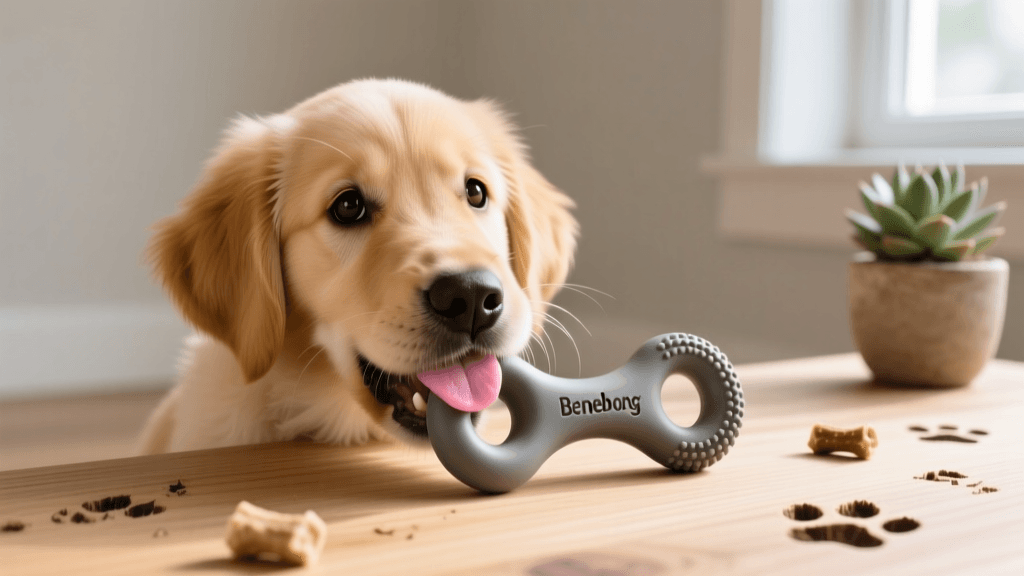
Puppies lack the paw dexterity of adult dogs, which often leads to frustration when they try to hold down traditional bone-shaped toys. The Benebone Puppy Zaggler solves this through ergonomic design. Its curved, wishbone-like shape allows the puppy to use their chest and front paws to pin the toy to the floor, satisfying the predatory "hold and tear" instinct safely. The 2026 Puppy line uses a slightly softer, nylon-infused bacon-scented material that is forgiving on erupting canines but durable enough to withstand aggressive chewing sessions. The scent engagement stimulates the olfactory bulb, keeping the puppy focused on the toy rather than your furniture.
3. Nylabone Puppy Power Chew Sensory Ring
Sensory mapping is crucial during the first six months of life. The Nylabone Sensory Ring features multiple raised textures, nubs, and bristles that mimic the varied tactile feedback a wild canine would get from gnawing on bark, cartilage, and bone. The bristles also serve a dual purpose by acting as a rudimentary toothbrush, mechanically scraping away the plaque that rapidly accumulates on new adult teeth. The flavor-driven exploration satisfies the puppy's need for novelty, preventing the boredom that often leads to destructive household chewing.
2026 Teething Toy Comparison Chart
| Toy Model (2026) | Material & Texture | Psychological Need Met | Best For | Avg. Price |
|---|---|---|---|---|
| KONG Puppy (Classic) | Soft, yielding red/blue rubber | Foraging instinct, mental fatigue | Food-motivated pups, cold therapy | $16 - $22 |
| Benebone Puppy Zaggler | Scent-infused softer nylon | Predatory grip, ergonomic control | Aggressive chewers, frustrated pups | $18 - $24 |
| Nylabone Sensory Ring | Multi-textured thermoplastic | Tactile mapping, oral hygiene | Sensory seekers, plaque prevention | $12 - $17 |
| Petstages Cool Teething Stick | Freezable mesh with crinkle | Auditory stimulation, numbing | Light chewers, noise-motivated pups | $10 - $14 |
Behavioral Redirection: Teaching "Chew This"
Providing the best teething toys is only half the battle; the other half is behavioral conditioning. Puppies do not inherently know that a $20 Benebone is for chewing, while a $200 pair of leather loafers is not. It is the owner's responsibility to build these neural pathways through positive reinforcement and environmental management.
When you catch your puppy chewing on an inappropriate item, avoid the common mistake of yelling or forcibly prying the object from their mouth. In canine psychology, forceful removal triggers opposition reflex and can inadvertently lay the groundwork for resource guarding—a severe behavioral issue where the dog learns to aggressively defend items in their mouth. Instead, employ the "Trade-Up" game. Approach calmly with a high-value teething toy, such as a KONG stuffed with frozen treats, and offer it to the puppy. The moment they drop the forbidden item to investigate the toy, praise them enthusiastically and remove the forbidden item from the area. Over time, the puppy learns that dropping items on command results in a highly rewarding psychological and physical experience.
Environmental Management and Puppy Proofing
While training is ongoing, management is your best defense. A puppy's brain is highly susceptible to environmental cues. If a television remote or a pair of socks is left on the floor, the puppy's brain registers it as an available chew toy. In 2026, successful puppy owners utilize physical barriers like playpens and baby gates to restrict access to un-puppy-proofed rooms. Keep a "chew basket" filled with a rotation of the toys mentioned above. Rotating the toys every few days prevents habituation, ensuring the toys retain their novelty and psychological value when the puppy's gums are at their most inflamed.
When to Consult a Veterinary Behaviorist
While teething is a universal canine experience, extreme behavioral reactions warrant professional attention. If your puppy exhibits signs of severe oral pain, such as refusing to eat, pawing frantically at their face, or showing uncharacteristic aggression when their muzzle is approached, consult your veterinarian immediately. Retained deciduous teeth (where baby teeth fail to fall out as adult teeth erupt) are common in small breeds and require surgical extraction to prevent permanent jaw misalignment and chronic pain. Furthermore, if your puppy's chewing is accompanied by signs of severe separation anxiety or compulsive pacing, a certified veterinary behaviorist can help differentiate between normal developmental teething and underlying psychological distress.
Ultimately, navigating the teething phase requires empathy and an understanding of your dog's internal world. By providing ergonomically sound, psychologically enriching teething toys like the KONG Puppy, Benebone Zaggler, and Nylabone Sensory Ring, you are not just saving your baseboards—you are actively supporting your puppy's neurological development, soothing their physical pain, and building a foundation of trust that will last a lifetime.
hannah-wickes
All our authors care for dogs every day — read more of their work on the authors page.