Decoding Resource Guarding: Expert Dog Behavior Analysis
Expert analysis of canine resource guarding. Learn the ethology, recognize early warning signs, and apply proven behavior modification protocols.
Understanding Canine Resource Guarding
Resource guarding, clinically referred to as possessive aggression, is one of the most common yet profoundly misunderstood behavioral issues in domestic dogs. It manifests when a dog uses aggressive or defensive behaviors to maintain control over a valued item, space, or person. While it can be deeply alarming for owners to witness their beloved pet snarl, snap, or bite over a chew toy or a piece of dropped food, expert behavior analysis reveals that this is not a sign of "dominance" or "spite." Instead, it is a complex, fear-based behavioral response rooted in survival instincts and classical conditioning. According to the ASPCA, resource guarding can be directed toward humans, other dogs, or even other household pets, and it requires a nuanced, science-based approach to resolve safely.
The Ethology and Neurobiology of Guarding
From an evolutionary perspective, guarding resources is a natural, adaptive survival strategy. In the wild, canids that successfully defended their food, mates, and territory were more likely to survive and pass on their genetics. In the modern domestic environment, this instinctual drive remains intact, though the "resources" have shifted to include kibble, high-value treats (like raw bones or pig ears), favorite sleeping spots, and even specific family members.
Neurologically, resource guarding is heavily influenced by the amygdala, the brain's threat-detection center. When a dog perceives that a valued resource is about to be stolen, their sympathetic nervous system triggers a "fight or flight" response. Cortisol and adrenaline flood the bloodstream, lowering the threshold for aggressive behavior. Understanding this neurobiological reality is crucial for behaviorists: the dog is not making a calculated decision to be "bad"; they are experiencing a genuine, physiological panic response to the perceived loss of a vital asset.
Recognizing the Canine Ladder of Aggression
Dogs rarely bite without warning. Before a bite occurs, a dog will typically ascend the "Ladder of Aggression," a sequence of escalating communication signals designed to increase distance between themselves and the perceived threat. Expert behaviorists train owners to recognize the lower rungs of this ladder to prevent bites before they happen.
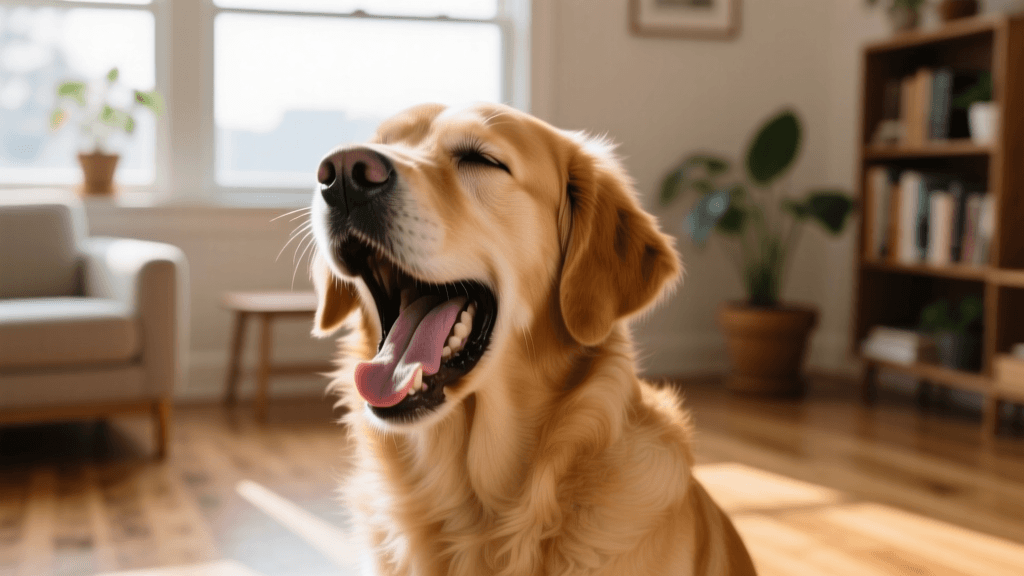
- Early Subtle Signals: Whale eye (showing the whites of the eyes), lip licking, yawning, turning the head away, and sudden freezing.
- Escalating Signals: Hard staring, body stiffening, low-pitched growling, and lifting the lip to expose teeth.
- Critical Signals: Snapping (air biting), lunging, and finally, biting with varying degrees of bite inhibition.
Many owners mistakenly believe that a dog who growls is being aggressive, but from a behavioral standpoint, a growl is a functional, distance-increasing communication tool. Punishing a growl suppresses the warning system, often resulting in a dog that skips the warning phase entirely and proceeds straight to biting.
The Resource Guarding Severity Scale
When conducting a functional behavioral assessment, professionals categorize guarding incidents to determine the appropriate intervention strategy. The following table outlines a standard severity scale used in behavior analysis:
| Level | Behavioral Indicators | Recommended Owner Action |
|---|---|---|
| 1 | Freezing, hard stare, whale eye, eating faster | Stop approach, avert gaze, toss high-value treat from a distance |
| 2 | Lip lifting, low guttural growl, body stiffening | Immediately retreat, do not punish, consult a behaviorist |
| 3 | Snapping (no physical contact), lunging | Implement strict environmental management, muzzle train, seek professional help |
| 4 | Bite making contact (no puncture, bruising possible) | Immediate veterinary and behavioral intervention, strict confinement protocols |
| 5 | Bite causing puncture wounds, tearing, or shaking | Emergency behavioral triage, evaluate safety risks and rehoming necessity |
Common Mistakes Owners Make
According to the VCA Hospitals, traditional, dominance-based training methods often exacerbate resource guarding. Common mistakes include:
- The "Alpha" Approach: Forcibly taking items away or performing "alpha rolls" to prove human dominance. This only validates the dog's fear that humans are indeed thieves, increasing their need to guard.
- Punishing Warnings: Scolding or hitting a dog for growling. This teaches the dog that growling results in punishment, leading them to suppress the growl and bite without warning next time.
- Free-Feeding: Leaving bowls of food out all day can increase territoriality over the feeding area. Structured meal times are preferred for dogs with guarding tendencies.
Evidence-Based Intervention Protocols
Resolving resource guarding requires a combination of classical counter-conditioning and operant conditioning. The goal is to change the dog's emotional response from "a human approaching means I will lose my item" to "a human approaching means I get something even better."
Step 1: Desensitization and Counter-Conditioning (DS/CC)
Begin with the dog eating a low-value meal (e.g., standard dry kibble). Stand at a distance where the dog notices you but does not show any signs of tension (this is called staying "under threshold").
- The Protocol: Every 1.5 seconds, toss a high-value treat (such as Zuke's Mini Naturals or boiled chicken breast cut into 1/4-inch cubes) directly into or near their bowl.
- The Timing: The latency between your step forward and the treat delivery must be under 1.5 seconds to forge a strong neurological association.
- Cost & Materials: A 6oz bag of Zuke's Mini Naturals costs approximately $6. You will need about 50-100 treats per session. Conduct 3-minute sessions twice daily.
Step 2: The "Trade-Up" Game
Once the dog happily anticipates your approach during meals, introduce the trade-up game with toys. Offer the dog a medium-value toy (like a standard tennis ball). When they take it, present a high-value treat (like a freeze-dried liver piece) right at their nose. The moment they drop the toy to eat the treat, mark the behavior with a verbal "Yes!" and toss the treat a few feet away. Pick up the toy, then immediately give it back to them. This teaches the dog that relinquishing an item is temporary and highly profitable.
Step 3: Teaching a Reliable "Drop It" Cue
A force-free "Drop It" cue is a vital safety net. Start with a toy the dog likes but doesn't obsess over. Present a high-value treat at their nose. When they release the toy, click a clicker or say "Yes," give the treat, and then return the toy. Gradually add the verbal cue "Drop It" just before presenting the treat. Never pry the item from the dog's mouth with your hands, as this triggers the opposition reflex and increases guarding intensity.
Management Tools and Environmental Setup
Behavior modification takes weeks or months. During this time, strict environmental management is required to prevent rehearsing the guarding behavior. Every time a dog successfully guards an item and makes the human back away, the behavior is negatively reinforced and becomes stronger.
- Physical Barriers: Use baby gates to restrict access to high-guarding areas like the kitchen or under the bed. The Carlson Extra-Wide Walk-Through Pet Gate (costing between $45 and $60) is an excellent, sturdy option for blocking off dining areas during human mealtimes.
- Food Puzzles: Instead of feeding from a bowl, which can trigger spatial guarding, use enrichment tools like the Kong Classic ($15) or West Paw Toppl ($20). Feed the dog in a crate or a separate, gated room to eliminate the perceived need to defend the food from foot traffic.
- Muzzle Conditioning: For dogs at Level 3 or higher on the severity scale, muzzle conditioning is a non-negotiable safety measure. The Baskerville Ultra Muzzle ($20-$25) allows the dog to pant, drink, and take treats while preventing bites. Introduce the muzzle using high-value spreads like peanut butter, ensuring the dog views it as a predictor of good things.
When to Hire a Professional Behaviorist
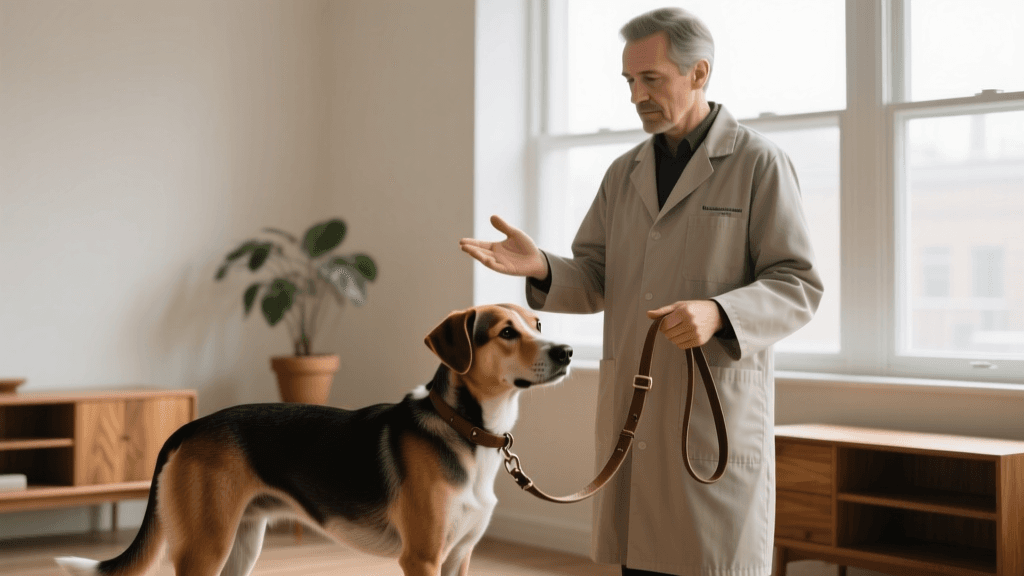
If your dog has progressed to Level 3 (snapping) or beyond, or if the guarding involves children, DIY training is highly discouraged due to the severe safety risks. Seek out a Certified Applied Animal Behaviorist (CAAB) or a professional certified by the International Association of Animal Behavior Consultants (IAABC). Expect to invest between $150 and $250 per hour for private, in-home behavioral consultations. A professional will conduct a functional assessment, identify specific triggers, and design a customized safety and modification plan tailored to your home's unique layout and your dog's specific neurobiology.
Conclusion
Resource guarding is a deeply ingrained survival behavior, not a personal affront to the owner. By shifting our perspective from one of dominance and control to one of empathy and behavioral science, we can help our dogs feel safe enough to share their world. Through meticulous management, precise timing in counter-conditioning, and a commitment to force-free training protocols, even severe cases of resource guarding can be dramatically improved, restoring trust and harmony to the human-canine bond.
priya-sutaria
All our authors care for dogs every day — read more of their work on the authors page.