First-Time Guide to Puppy Teething and Bite Inhibition
Discover a complete puppy teething timeline, best soothing toys, and actionable bite inhibition training tips for first-time dog owners.
Welcome to the Chew Zone: Understanding Puppy Teething
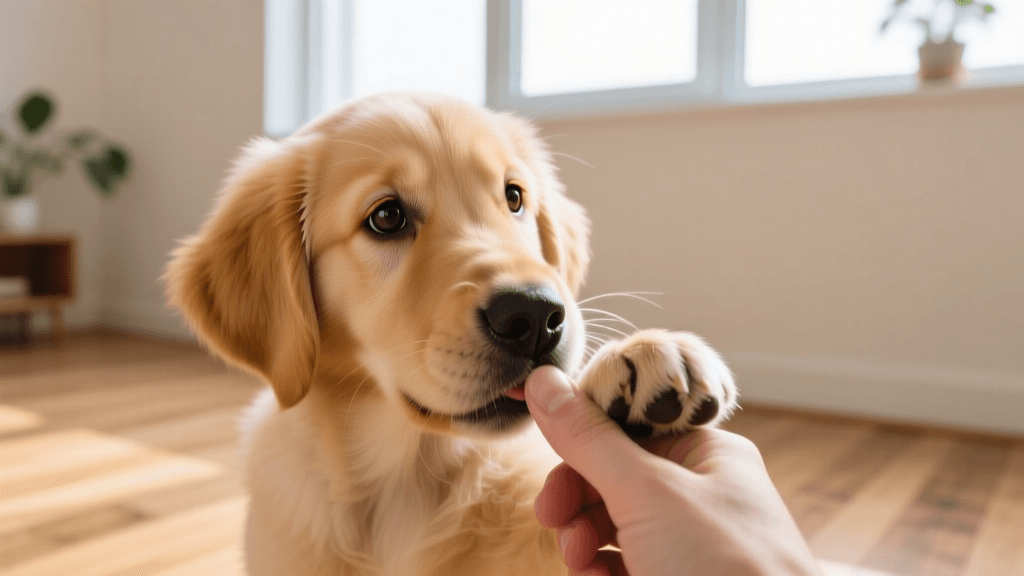
Bringing home a new puppy is an exhilarating experience, but it often comes with a sharp, unexpected reality check: those tiny, needle-like teeth. For first-time dog owners, the puppy teething phase can feel like an endless battle of destroyed shoes, bloody gums, and relentless nipping. However, understanding the biological timeline and behavioral needs of your teething puppy is the key to preserving your sanity and your belongings.
Teething is a completely natural developmental milestone. Just like human babies, puppies must shed their deciduous (baby) teeth to make way for their permanent adult teeth. This process causes significant gum inflammation, discomfort, and an overwhelming instinctual drive to chew on objects to relieve the pressure. As a first-time owner, your goal is not to stop the chewing entirely, but to redirect it toward appropriate outlets while simultaneously teaching bite inhibition.
The Complete Puppy Teething Timeline
Knowing what to expect and when to expect it will help you prepare your home and adjust your training strategies. The American Kennel Club (AKC) outlines a predictable sequence for dental development in dogs, though small breeds may experience slight delays compared to large breeds.
| Age Range | Dental Milestone | What First-Time Owners Should Expect |
|---|---|---|
| 2 to 4 Weeks | Baby teeth emerge | Puppies are usually still with their breeder or littermates. Nursing mothers may start weaning due to sharp teeth. |
| 5 to 6 Weeks | All 28 baby teeth are in | Puppies explore the world with their mouths. Gentle bite inhibition learning begins with littermates. |
| 12 to 16 Weeks | Baby teeth fall out; adult teeth emerge | Peak teething discomfort. You may find tiny teeth on the floor or in their food bowl. Chewing intensity peaks. |
| 6 Months | All 42 adult teeth are fully erupted | Teething discomfort subsides. If baby teeth remain, veterinary intervention may be required. |
Top Soothing Toys and Home Remedies (With Costs)
When your puppy is in pain, they will seek relief by chewing on whatever is closest—often your baseboards or favorite sneakers. Providing a rotating selection of soothing, textured, and cold items is essential. Here is a curated list of highly effective, veterinarian-approved remedies and their approximate costs.
1. The KONG Classic Puppy Toy ($12 - $18)
Made from a softer, puppy-specific rubber formula, the KONG Classic is a staple for first-time owners. The hollow center allows you to stuff it with puppy-safe peanut butter (strictly xylitol-free) or plain Greek yogurt. Pro Tip: Freeze the stuffed KONG for 4 to 6 hours. The freezing temperature acts as a localized anesthetic for inflamed gums, providing up to 45 minutes of soothing, independent play.
2. Nylabone Puppy Chew Teething Rings ($7 - $10)
These feature raised dental nubs that help massage gums and clean teeth as the puppy chews. They are flavored with puppy-safe ingredients like chicken or lamb to encourage appropriate chewing. Ensure you select the specific "Puppy" line, as adult Nylabones are too hard for developing puppy jaws and can cause tooth fractures.
3. The DIY Frozen Washcloth (Free)
Take a clean, inexpensive cotton washcloth, soak it in low-sodium chicken broth or plain water, wring it out, and twist it into a tight rope. Freeze it solid. The texture of the fabric mimics the feeling of tearing prey, while the ice numbs the gums. Supervision is mandatory to ensure your puppy does not ingest pieces of the fabric, which could cause an intestinal blockage.
4. Chilled Whole Carrots ($2 - $4 per bag)
Large, whole carrots kept in the refrigerator make excellent, low-calorie teething sticks. They are rich in beta-carotene and fiber. The crunchiness helps scrape away plaque, and the cold temperature soothes the gums. Never use baby carrots, as they pose a significant choking hazard for medium and large breed puppies.
Bite Inhibition: Teaching Your Puppy to Be Gentle
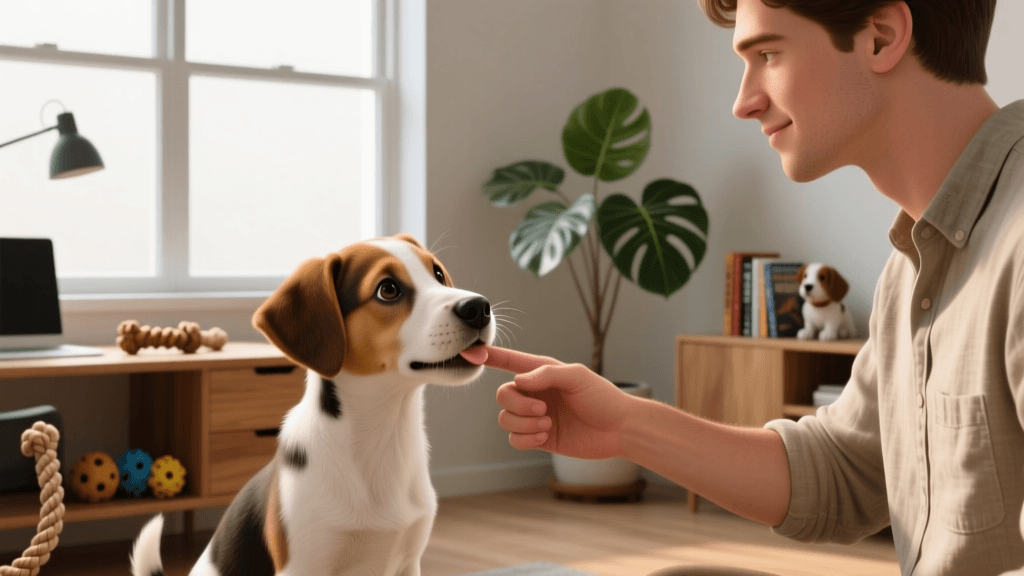
Bite inhibition is a dog's ability to control the force of their mouthing. Puppies naturally learn this from their littermates; if one puppy bites too hard, the other yelps and stops playing. As a first-time owner, you must replicate this feedback loop. The ASPCA emphasizes that teaching a soft mouth is one of the most critical safety lessons a puppy will ever learn.
Step 1: The "Ouch" Method
When your puppy's teeth make contact with your skin, immediately let out a high-pitched, convincing "Ouch!" or yelp. Immediately withdraw your attention by standing up, folding your arms, and looking away for 10 to 15 seconds. This mimics littermate behavior and teaches the puppy that human skin is incredibly fragile and that biting results in the cessation of fun.
Step 2: Redirection
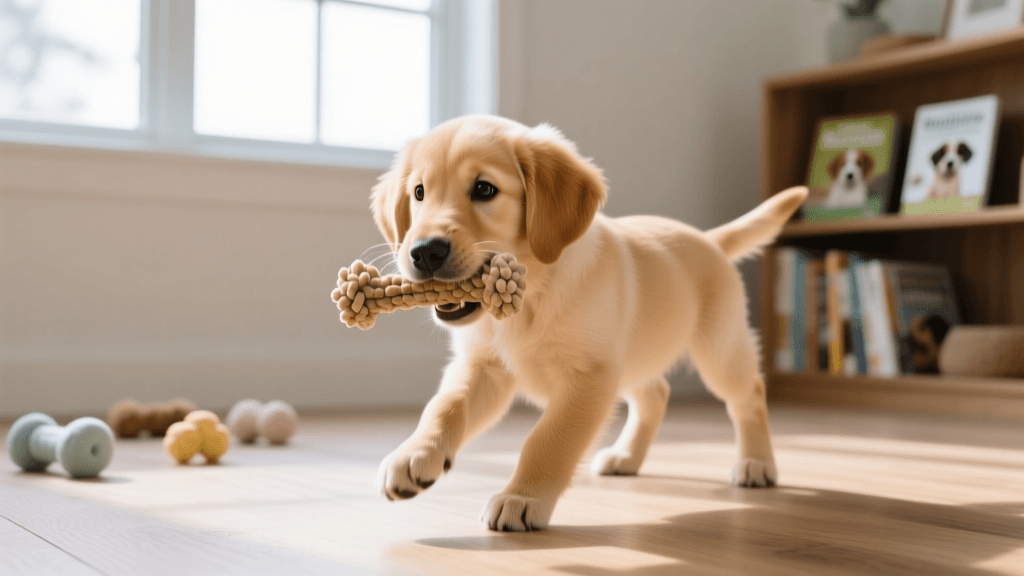
Puppies need to chew, so you must tell them what is acceptable. Keep a plush toy or a rope chew in your pocket. The moment the puppy backs off from your skin after a yelp, praise them calmly and offer the toy. When they bite the toy, engage in a gentle game of tug. This builds a positive association with appropriate chew items.
Step 3: The Time-Out Protocol
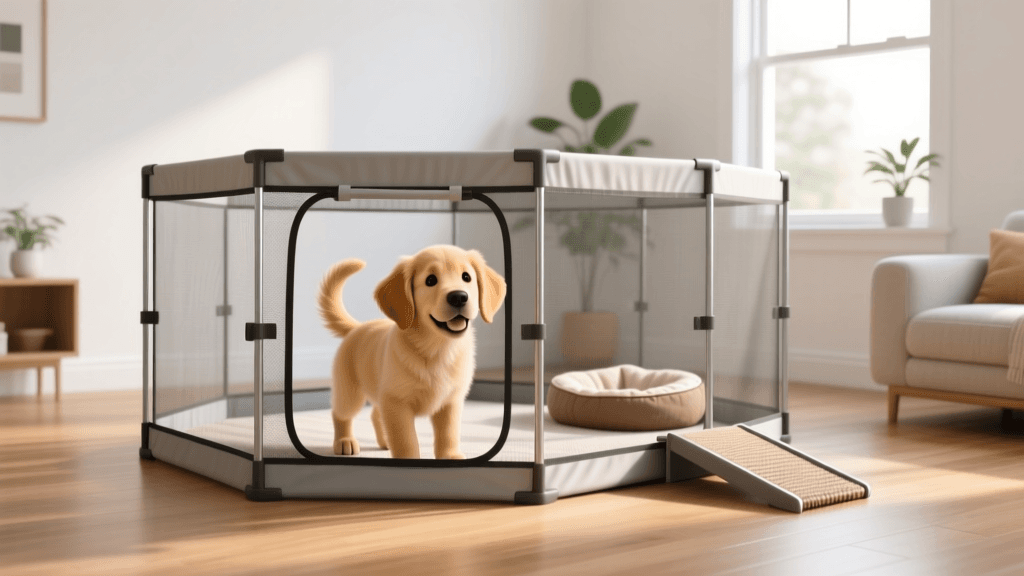
If your puppy is overstimulated and the yelping method is ignored (or if they become more aggressive), it is time for a structured time-out. Calmly pick up the puppy or lead them by their collar into a designated playpen or small, boring room (like a bathroom) for 30 to 60 seconds. Do not yell or use physical punishment. The time-out is simply a chance for their nervous system to reset. After 60 seconds, release them and offer a chew toy.
"Consistency is the cornerstone of bite inhibition. Every family member, including children and guests, must enforce the exact same rules regarding human skin. If the puppy is allowed to gently mouth one person's hands but scolded for mouthing another's, the puppy will become confused and the training will fail."
Puppy-Proofing Your Home and Yard
A teething puppy explores their environment like a toddler, but with sharper tools. Before bringing your puppy home, get down on your hands and knees to view the world from their perspective. You must secure electrical cords using split-loom tubing or cord concealers. Invest in baby gates to block off high-risk areas like kitchens and stairwells.
For items you cannot move, such as wooden table legs or baseboards, apply a pet-safe deterrent spray. Grannick's Bitter Apple Spray ($10 - $15) is a highly rated, non-toxic option that leaves a remarkably foul taste in a dog's mouth. Spray it generously on forbidden items once a day for the first two weeks to build a strong negative association.
Nutritional Support During Peak Teething
During the 12 to 16-week window, your puppy's gums will be highly sensitive. You may notice a slight decrease in their appetite or hesitation to eat dry kibble. To support their nutritional needs without causing oral pain, temporarily soften their high-quality puppy kibble. Add warm (not hot) water or low-sodium bone broth to the bowl, let it sit for 10 minutes until the kibble absorbs the liquid and becomes mushy, and serve. This ensures they maintain the caloric intake required for their rapid growth phase without the mechanical stress of crunching hard pellets.
When to Consult Your Veterinarian
While teething is a normal physiological process, complications can arise. Veterinary experts at the American Veterinary Medical Association (AVMA) advise owners to monitor their puppy's mouth closely during the transition phase. Schedule a veterinary visit if you observe any of the following red flags:
- Retained Deciduous Teeth: If an adult tooth erupts but the baby tooth does not fall out, it can cause severe crowding, misalignment, and trap food leading to early periodontal disease. A vet will need to extract the retained baby tooth.
- Excessive Bleeding: A tiny spot of blood on a chew toy is normal. Profuse bleeding from the gums that does not stop within a few minutes requires immediate medical attention.
- Refusal to Eat or Drink: If your puppy completely refuses food and water for more than 24 hours, or shows signs of lethargy, this indicates a problem beyond standard teething discomfort.
- Facial Swelling or Pus: These are clear signs of an oral infection or an abscessed tooth root.
Final Thoughts for First-Time Owners
The teething phase is undeniably challenging, but it is temporary. By providing appropriate cold therapies, rigorously enforcing bite inhibition protocols, and puppy-proofing your living space, you will guide your dog through this developmental milestone successfully. Remember that patience and consistency are your greatest tools. The effort you invest in teaching your puppy a soft mouth today will result in a safe, gentle, and well-mannered adult dog for the rest of their life.
jonas-cole
All our authors care for dogs every day — read more of their work on the authors page.