Best Puppy Playpens: Top Enclosures And Buyer Guide
Discover the best puppy playpens for safe containment and potty training. Read our expert buyer's guide, top reviews, and sizing tips for your new pup.
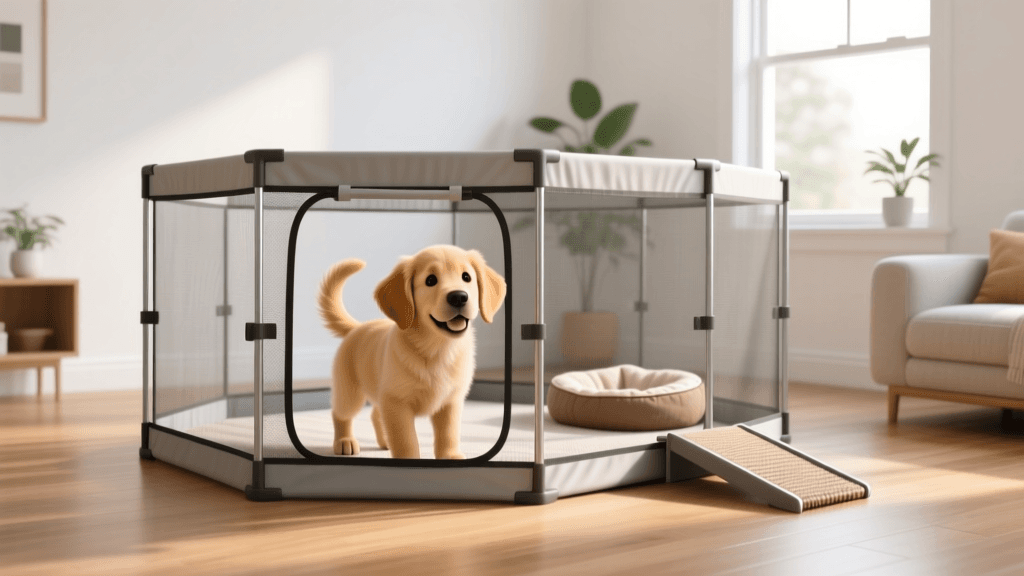
Bringing a new puppy home is one of the most exciting milestones in a dog owner's life, but it also introduces a whirlwind of chaos. From unexpected potty accidents to chewed-up baseboards, the first few months require constant supervision. This is where a high-quality puppy playpen becomes your most valuable tool. Unlike crates, which are designed for sleeping and short-term confinement, exercise pens provide a spacious, safe zone where your puppy can play, eat, and learn potty habits while you take a much-needed breather.
In this comprehensive buyer's guide, we review the best puppy playpens on the market, break down the essential features you need to look for, and provide expert tips on setting up the ultimate puppy zone for successful early development.
Why Every Puppy Needs a Dedicated Playpen
A playpen is not just a fence; it is a foundational tool for early puppy training. According to the ASPCA's official puppy care guidelines, creating a safe, confined space is critical for preventing destructive chewing and household accidents when you cannot provide direct supervision. Puppies explore the world with their mouths, and an unconfined pup can quickly ingest dangerous items like electrical cords or toxic houseplants.
Furthermore, playpens are instrumental in potty training. By utilizing a playpen, you can create distinct zones for sleeping, eating, and eliminating. Dogs have a natural instinct to keep their sleeping areas clean. By placing a bed on one side of the pen and potty pads on the far opposite side, you encourage your puppy to hold it and move away from their den to do their business, accelerating the housebreaking process.
How to Choose the Right Playpen: A Buyer's Checklist
Before clicking 'add to cart,' you must evaluate your specific needs based on your puppy's breed, size, and chewing habits. Here are the primary factors to consider:
Material Matters
- Metal Wire: The gold standard for durability. Metal pens are heavy, stable, and virtually chew-proof. They are ideal for medium to large breeds or aggressive chewers.
- Plastic: Lightweight, modular, and easy to clean. Plastic panels are great for small breeds and indoor use on hardwood floors, but determined teething puppies may gnaw on the edges.
- Fabric and Mesh: Best reserved for travel or temporary outdoor use. Never leave an unsupervised teething puppy in a fabric pen, as they will chew through the mesh in minutes.
Sizing and Height Guidelines
The height of the playpen is crucial to prevent escape artists from climbing out. Use this general sizing guide:
- Small Breeds (Chihuahuas, Pugs, Pomeranians): 24-inch height is usually sufficient.
- Medium Breeds (Beagles, Cocker Spaniels, French Bulldogs): 30-inch to 36-inch height is recommended.
- Large Breeds (Labrador Retrievers, German Shepherds, Golden Retrievers): 36-inch to 48-inch height is mandatory to contain their long legs and athletic jumping abilities.
Top 4 Puppy Playpens Reviewed
1. Midwest Homes for Pets Foldable Metal Exercise Pen
The Midwest metal exercise pen is a staple in the dog training community. It features eight interconnected panels, each measuring 24 inches wide, providing up to 16 square feet of enclosed space. The panels fold flat for easy storage and transport, and the rust-resistant e-coat finish ensures longevity.
- Best For: Medium to large breeds, indoor and outdoor use.
- Approximate Cost: $40 to $75 depending on height.
- Pros: Extremely durable, configurable into multiple shapes (square, octagon, rectangle), includes ground stakes for outdoor anchoring.
- Cons: Heavy and bulky; the metal wire can scratch unprotected hardwood floors.
2. IRIS USA Square Exercise Pet Playpen
If you have a small breed or want to protect your hardwood floors from scratches, the IRIS USA plastic playpen is a top-tier choice. Made from heavy-duty molded plastic, the panels interlock securely and can be easily expanded by purchasing additional packs. The 24-inch and 34-inch height options cater to various small and medium breeds.
- Best For: Small breeds, apartment living, and floor protection.
- Approximate Cost: $60 to $120.
- Pros: Lightweight, aesthetically pleasing, easy to wipe clean, won't scratch floors.
- Cons: Plastic edges can be damaged by aggressive chewers; large dogs can easily tip it over.
3. Yaheetech Heavy Duty Pet Playpen
Yaheetech offers a robust metal alternative with slightly thicker wiring and rounded edges to protect your puppy's paws and snout. The powder-coated finish is highly resistant to rust, making it an excellent choice for outdoor patio use or damp environments. It also features a secure door latch that is difficult for clever paws to manipulate.
- Best For: Escape artists and outdoor patio containment.
- Approximate Cost: $50 to $85.
- Pros: Very sturdy, safe rounded edges, secure door panel, excellent rust resistance.
- Cons: Assembly can be slightly stiff out of the box; heavier than standard wire pens.
4. Amazon Basics Foldable Metal Exercise Pen
For budget-conscious new owners, the Amazon Basics pen delivers reliable performance without breaking the bank. It mirrors the design of premium metal pens with eight panels and multiple height options. While the latch mechanism is a bit more basic than the Yaheetech or Midwest models, it is perfectly adequate for young puppies who have not yet figured out how to manipulate door latches.
- Best For: Budget buyers and young, non-escape-artist puppies.
- Approximate Cost: $35 to $55.
- Pros: Highly affordable, folds flat, easy to assemble.
- Cons: Basic latch may be outsmarted by highly intelligent or older puppies.
Quick Comparison Chart
| Playpen Model | Material | Best For | Price Range |
|---|---|---|---|
| Midwest Homes for Pets | Metal Wire | Large breeds & durability | $40 - $75 |
| IRIS USA Square | Plastic | Small breeds & floor protection | $60 - $120 |
| Yaheetech Heavy Duty | Metal Wire | Outdoor use & escape artists | $50 - $85 |
| Amazon Basics | Metal Wire | Budget-conscious buyers | $35 - $55 |
Setting Up the Ultimate Puppy Zone
Buying the pen is only half the battle; how you arrange it dictates your puppy's success. VCA Hospitals' puppy behavior resources note that environmental enrichment and proper spatial arrangement significantly reduce separation anxiety and promote healthy mental development.
Follow this layout strategy for optimal results:
- The Sleeping Zone: Place a comfortable, washable dog bed or an open crate in one corner. This is their den.
- The Hydration Station: Secure a heavy ceramic or stainless steel water bowl in the middle of the pen, or use a clip-on water bottle to prevent spilling.
- The Elimination Zone: Lay down puppy potty pads or a reusable grass patch in the corner furthest from the bed.
- Enrichment: Scatter safe chew toys, Kongs stuffed with frozen peanut butter, and snuffle mats to keep your puppy mentally stimulated while you work or cook.
Expert Tip: Never use the playpen as a place for punishment. Your puppy must view the enclosure as a safe, positive sanctuary. Toss high-value treats inside and feed them their meals in the pen to build a strong positive association.
Transitioning from Playpen to Free Roam
Eventually, your puppy will earn the privilege of roaming the house. However, rushing this process is the number one cause of potty training regression and destroyed furniture. The Humane Society's Puppy Start Right guide recommends a gradual expansion of territory rather than sudden, unrestricted freedom.
Begin by allowing your puppy to explore a single, puppy-proofed room while attached to a leash or under strict visual supervision. If they remain accident-free and refrain from chewing inappropriate items for several weeks, you can slowly expand their boundaries. Most puppies are not mentally mature enough for unsupervised free roam until they are past the intense teething phase, typically between 8 to 12 months of age.
Final Thoughts
Investing in a high-quality puppy playpen is an investment in your sanity and your dog's safety. Whether you opt for the heavy-duty Midwest metal pen for a growing Labrador or the sleek IRIS plastic pen for a tiny Pomeranian, providing a structured, secure environment sets the stage for a well-behaved, confident adult dog. Assess your space, evaluate your puppy's chewing habits, and choose the enclosure that best fits your lifestyle.
aaron-whyte
All our authors care for dogs every day — read more of their work on the authors page.