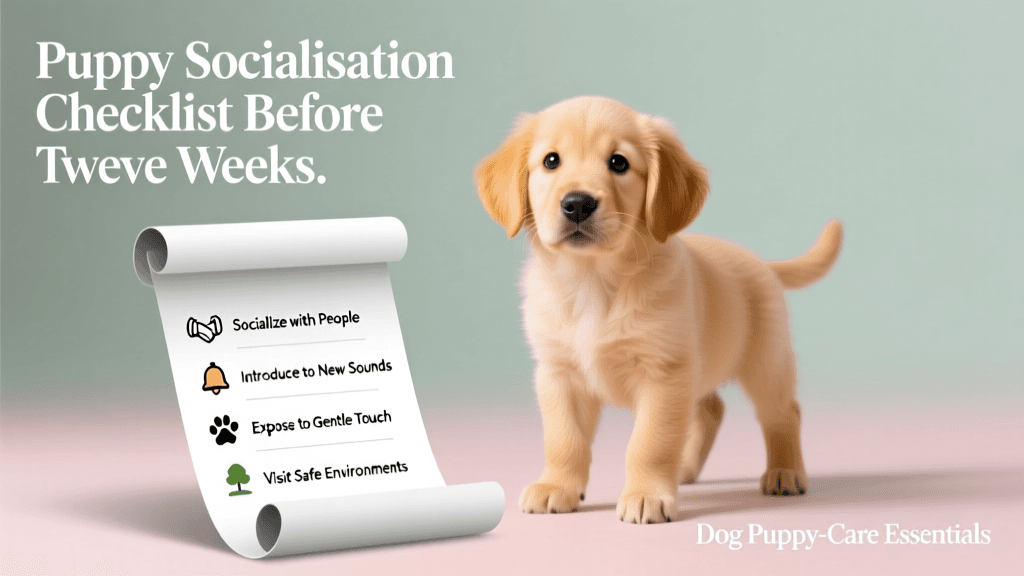
The Science of Puppy Socialization: Brain Development & Timing
Discover the science behind the puppy socialization window. Learn how brain development dictates timing and get a weekly guide to raising a confident dog.

The Neurological Blueprint: Understanding the Primary Socialization Window
Raising a well-adjusted, confident dog is not merely a matter of luck or innate temperament; it is deeply rooted in canine neurobiology. The first year of a puppy's life is marked by rapid physiological and neurological changes, but none are as critical as the primary socialization window. From a scientific perspective, socialization is the process of habituation and classical conditioning that occurs while a puppy's brain is highly plastic. During this time, the brain is actively mapping the environment, categorizing stimuli as 'safe' or 'threatening.'
According to the American Veterinary Society of Animal Behavior (AVSAB), the primary window for puppy socialization opens at approximately 3 weeks of age and begins to close between 12 and 14 weeks. During this brief period, a puppy's brain is uniquely wired to accept novel experiences without triggering a sustained fear response. Understanding the neurology behind this window is essential for any dog owner who wants to prevent behavioral issues, which remain the leading cause of euthanasia in dogs under three years of age.
Synaptogenesis and the Amygdala: Why Timing is Everything
To understand why the 14-week mark is a biological deadline, we must look at synaptogenesis—the formation of synapses between neurons in the nervous system. In puppies, the brain undergoes a massive overproduction of synapses. Experiences during the first 14 weeks dictate which of these neural pathways are strengthened and which are pruned away. If a puppy is repeatedly exposed to a stimulus (like the sound of traffic or the presence of strangers) in a positive or neutral context, the brain wires itself to accept that stimulus as a normal part of the environment.
Conversely, the amygdala—the brain's fear center—matures slightly later than the areas responsible for curiosity and exploration. Around 8 to 10 weeks, puppies often experience their first 'fear period.' During this time, the amygdala becomes more reactive, and a single traumatic event can create a lifelong phobia. This is why science-backed socialization protocols emphasize positive emotional associations rather than forced interactions. Forcing a frightened puppy to be held by a stranger does not build confidence; it floods the brain with cortisol, reinforcing the neural pathway that strangers equal danger.
The AVSAB Consensus: Balancing Disease Risk and Behavioral Health
Historically, veterinarians advised keeping puppies isolated until they completed their vaccination series at 16 weeks to prevent parvovirus and distemper. However, modern veterinary science has shifted this paradigm. The AVSAB released a landmark position statement highlighting that the risk of behavioral euthanasia due to poor socialization vastly outweighs the risk of infectious disease, provided the puppy is socialized in controlled, safe environments.
Waiting until 16 weeks means missing the entire primary socialization window. Puppies isolated during this critical period are statistically much more likely to develop fear-based aggression, separation anxiety, and noise phobias. Safe socialization involves carrying the puppy in public spaces, hosting vaccinated adult dogs in your home, and utilizing puppy classes that require at least one set of vaccines and a clean, sanitized environment.
Classical Conditioning: The Mechanism of Positive Association
Socialization is not about a puppy 'playing' with everything it meets; it is about classical conditioning. Pioneered by Ivan Pavlov, classical conditioning pairs a neutral stimulus with an unconditioned stimulus (like high-value food) to create a positive emotional response.
When introducing a puppy to a novel stimulus—such as a person wearing a large hat or a loud garbage truck—use the 'Open Bar/Closed Bar' technique. The moment the stimulus appears, the 'bar opens' and you feed the puppy high-value treats (e.g., freeze-dried beef liver cut into 1/4-inch cubes). The treats must be delivered within 0.5 seconds of the puppy noticing the stimulus. When the stimulus disappears, the 'bar closes' and the treats stop. Over time, the puppy's brain releases dopamine in anticipation of the trigger, effectively rewiring the amygdala's fear response into a positive expectation.
Week-by-Week Neurological Socialization Protocol
Below is a science-backed, structured protocol designed to align with your puppy's neurological development. Keep sessions short (10-15 minutes) to prevent cortisol accumulation and mental fatigue.
| Age (Weeks) | Neurological Stage | Primary Focus | Actionable Science-Backed Task |
|---|---|---|---|
| 3 to 5 Weeks | Transitional Period / Sensory Awakening | Tactile and Auditory Habituation | Handle paws, ears, and mouth daily for 30 seconds. Introduce mild, varied household sounds (e.g., a muted vacuum cleaner) while the puppy is nursing or eating. |
| 6 to 8 Weeks | Peak Curiosity / Low Fear Response | Environmental Mapping & Surface Texture | Expose the puppy to 5 different floor textures (grass, gravel, tarps, grates). Use classical conditioning to pair novel surfaces with a lick mat spread with puppy-safe peanut butter. |
| 8 to 10 Weeks | First Fear Period / Amygdala Reactivity | Consent-Based Handling & Distance Observation | Do not force interactions. Sit on a park bench 15 feet away from foot traffic. Feed high-value treats every time a stranger walks by. Allow the puppy to retreat if they show stress signals. |
| 11 to 14 Weeks | Synaptic Pruning / Window Closing | Complex Stimuli & Veterinary Prep | Visit the vet clinic for 'happy visits' (no vaccines, just treats on the scale and in the lobby). Introduce the puppy to people in uniforms, hats, and sunglasses using the Open Bar method. |
Measuring Success: Recognizing Habituation vs. Sensitization
A common mistake owners make is assuming that mere exposure equals socialization. In behavioral science, repeated exposure to a frightening stimulus without positive reinforcement leads to sensitization, where the fear response actually amplifies over time. True habituation occurs when the puppy's physiological arousal (heart rate, panting, cortisol levels) decreases upon subsequent exposures to the stimulus.
To measure success, observe your puppy's body language. According to resources compiled by the American Kennel Club (AKC), a well-socialized puppy will display a loose, wiggly body, soft eyes, and a relaxed, sweeping tail wag. They will willingly approach novel objects after a brief moment of investigation.
Red Flags of Sensitization and Stress
- Whale Eye: Showing the whites of the eyes while turning the head away.
- Lip Licking and Yawning: Displacement behaviors indicating cognitive overload and stress.
- Freezing: A complete cessation of movement, indicating the puppy has entered a 'fight, flight, or freeze' sympathetic nervous system response.
- Shutting Down: Refusing high-value treats that the puppy normally loves, indicating cortisol levels have suppressed their appetite.
If you observe these signs, you have crossed the puppy's threshold of tolerance. Science dictates that you must immediately increase the distance from the stimulus by at least 10 to 15 feet and lower the intensity of the exposure until the puppy's parasympathetic nervous system (the 'rest and digest' state) re-engages.
The Role of Sleep in Neurological Consolidation
Finally, science-backed puppy care must account for sleep. Puppies require 18 to 20 hours of sleep per day. During REM sleep, the brain consolidates the experiences and neural connections formed during waking hours. A sleep-deprived puppy will have elevated baseline cortisol levels, drastically lowering their threshold for fear and reactivity. Always ensure your puppy has a quiet, dark, and temperature-controlled crate or pen to decompress after a socialization outing. Forcing a tired puppy to continue socializing is counterproductive and biologically detrimental to their brain development.
Conclusion
The science of puppy socialization is a race against the biological clock. By understanding the mechanics of synaptogenesis, respecting the amygdala's development, and utilizing classical conditioning, you can systematically build a resilient, confident adult dog. Prioritize positive emotional associations over forced interactions, respect your puppy's stress signals, and leverage the critical 3-to-14-week window to lay a neurological foundation that will last a lifetime.
tom-renshaw
All our authors care for dogs every day — read more of their work on the authors page.