The Science of Puppy Sleep: Brain Development and Nap Schedules
Discover the science behind puppy sleep needs, brain development, and enforced naps. Learn actionable schedules and crate training tips for a calmer pup.
The Neurological Need for Sleep in Puppies
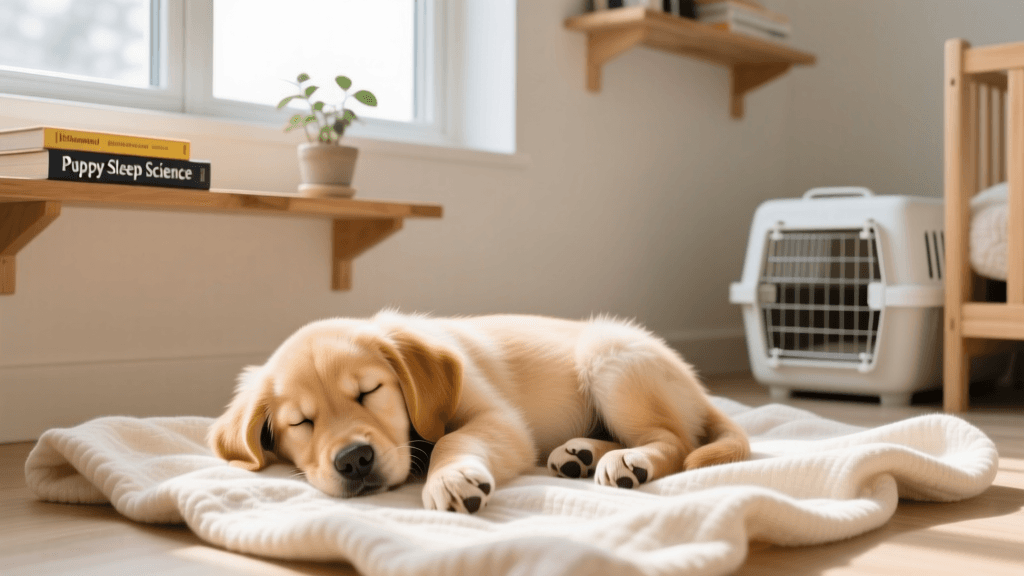
Bringing a new puppy home is an exhilarating experience, but it often comes with a steep learning curve regarding their daily rhythms. While it is easy to assume that puppies will naturally sleep when they are tired, canine neurology and behavioral science tell a different story. According to the American Society for the Prevention of Cruelty to Animals (ASPCA), puppies require between 18 to 20 hours of sleep per day during their first few months of life. This staggering amount of rest is not merely a byproduct of physical exhaustion; it is a critical biological requirement for central nervous system development.
During the rapid eye movement (REM) phase of sleep, a puppy's brain is actively engaged in synaptic pruning and memory consolidation. When your puppy learns a new cue like "sit," practices bite inhibition, or explores a novel environment, the neural pathways associated with those experiences are fragile. Sleep solidifies these pathways, transferring short-term memories into long-term cognitive maps. Without adequate REM sleep, a puppy's ability to retain potty training routines and basic obedience commands is significantly impaired, leading to frustrating setbacks for owners who mistakenly believe their dog is simply being stubborn.
The Danger of Sleep Deprivation: Overstimulation and "Zoomies"
One of the most common behavioral issues reported by new owners is the sudden onset of aggressive biting, hyperactivity, and frantic "zoomies" in the late afternoon or evening. In the dog training community, an overtired, biting puppy is often affectionately but inaccurately dubbed a "land shark." However, from a scientific perspective, this behavior is a classic stress response driven by sleep deprivation.
When a puppy stays awake past their natural biological window, their endocrine system compensates by releasing cortisol and adrenaline to keep them alert. This chemical cocktail triggers a state of hyperarousal. Because puppies lack the prefrontal cortex development required for emotional self-regulation, they cannot self-soothe or voluntarily disengage from stimulating environments. The resulting "zoomies" and nipping are not signs of excess energy that requires more exercise; they are neurological distress signals indicating that the puppy's brain is overwhelmed and desperately needs to shut down.
Implementing "Enforced Naps": A Science-Backed Approach
To combat overstimulation, veterinary behaviorists highly recommend the practice of "enforced naps." This involves proactively placing your puppy in a safe, low-stimulation environment before they reach the point of overtiredness. An effective enforced nap routine follows a specific sequence: active play and training, followed by a potty break, and then immediate placement into a crate or puppy-proofed pen for sleep. By controlling their wake windows, you regulate their cortisol levels and prevent the behavioral fallout of exhaustion.
Essential Gear for Enforced Napping
Creating an optimal sleep environment requires specific tools that mimic the safety and sensory input of the litter. Here are the science-backed products that facilitate better puppy sleep:
- Adjustable Crate (e.g., MidWest Homes for Pets iCrate, $45-$70): A crate provides a den-like environment that triggers a dog's natural instinct to keep their sleeping area clean, which is vital for potty training. Crucially, you must use a crate with a movable divider panel. The space should only be large enough for the puppy to stand up, turn around, and lie down. Excess space allows them to soil one corner and sleep in another, breaking the psychological association between the crate and cleanliness.
- Behavioral Aid (e.g., SmartPetLove Snuggle Puppy, $39.95): This plush toy features a battery-operated, pulsing heartbeat that mimics the physiological rhythm of a mother dog. Studies in canine neonatology show that rhythmic auditory and tactile stimulation lowers heart rates and reduces the duration of separation-induced vocalization in isolated puppies.
- Acoustic Masking (e.g., LectroFan Evo White Noise Machine, $40): Puppies have highly sensitive hearing and are easily roused by household noises (footsteps, doors closing, talking). A continuous white noise machine masks these sharp acoustic spikes, promoting deeper, uninterrupted non-REM sleep cycles.
- Chew-Resistant Bedding (e.g., K9 Ballistics Tough Bed, $110-$140): Standard plush beds can be a choking hazard and disrupt sleep if the puppy wakes up and begins to shred them. A ballistic nylon bed provides a safe, cool surface that won't trigger destructive waking behaviors.
Structured Puppy Sleep and Wake Schedule
Understanding age-appropriate wake windows is the foundation of a successful enforced nap schedule. A wake window is the maximum amount of time a puppy can comfortably stay awake before cortisol levels begin to spike. The following data table outlines the scientifically recommended sleep parameters for a puppy's first six months.
| Age Range | Max Wake Window | Average Nap Duration | Total Daily Sleep | Nighttime Bladder Capacity |
|---|---|---|---|---|
| 8 - 10 Weeks | 45 - 60 Minutes | 2 - 3 Hours | 18 - 20 Hours | 2 - 3 Hours |
| 11 - 14 Weeks | 1 - 1.5 Hours | 2 - 3 Hours | 16 - 18 Hours | 3 - 4 Hours |
| 15 - 20 Weeks | 1.5 - 2 Hours | 1.5 - 2.5 Hours | 14 - 16 Hours | 4 - 5 Hours |
| 5 - 6 Months | 2 - 3 Hours | 1 - 2 Hours | 12 - 14 Hours | 5 - 7 Hours |
Nighttime Sleep and Bladder Capacity Science
Nighttime sleep presents a unique biological hurdle: the intersection of neurological rest and urological development. A puppy's bladder sphincter muscles and the neural pathways connecting the bladder to the brain are not fully mature until they are several months old. According to guidelines published by VCA Animal Hospitals, a general veterinary rule of thumb for bladder capacity is the puppy's age in months plus one. Therefore, an 8-week-old (2-month-old) puppy can physiologically hold their bladder for a maximum of three hours. Attempting to force a puppy to sleep for eight uninterrupted hours at this age is biologically impossible and will result in involuntary soiling, which damages the crate-training process.
To align with their biological limits, set an alarm to take your puppy out for a potty break in the middle of the night. Keep this interaction incredibly boring: no talking, no eye contact, and no play. Simply leash them, carry or walk them to the elimination spot, reward them quietly for voiding, and immediately return them to the crate. This prevents the brain from associating nighttime waking with social interaction or play.
Optimizing the Sleep Environment
The physiology of canine sleep is heavily influenced by environmental cues, particularly light and temperature. Melatonin, the hormone responsible for regulating the sleep-wake cycle (circadian rhythm), is produced in the pineal gland in response to darkness. To encourage natural melatonin production, dim the household lights and turn off overhead screens 30 to 45 minutes before your puppy's final bedtime. Covering the crate with a breathable, dark blanket can simulate a den environment, blocking out visual stimuli that might trigger arousal.
Temperature regulation is equally critical. Puppies cannot regulate their core body temperature as efficiently as adult dogs. The ambient temperature of their sleep space should be maintained between 68°F and 72°F (20°C - 22°C). If the environment is too warm, the puppy will experience fragmented sleep as their body struggles to cool down, leading to increased restlessness and whining.
Troubleshooting: The Extinction Burst
When you first implement enforced naps and crate training, your puppy will likely protest. Behavioral science refers to a phenomenon known as an "extinction burst." When a previously reinforced behavior (like crying to get out of the crate and receive attention) suddenly stops yielding the desired result, the subject will temporarily increase the frequency, duration, and intensity of that behavior before it finally stops.
If you give in and release a crying puppy, you have scientifically proven to them that crying is the correct mechanism for opening the door. The American Kennel Club (AKC) emphasizes that consistency is paramount during this phase. You must differentiate between protest crying and a genuine biological need to eliminate. If the puppy has been awake for less than an hour and has recently pottied, the crying is behavioral. Wait for a brief pause in the vocalization—even just three seconds of silence—before opening the crate, ensuring you are rewarding calmness rather than noise.
Conclusion
Understanding the science behind puppy sleep transforms the way we approach early dog ownership. By recognizing that 18 to 20 hours of sleep is a neurological necessity rather than a luxury, owners can proactively manage their puppy's environment to prevent behavioral issues rooted in exhaustion. Utilizing enforced naps, respecting biological wake windows, and providing a den-like, acoustically managed sleep space will not only accelerate your puppy's cognitive development and potty training but will also lay the foundation for a calm, well-adjusted adult dog.
marcus-aldridge
All our authors care for dogs every day — read more of their work on the authors page.