The Ultimate Puppy-Proofing Guide For First-Time Owners
Discover essential puppy-proofing tips for first-time dog owners. Learn how to secure every room, estimate costs, and keep your new furry friend safe.
Welcome to Puppy Parenthood: Why Proofing Matters
Bringing a new puppy home is one of life's most joyful experiences, but it also comes with a tremendous amount of responsibility. For first-time dog owners, the excitement of picking out toys and beds can easily overshadow the critical task of puppy-proofing your home. Puppies are essentially toddlers with sharp teeth and an insatiable curiosity. They explore the world with their mouths, and what seems like a harmless household item to you could be a deadly hazard to a curious pup. According to the American Kennel Club (AKC), failing to properly secure your living space is one of the leading causes of preventable veterinary emergencies for young dogs.
The Financial Reality of Puppy-Proofing
Before diving into the physical changes you need to make, it is important to understand the budget required to properly secure a home for a new dog. Many first-time owners underestimate the cost of safety equipment. While you do not need to buy the most expensive gear on the market, investing in high-quality, durable proofing products will save you money in the long run by preventing ruined furniture and emergency vet bills.
| Item Category | Specific Product Example | Estimated Cost | Purpose |
|---|---|---|---|
| Safety Gates | Regalo Easy Step Walk Thru Gate (30-inch tall) | $40 - $60 | Restricting access to stairs and hazardous rooms |
| Chew Deterrents | Grannick's Bitter Apple Spray (8 oz) | $10 - $15 | Discouraging chewing on baseboards and furniture |
| Cord Protectors | JOTO Cable Management Sleeves | $15 - $25 | Preventing electrocution from chewed electrical wires |
| Cabinet Locks | Safety 1st Magnetic Cabinet Locks (12-pack) | $20 - $30 | Securing cleaning supplies and toxic foods |
| Secure Trash Cans | simplehuman Step Trash Can (Locking lid) | $60 - $90 | Preventing dietary indiscretion and bowel obstructions |
| Total Estimated Investment | $145 - $220 | Comprehensive baseline safety setup |
Room-by-Room Puppy-Proofing Checklist
The Kitchen: Hazards and Solutions
The kitchen is arguably the most dangerous room in your house for a new puppy. Between dropped food, toxic cleaning supplies, and accessible trash, the culinary space is a minefield. First and foremost, you must secure your trash cans. Puppies are notorious scavengers, and ingesting cooked bones, onion scraps, or fatty leftovers can lead to severe gastrointestinal blockages or pancreatitis. Invest in a heavy-duty, locking trash can like the simplehuman Step Trash Can, or keep your bin completely hidden inside a latched cabinet.
Additionally, be hyper-aware of where you store human foods. Xylitol, an artificial sweetener found in sugar-free gum, peanut butter, and baked goods, is highly toxic to dogs. The U.S. Food and Drug Administration (FDA) warns that even small amounts of xylitol can cause a rapid, life-threatening drop in a dog's blood sugar and acute liver failure. Store all sweets, grapes, raisins, and chocolate in upper cabinets secured with magnetic child-proof locks. Never leave grocery bags unattended on the floor or on low countertops.
The Living Room: Wires, Wood, and Windows
Your living room is likely where your puppy will spend the most time relaxing with you, but it is filled with hidden electrical and structural hazards. Puppies go through a teething phase that typically peaks between four and six months of age. During this time, they will chew on anything that provides relief to their sore gums, including baseboards, table legs, and electrical cords.
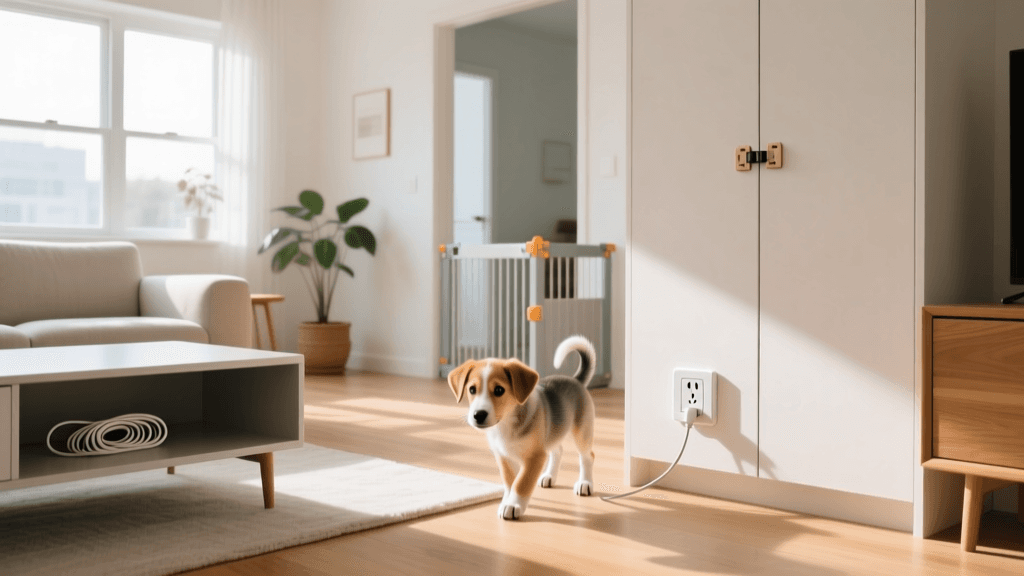
To protect your electronics and your puppy's life, use cord concealers or split-loom tubing to cover exposed wires. If a puppy bites into a live wire, the resulting electrical shock can cause fatal pulmonary edema. Furthermore, apply a taste deterrent like Grannick's Bitter Apple Spray to wooden furniture legs and baseboards. Test the spray on a small, hidden area of the wood first to ensure it does not cause discoloration. Reapply the spray daily for the first two weeks to reinforce the negative association.
Window safety is another frequently overlooked area. If you live in an apartment or a multi-story home, ensure all windows have sturdy, pet-proof screens. Puppies can easily push through flimsy mesh screens if they see a squirrel or bird outside, leading to tragic falls.
The Bathroom and Laundry Room: Toxins and Traps
Bathrooms and laundry rooms house a concentrated collection of household chemicals, medications, and small ingestible items. Toilet bowls pose a dual threat: they are a source of stagnant, bacteria-laden water that puppies love to drink from, and they present a drowning hazard for very small breeds. Keep the toilet lid closed at all times and consider using a toilet lid lock if you have a particularly determined or agile breed like a Terrier or a Poodle.
Store all medications, including over-the-counter pain relievers like ibuprofen and acetaminophen, in high, closed cabinets. Never leave vitamins or supplements on the bathroom counter, as many are flavored and look like treats to a dog. In the laundry room, keep detergent pods, bleach, and fabric softeners completely out of reach. The ASPCA Animal Poison Control Center receives thousands of calls annually regarding pets ingesting household cleaning agents, which can cause severe chemical burns to the mouth, esophagus, and stomach lining. Always keep the doors to these rooms firmly shut or blocked by a tall baby gate.
The Backyard: Fences, Flora, and Fertilizers
If you have a yard, it needs to be just as secure as the interior of your home. Inspect your fencing from the ground up. Puppies are natural diggers and can easily squeeze through gaps that are wider than four inches. Lay chicken wire along the base of the fence and bury it a few inches into the soil, or place heavy landscaping rocks along the perimeter to deter digging.
Landscaping also requires a critical eye. Many common ornamental plants, including sago palms, azaleas, rhododendrons, and lilies, are highly toxic to dogs. The ASPCA maintains a comprehensive database of toxic and non-toxic plants that every first-time owner should consult before bringing a puppy home. Additionally, avoid using cocoa bean mulch, which smells like chocolate and contains theobromine, a compound that is toxic to canines. Opt for cedar or pine mulch instead, and ensure that any fertilizers, herbicides, or pesticides are stored in a locked shed and applied strictly according to pet-safe timelines.
Setting Up a Safe Puppy Zone
No matter how thoroughly you puppy-proof your home, you cannot supervise your new dog every single second of the day. First-time owners often make the mistake of giving a new puppy free roam of the house, which inevitably leads to accidents and destroyed belongings. Instead, establish a designated puppy zone or sanctuary room.
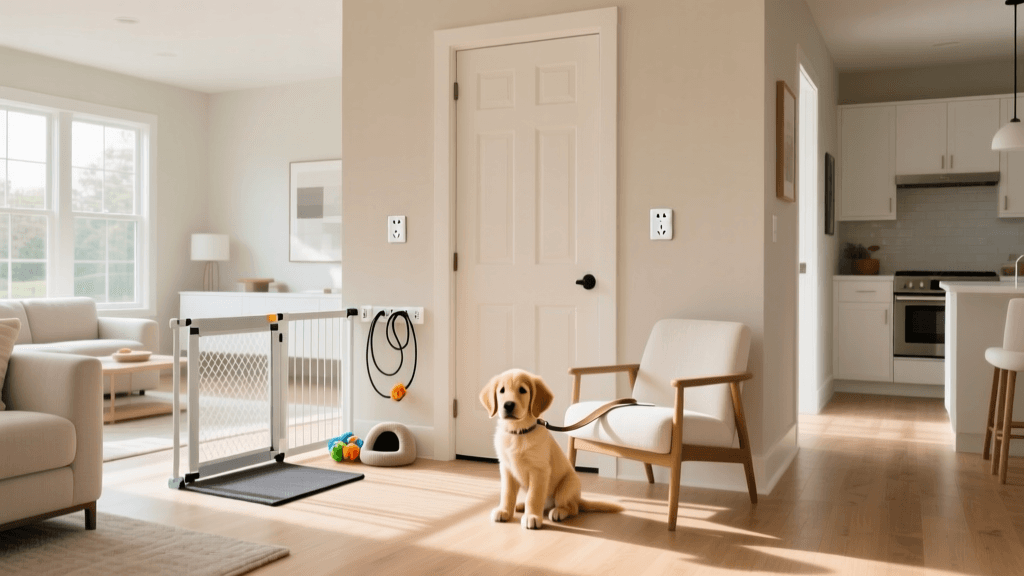
This space should be a small, easily cleanable area like a kitchen or a gated-off section of a hallway. Equip this zone with a sturdy wire crate, a washable dog bed, fresh water in a tip-proof bowl, and safe, interactive chew toys like the KONG Classic stuffed with frozen peanut butter. This zone serves as a safe haven when you need to cook, shower, or leave the house for short periods. It teaches the puppy how to self-soothe and prevents the development of separation anxiety and destructive boredom habits.
"Supervision is the ultimate puppy-proofing tool. When you cannot actively watch your puppy, they should be confined to a safe, puppy-proofed area or their crate. Freedom is a privilege that must be earned over months of consistent good behavior." - Certified Professional Dog Trainer (CPDT-KA) Guidelines.
Final Thoughts for First-Time Owners
Puppy-proofing is not a one-time chore; it is an ongoing process of observation and adaptation. As your puppy grows, their physical capabilities and cognitive skills will change. A gate that contained an eight-week-old Golden Retriever will be easily vaulted by the time they are six months old. Stay vigilant, continually assess your environment from your puppy's eye level, and do not hesitate to consult with your veterinarian or a certified dog trainer if you encounter behavioral hurdles. By investing the time and resources into securing your home today, you are laying the foundation for a safe, happy, and lifelong bond with your new best friend.
priya-sutaria
All our authors care for dogs every day — read more of their work on the authors page.