Puppy-Proofing Your Home: A Room-by-Room Guide for New Owners
Discover essential puppy-proofing tips for first-time dog owners. Learn how to secure every room, choose safe products, and prepare your home for a new pup.
Bringing a new puppy home is one of life's most exciting milestones, but it also comes with a profound responsibility. For first-time dog owners, the sheer level of curiosity and destructive potential a puppy possesses can be overwhelming. Puppies explore the world primarily through their mouths, and their teething phase—which peaks between 4 and 6 months of age—means they will chew on virtually anything they can reach. Puppy-proofing your home is not just about protecting your favorite pair of shoes or your expensive electronics; it is a critical, life-saving measure. Just as you would baby-proof a house for a crawling toddler, you must adapt your living space for a fast, agile, and entirely uninhibited animal.
This comprehensive, room-by-room guide will walk you through the exact steps, measurements, and products required to create a safe environment for your new furry family member.
The Financial Reality of Puppy-Proofing
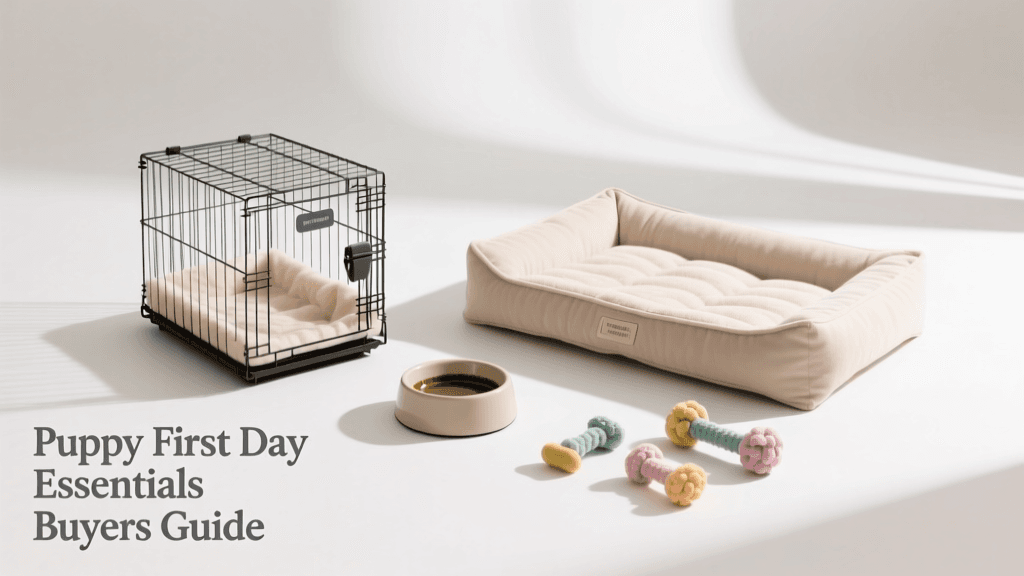
Before you begin moving furniture and taping down cords, it is important to budget for the necessary safety equipment. While some adjustments are free, securing a home properly requires a few specialized investments. Below is a breakdown of essential puppy-proofing products and their estimated costs.
| Item | Purpose | Estimated Cost |
|---|---|---|
| Hardware-Mounted Baby Gate (e.g., Regalo) | Block stair access safely without slipping | $45 - $75 |
| Cable Management Sleeves (e.g., JOTO) | Prevent electrocution from chewed wires | $15 - $25 |
| Locking Trash Can (e.g., Simplehuman) | Secure toxic foods, bones, and packaging | $80 - $160 |
| Bitter Apple Spray (e.g., Grannick's) | Deter chewing on baseboards and furniture | $10 - $15 |
| Wire Crate and Playpen (e.g., MidWest Homes) | Create a secure indoor sanctuary | $70 - $140 |
Investing roughly $250 to $400 upfront can save you thousands of dollars in emergency veterinary bills and property damage down the line.
Room-by-Room Puppy-Proofing Checklist
The Living Room: Managing Cords and Hiding Spots
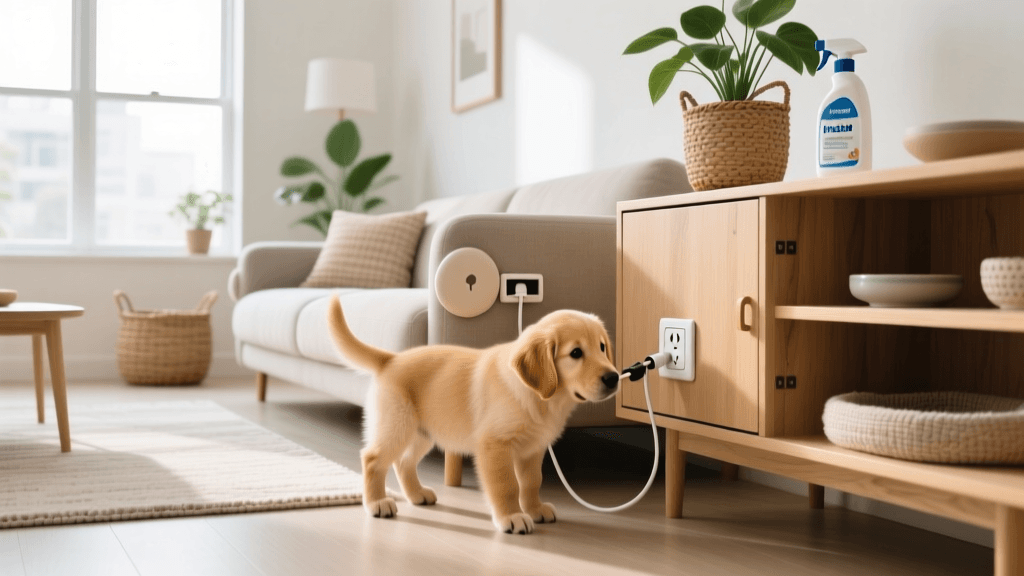
The living room is typically where your puppy will spend the most time, making it a primary hazard zone. Start by addressing electrical cords. Puppies can easily chew through the plastic casing of a lamp or television cord, leading to severe oral burns or fatal electrocution. Use split-loom tubing or neoprene cable sleeves, such as the JOTO Cable Management Sleeves, to encase all exposed wires. Ensure that power strips are mounted high on the wall or hidden inside a locked cord management box.
Next, evaluate your furniture. Puppies love to seek out dark, enclosed spaces when they feel overwhelmed or want to chew in peace. If the gap beneath your sofa or bed is less than 12 inches, block it off using wooden boards or specialized furniture blockers. Additionally, remove any low-hanging tablecloths, decorative tassels, or small remote controls from coffee tables. Anything smaller than a golf ball is a choking hazard or a potential intestinal blockage waiting to happen.
The Kitchen: Securing Toxins and Food Waste
The kitchen poses the highest risk for dietary indiscretion and poisoning. Standard pedal-trash cans are no match for a determined puppy. Upgrade to a heavy-duty, locking trash can like the Simplehuman Locking Trash Can, or store your waste bin inside a latched lower cabinet. This prevents your dog from accessing cooked bones (which can splinter and puncture the digestive tract), grease, and toxic food scraps.
Speaking of toxins, first-time owners must be acutely aware of hidden dangers. According to the Pet Poison Helpline, xylitol—an artificial sweetener found in sugar-free gum, mints, and some peanut butters—is highly toxic to dogs and can cause rapid, fatal hypoglycemia and liver failure. Store all human snacks, vitamins, and medications in high, latched pantries. Furthermore, ensure that household cleaning supplies, including bleach and ammonia-based floor cleaners, are moved to high shelves or secured with child-proof cabinet locks.
The Bathroom: Medications and Drowning Hazards
Bathrooms are often overlooked, but they contain a concentrated amount of danger. Human medications, particularly NSAIDs like ibuprofen and acetaminophen, are incredibly toxic to dogs even in small doses. Never leave pills on the counter or in easily accessible pill organizers. Store all medications in a high, closed cabinet.
Additionally, always keep the toilet lid closed. Puppies can easily lose their balance and fall in, posing a drowning risk, or they may drink from the bowl, exposing themselves to residual toilet bowl cleaners and bacteria. Secure all toiletries, including toothpaste (which often contains xylitol or fluoride), mouthwash, and cosmetics, behind closed doors.
The Bedroom and Home Office: Shoes and Electronics
Bedrooms and home offices are treasure troves of enticing chewing materials. Shoes, socks, and underwear carry your scent, making them highly attractive to a puppy seeking comfort. However, ingesting fabric can lead to a life-threatening gastrointestinal obstruction requiring emergency surgery. Keep all laundry in hampers with secure lids and store shoes inside closed closets.
In the home office, pay special attention to laptop chargers, USB cables, and wireless mouse receivers. Use heavy-duty cord protectors and consider using a playpen to restrict your puppy's access to your desk area while you are working. As noted by the American Kennel Club (AKC), restricting access to high-risk rooms when you cannot actively supervise is one of the most effective management strategies for new owners.
Outdoor and Yard Security
If you have a yard, it must be a secure fortress. Inspect your perimeter fencing meticulously. For small breeds, a 4-foot fence is generally sufficient, but athletic or large breeds (like Huskies or German Shepherds) require a minimum height of 6 feet. Check the bottom of the fence line for gaps; if a gap is wider than 3 inches, a puppy can easily squeeze through or begin digging an escape tunnel. Bury chicken wire along the fence line or lay heavy paving stones to deter digging.
Landscaping also requires a careful audit. Many common ornamental plants are highly toxic to dogs. Sago Palms, Azaleas, Lilies, and Oleander can cause severe organ failure or death if ingested. Before planting or allowing your puppy to roam, cross-reference your garden with the ASPCA's Toxic and Non-Toxic Plants list. If you have a swimming pool, ensure it is covered with a rigid, weight-bearing safety cover, or install a secondary fence around the pool area to prevent accidental drownings.
Creating a Safe 'Puppy Zone'
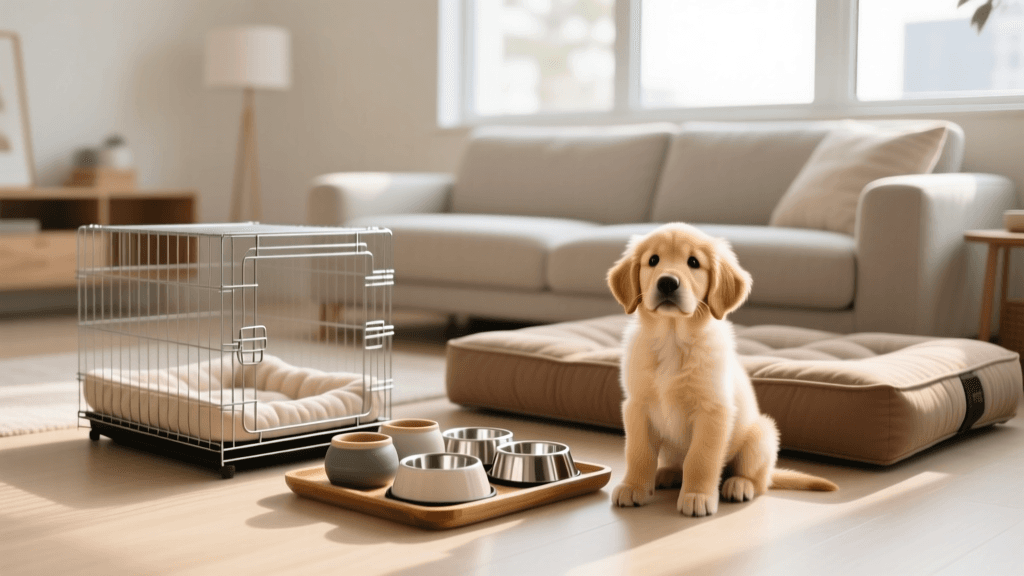
Even with a perfectly proofed house, a puppy needs a designated sanctuary where they can relax without the pressure of navigating the entire home. Setting up a 'Puppy Zone' using a wire crate and an attached exercise playpen is highly recommended for the first few months.
- Crate Sizing: The crate should be large enough for the puppy to stand up, turn around, and lie down comfortably, but not so large that they can eliminate in one corner and sleep in the other. For growing puppies, use a crate with an adjustable divider panel.
- Playpen Dimensions: Attach an exercise pen to the crate door to provide a safe potty and play area. Aim for at least 8 square feet of space for small breeds, and 16 square feet for large breeds.
- Flooring Protection: Place interlocking EVA foam mats or a waterproof vinyl mat beneath the playpen. This protects your hardwood floors from urine accidents and provides essential joint support for your puppy's developing bones.
The American Kennel Club notes that puppies explore their environment primarily through their mouths, making chewing a natural but potentially dangerous behavior if the home is not properly secured. Confinement to a safe zone when unsupervised is a cornerstone of successful house training and behavioral management.
Final Thoughts for First-Time Owners
Puppy-proofing is not a one-time event; it is an ongoing process. As your dog grows, their reach, jumping ability, and problem-solving skills will expand. A cabinet that was secure for an 8-week-old Labrador might easily be nudged open by a 6-month-old. Stay vigilant, regularly reassess your home from your puppy's eye level by literally getting down on your hands and knees, and always prioritize supervision. By taking these proactive, detailed steps, you are setting the foundation for a safe, stress-free, and joyous life with your new best friend.
tom-renshaw
All our authors care for dogs every day — read more of their work on the authors page.