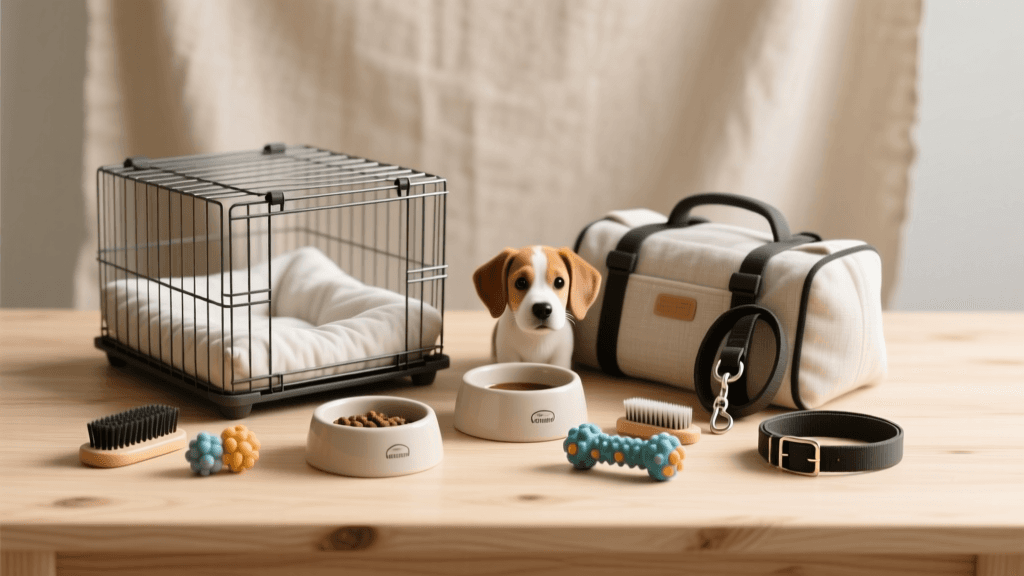
First-Day Puppy Essentials: The Ultimate Buyer's Guide
Discover must-have puppy essentials for day one. Our buyer's guide covers crates, beds, food bowls, and toys with costs and expert tips for new owners.
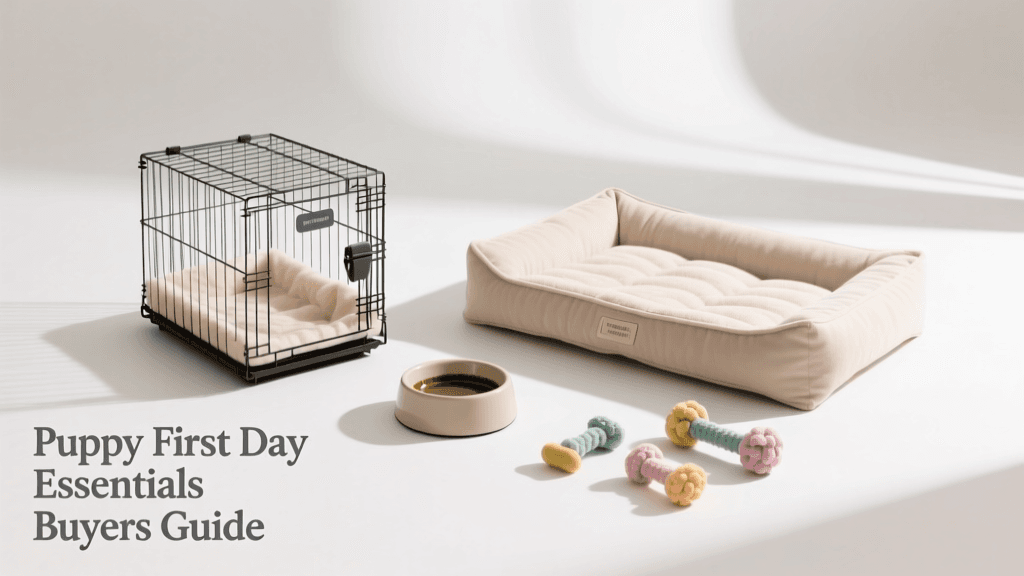
Welcome Home: Preparing for Your New Puppy
Bringing a new puppy home is one of the most exciting milestones in life, but it can also be incredibly overwhelming. Between the endless aisles of pet store products and the barrage of online recommendations, new dog owners often find themselves overspending on unnecessary gadgets while missing out on critical essentials. According to the American Society for the Prevention of Cruelty to Animals (ASPCA), proper preparation and environment setup are the most crucial steps in reducing stress and preventing behavioral issues in newly adopted dogs.
This comprehensive buyer’s guide cuts through the marketing noise. We will break down the exact first-day puppy essentials you need, the specific materials and measurements to look for, and the overhyped products you can safely skip. Whether you are adopting a rescue or bringing home a purebred, having the right gear ready before their paws touch your floor is the key to a smooth transition.
The Core Essentials: What to Buy Before Day One
1. Confinement and Sleep: Crates and Beds
A crate is not just a bed; it is a vital tool for potty training, safety, and providing your puppy with a secure den. The Humane Society of the United States strongly advocates for crate training, noting that dogs are naturally den animals and will seek out small, enclosed spaces for comfort.
Buyer’s Advice: Opt for a heavy-duty wire crate with a divider panel. Wire crates offer superior ventilation and visibility, which helps anxious puppies feel connected to their family. The divider panel is a cost-saving essential: it allows you to buy a crate sized for your dog’s adult dimensions while restricting the space to a puppy-sized area. If a puppy has too much room, they may eliminate in one corner and sleep in the other, ruining potty training.
Measurements: To find the right adult size, measure from the tip of the nose to the base of the tail, and add 2 to 4 inches. For height, measure from the floor to the top of the head (or ears, if erect) and add 2 inches. For bedding, skip the expensive, plush orthopedic beds for the first few months. Puppies chew. Instead, purchase a washable, chew-resistant fleece pad or a elevated cot-style bed like the Kuranda, which prevents heat retention and is difficult to destroy.
2. Nutrition and Hydration: Bowls and Storage
When it comes to food and water bowls, material matters more than aesthetics. Plastic bowls are porous and easily develop microscopic scratches that harbor bacteria, which can lead to canine acne on your puppy's chin and muzzle. Ceramic bowls are better but can be dangerous if they chip, exposing sharp edges or lead-based glazes.
Buyer’s Advice: Invest in high-quality, food-grade stainless steel bowls with a non-slip rubber base. They are dishwasher safe, rust-resistant, and completely non-porous. For puppies that eat too quickly—a common issue that can lead to dangerous bloat or vomiting—purchase a stainless steel or silicone slow-feeder bowl. Additionally, buy an airtight food storage container to keep kibble fresh and prevent pests, but always keep the food in its original bag inside the container to preserve the batch number in case of a recall.
3. Walking and Safety: Harnesses, Leashes, and Tags
Walking a puppy requires the right biomechanical support. Traditional collars place pressure directly on a puppy’s fragile trachea, which can lead to long-term respiratory issues or tracheal collapse, especially in small breeds.
Buyer’s Advice: Purchase a Y-shaped, front-clip harness. The Y-shape ensures that the straps do not restrict the natural movement of the puppy's shoulder joints, while the front-clip leash attachment gently redirects pulling by turning the dog's chest toward you. Avoid step-in harnesses or those with straps that cut horizontally across the shoulders. For the leash, a standard 4-to-6-foot nylon or leather leash is ideal. Avoid retractable leashes entirely; they teach puppies to pull, offer zero control in emergencies, and the thin cords can cause severe friction burns to your hands.
Safety Note: Before bringing your puppy home, order a custom-engraved stainless steel ID tag with your current phone number. Microchips are essential, but a visible tag is the fastest way for a Good Samaritan to return a lost dog.
4. Enrichment and Teething: Toys and Chews
Puppies explore the world with their mouths, and the teething phase (which peaks between 12 and 16 weeks) will test the durability of your furniture. You need a rotation of toys that serve different purposes: chewing, fetching, and mental enrichment.
Buyer’s Advice: The undisputed king of puppy toys is the Classic KONG. Made from durable, natural red rubber, it can be stuffed with puppy-safe peanut butter or plain yogurt and frozen to soothe inflamed teething gums. Pair this with a few Nylabone puppy chews (specifically the puppy-formula, which is softer on developing teeth) and a snuffle mat for mental stimulation. Snuffle mats mimic foraging behavior and can tire out a high-energy puppy in just 15 minutes, making them an excellent tool for crate training and settling down.
5. Cleanup and Potty Training Supplies
Accidents are an unavoidable part of raising a puppy. Standard household cleaners, including bleach and ammonia-based products, will not eliminate the uric acid crystals found in dog urine. Worse, ammonia smells like urine to a dog, which will actually encourage them to mark the same spot again.
Buyer’s Advice: An enzymatic cleaner is non-negotiable. Brands like Nature’s Miracle or Rocco & Roxie use bio-enzymatic formulas that literally eat the organic matter and uric acid, completely removing the scent marker. Buy a large gallon jug and a UV blacklight flashlight to find hidden accidents in dimly lit rooms.
Puppy Essentials Cost Breakdown
Budgeting for a new dog can be stressful. Below is a realistic cost breakdown for high-quality, durable essentials that will last well beyond the puppy phase.
| Category | Product Recommendation | Estimated Cost | Priority |
|---|---|---|---|
| Confinement | Wire Crate with Divider Panel | $45 - $85 | High |
| Bedding | Washable Fleece Pad or Cot | $20 - $45 | High |
| Dining | Stainless Steel Bowls (Set of 2) | $15 - $25 | High |
| Walking | Y-Shaped Front-Clip Harness | $25 - $40 | High |
| Enrichment | Classic KONG & Snuffle Mat | $20 - $35 | High |
| Cleaning | Enzymatic Cleaner (1 Gallon) | $15 - $20 | High |
| Safety | Custom Engraved ID Tag | $8 - $15 | High |
Note: Prices vary based on brand and dog size. Expect to spend between $150 and $265 on core day-one essentials.
Overhyped Products You Can Skip
The pet industry is a multi-billion dollar market, and companies love to prey on the anxieties of first-time dog owners. Save your money and avoid these common pitfalls:
- Puppy Pee Pads: Unless you live in a high-rise apartment or have a puppy that cannot go outside due to incomplete vaccinations, skip the pee pads. They teach puppies that it is acceptable to eliminate indoors on soft, rectangular surfaces (which translates to your rugs and carpets). Instead, use real grass patches like Fresh Patch, or commit to taking them outside every two hours.
- Fancy Dog Clothing: While sweaters are necessary for thin-coated breeds like Greyhounds in winter, the average Golden Retriever or Lab mix does not need a wardrobe. Puppies grow incredibly fast, and clothing can easily become a choking hazard or a chew toy if left unsupervised.
- Expensive Orthopedic Beds: Do not buy a $150 memory foam bed for an 8-week-old puppy. They will likely chew the foam, which poses a severe intestinal blockage risk. Wait until they are past the destructive teething phase (usually around 12 to 18 months) before investing in premium bedding.
Expert Tips for a Smooth Transition
Having the right gear is only half the battle; how you introduce these items matters just as much. The American Kennel Club (AKC) emphasizes the importance of establishing a strict routine from the very first day, particularly regarding feeding and potty schedules. Puppies thrive on predictability.
"When introducing your puppy to their new crate, never use it as a place of punishment. Feed them their meals inside the crate, toss high-value treats in the back, and leave the door open during the day. The crate should become their favorite sanctuary in the house."
Finally, remember to puppy-proof your home before they arrive. Get down on your hands and knees to see the world from their perspective. Secure electrical cords, remove toxic houseplants (like lilies and sago palms), and ensure that cleaning supplies are locked away behind child-proof cabinets. By combining a safe environment with the high-quality essentials outlined in this guide, you are setting the foundation for a happy, healthy, and well-adjusted adult dog.
tom-renshaw
All our authors care for dogs every day — read more of their work on the authors page.